
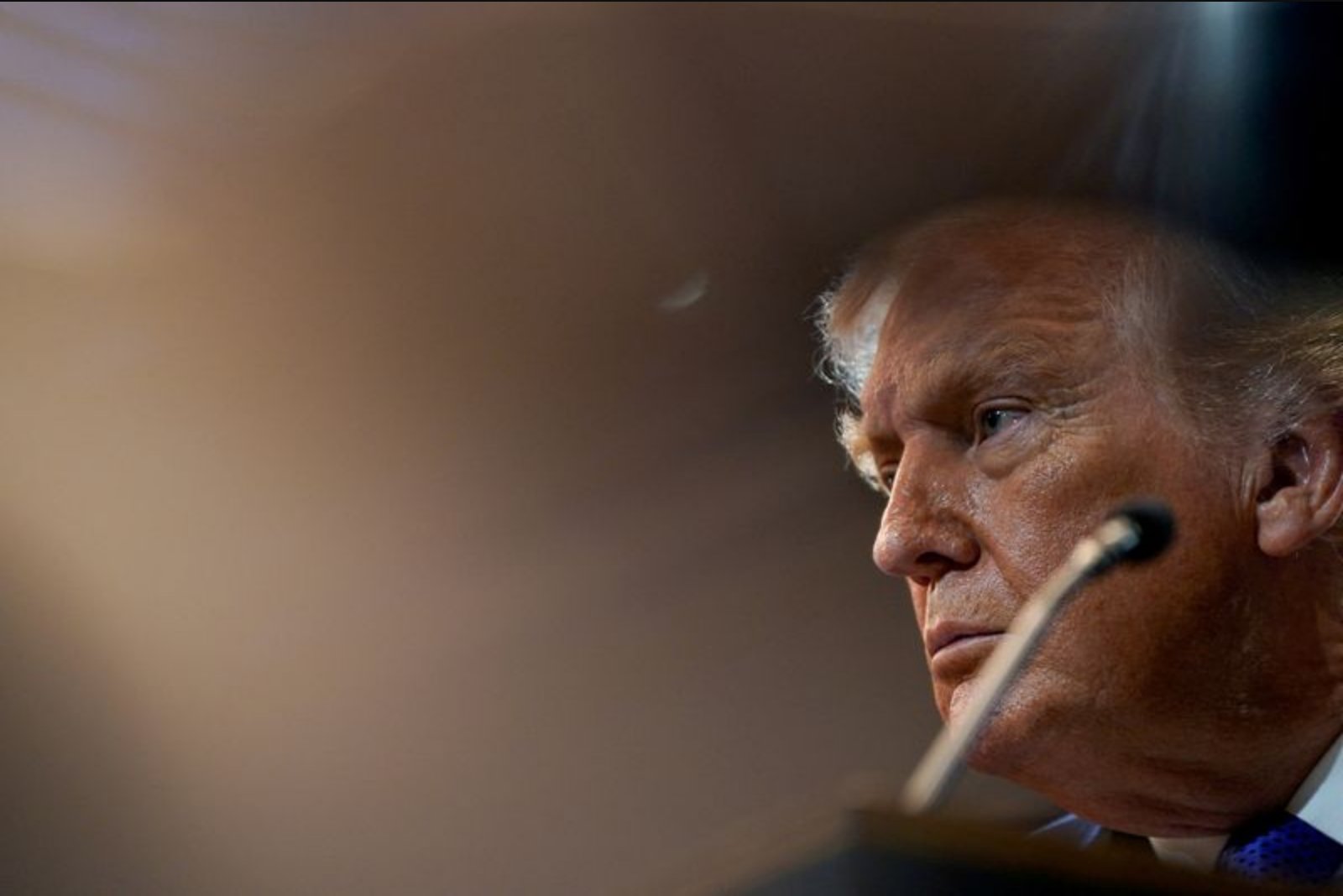
U.S. President Donald Trump has warned trade partners not to "play games" by attempting to withdraw from agreements after the Supreme Court struck down his emergency tariffs, creating a fresh diplomatic tussle over the status of recent trade deals.
Several U.S. allies have responded by requesting clarity on whether the arrangements they negotiated remain intact. Officials in Japan have asked whether their treatment under a new U.S. tariff framework will match the favourable terms agreed last year, while Taiwan's government has sought explicit reassurances that the concessions it has secured will not be altered.
Trump is expected to "come out swinging" in his annual State of the Union address on Tuesday following the tariff setback and may confront some Supreme Court justices who will be present in the chamber, underscoring the political sensitivity of the ruling.
Not to be outdone on the trade front, China on Tuesday announced a ban on exports of dual-use items to 20 Japanese entities it says have military links, describing the move as intended to curb Japan's "remilitarisation". The measure targets specific suppliers that China alleges support Japan's defence build-up.
Markets in Japan and China largely shrugged off the diplomatic flare-up. As trading resumed after local holidays and investors digested last Friday's developments, both the Nikkei 225 and the CSI 300 rose by more than 1%, buoyed in part by the removal of expected U.S. tariff headwinds.
Elsewhere in Asia, markets steadied following a selloff on Wall Street on Monday that some analysts linked to a "doomsday" analysis published by Citrini Research earlier in the week. That report sketched a scenario of extensive disruption to the global economy from artificial intelligence over coming years, prompting risk-off moves in some quarters.
U.S. S&P 500 e-mini futures recovered, climbing 0.3% as investors weighed the mixed signals. At the same time, manufacturers in the AI supply chain lifted benchmarks in Taiwan and South Korea to new highs, helping to drive MSCI's broadest index of Asia-Pacific shares outside Japan to a record.
In early European trade, pan-region futures were last up 0.3%, with German DAX futures gaining 0.2% and FTSE futures slipping 0.1%.
Key events to watch on Tuesday
- Company earnings: Home Depot, Workday, Telefonica, Endesa
- Economic data: France - business confidence for February
- Debt auctions: UK 7-year government debt
ProPicks AI note on TEF
ProPicks AI evaluates TEF alongside thousands of other companies each month using more than 100 financial metrics. According to the description of the tool, it applies AI to identify stock ideas based on fundamentals, momentum, and valuation without bias, and highlights names it considers to offer attractive risk-reward profiles. The tool points to notable past winners it lists as examples and invites readers to check whether TEF currently features in any of its strategies.