
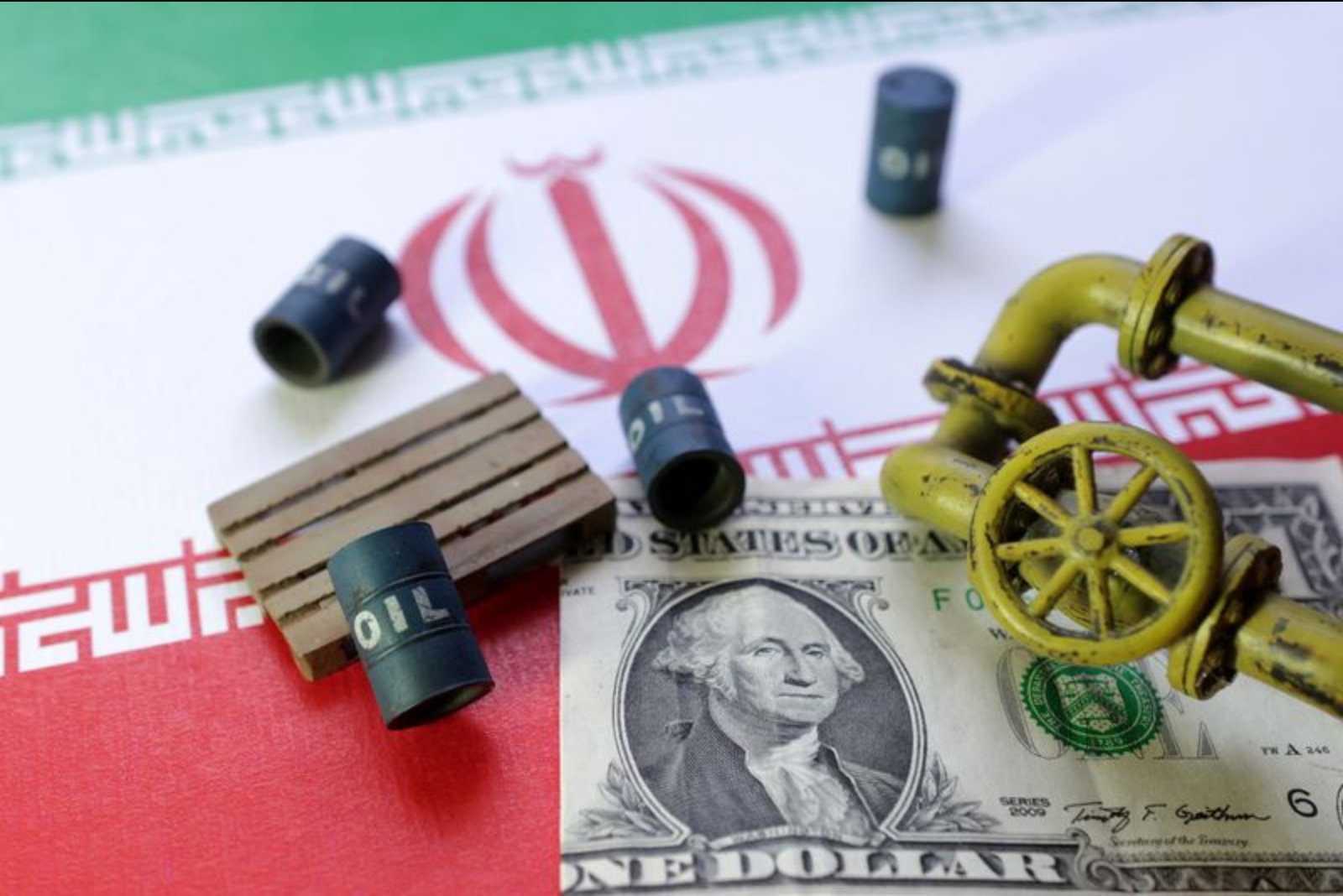
The United States and Israel carried out strikes on Iran on Saturday targeting its leadership, actions that U.S. President Donald Trump said would remove a security threat and give Iranians an opportunity to topple their rulers. Tehran responded by launching missiles toward Israel, setting off a fresh round of tensions across the Middle East.
Financial markets reacted quickly, with observers and traders centering their attention on oil flows, volatility measures, currency moves and demand for traditional safe-haven assets. Proximity to the Strait of Hormuz - a chokepoint that carries about 20% of global oil supply - makes the Gulf region highly sensitive to any escalation that could constrain exports.
Oil and supply concerns
Crude oil is the primary immediate channel through which a Middle East confrontation feeds into global markets. Brent crude traded around $73 a barrel on Friday, having already gained roughly a fifth so far this year. The risk is that further disruption could curtail volumes reaching international markets and lift prices.
In the immediate aftermath of the strikes, some oil majors and leading trading houses suspended crude and fuel shipments through the Strait of Hormuz because of the attacks, according to four trading sources. William Jackson, chief emerging markets economist at Capital Economics, noted that if the conflict remains contained, Brent could rise to about $80 - roughly the peak seen during the 12-day war in Iran last June. He warned that a more prolonged disruption to supply could push oil toward $100 a barrel and potentially add 0.6-0.7 percentage points to global inflation.
Heightened market volatility
Markets were already on edge this year following a range of shocks including tariff moves and a pronounced technology sector selloff. The VIX volatility index has climbed by about a third year-to-date, while implied U.S. bond volatility is up about 15%.
Analysts expect currency markets to be affected as well. The dollar index fell by around 1% during the June conflict, CBA notes, though that move was short-lived and largely reversed within three or four days. CBA analysts said: "In current circumstances, the size of the fall will depend on how large and how long-lasting the conflict is expected to be." They added: "If the conflict was long-lasting and disrupted oil supplies, we expect the U.S. dollar would lift against most currencies except Japanese yen and Swiss franc. The U.S. is a net energy exporter and so benefits from higher oil and gas prices that would result from disrupted oil supply."
Israel’s shekel is also likely to be a focal point. Iran’s quick retaliation sent the shekel lower in prior flare-ups - it dropped 5% at the start of the June war and fell after Israel struck Iran’s Damascus consulate in April 2024 and when Iran launched missiles at Israel in October. Those episodes were brief and followed by rapid rebounds, but JPMorgan warned it could be different if the confrontation and elevated market risk premia persist. The bank said: "This would especially be the case if confrontation with Iran also triggers more intensive operations against Iran’s proxies."
Safe-haven flows and commodities
The Swiss franc, long seen as a refuge in periods of turmoil, has already strengthened about 3% this year against the U.S. dollar and would likely come under additional upward pressure - a development that could complicate policy for the Swiss National Bank. Investors may also turn again to gold, which has enjoyed a record run and was up 22% so far in 2026, and to silver, which has risen alongside it.
Demand for U.S. Treasuries could increase as investors seek safety; Treasury yields have been drifting lower in recent weeks. By contrast, bitcoin has not behaved like a conventional haven - it fell 2% on Saturday and has lost more than a quarter of its value over the past two months.
Regional equities and trade flows
Trading in regional bourses when markets reopen will offer an early gauge of investor sentiment. Markets in the Middle East, including Saudi Arabia and Qatar, will be watched closely on Sunday. Because many of these markets are tightly correlated with oil prices, a widening conflict could weigh on local equity performance and broader economic activity.
Ryan Lemand, chief executive officer and co-founder of Neovision Wealth Management, said: "I suspect markets will be down if these hostilities continue through the day." He estimated that, depending on the scale of hostilities, Gulf equities could fall between 3% and 5%. Prior to the latest strikes, Saudi Arabia’s benchmark stock index had dropped 1.3% over the five days through Thursday, marking its second week of declines. Dubai’s main market also fell over the previous two weeks and is scheduled to reopen on Monday.
On the logistics side, global airlines cancelled flights across the Middle East on Saturday. Those operational disruptions could put pressure on airline stocks if the conflict expands and forces additional airspace closures. Separately, shipments of crude and refined products through the Strait of Hormuz were temporarily suspended by some companies, a direct impact on seaborne oil flows that underscores the vulnerability of maritime routes to geopolitical shocks.
Defense demand and market winners
European defence manufacturers, which are up about 10% this year, may see increased interest if the situation escalates further and governments look to bolster capabilities. The scale and duration of the confrontation will determine whether that interest translates into sustained demand for defence suppliers.
For now, market participants are weighing a broad array of signals - from oil and currency moves to safe-haven demand and regional equity reactions. How far these ripples spread will depend crucially on the length and intensity of the fighting and whether supply channels such as the Strait of Hormuz remain open or face longer interruptions.
What to watch next
- Prices at the pump and Brent crude levels, with $80 and $100 flagged as possible scenarios depending on containment or escalation.
- Volatility indicators including the VIX and implied bond volatility, which have already risen this year.
- Reactions in regional equities when markets reopen, particularly in Saudi Arabia, Qatar and Dubai.
These developments will continue to be monitored closely by traders, policy makers and transport and logistics operators whose routes and costs are sensitive to shifts in oil prices and airspace or shipping disruptions.