
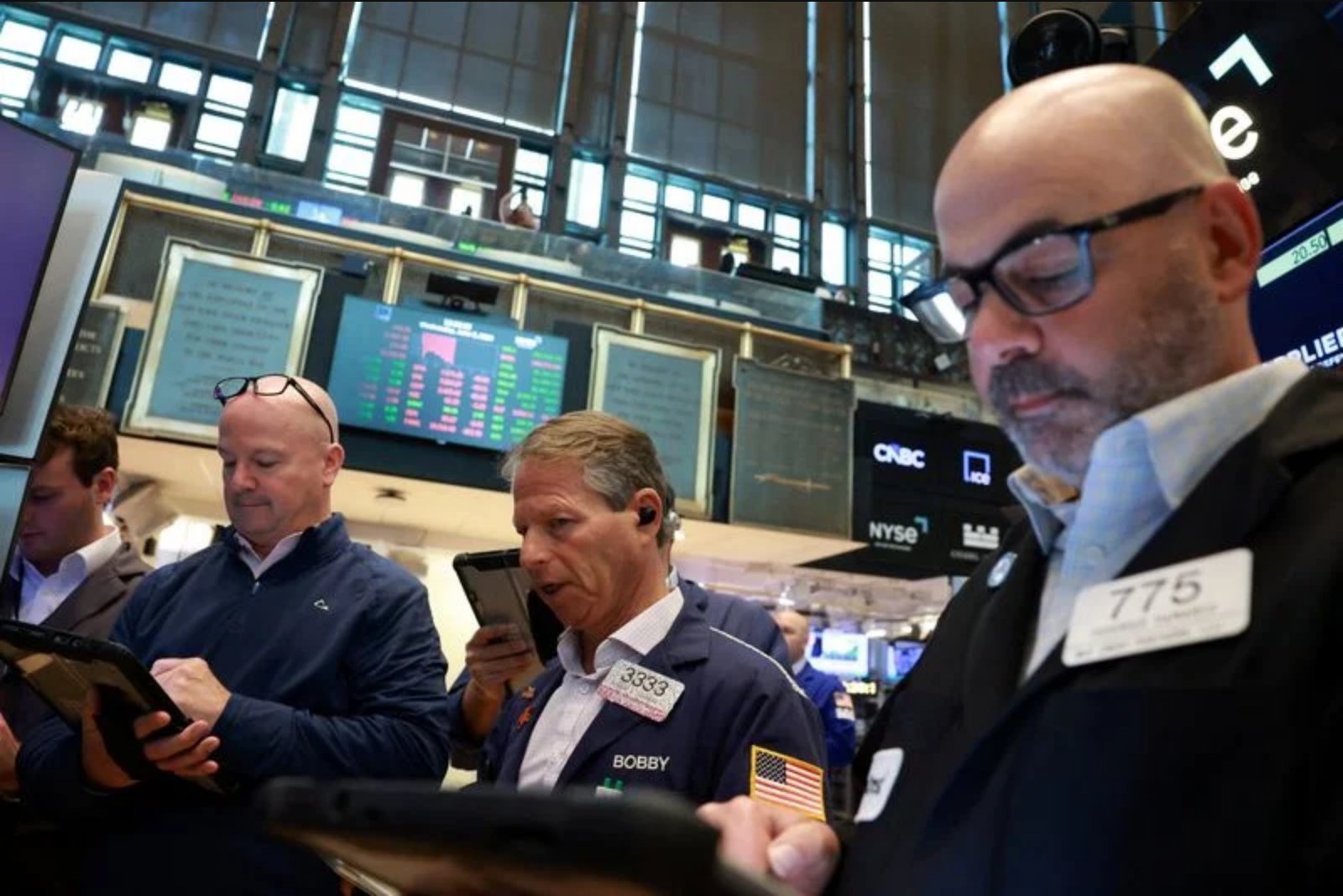
Global financial markets experienced significant turbulence on Wednesday, driven by a combination of heightened geopolitical tensions in the Middle East and a notable retreat in technology and artificial intelligence stocks. This shift in investor sentiment led to a decline in both stock and bond prices, while simultaneously providing upward momentum for the U.S. dollar and crude oil.
Market Performance Overview
The divergence in market performance was evident across various asset classes and regions. In the United States, equity markets faced headwinds: the Dow Jones Industrial Average dropped 1.2%, while the Nasdaq fell by 0.9%. Sectoral performance on the S&P 500 showed a split, with seven sectors declining and five seeing gains. The technology sector was particularly hard hit, sliding 1.5%.
Individual stock movements highlighted this tech-driven volatility. Nvidia shares fell by 3.62%, and IBM saw a significant drop of 7.17%. Broadcom experienced a record high before falling 7% after the market close. Conversely, Walmart provided a bright spot with a 3.39% increase. In the energy sector, stocks rose by 1.4%, and oil prices climbed by 2%.
In Asia, Japan's Nikkei displayed resilience, rising 2.5% to reach new highs. However, Brazil's markets faced a downturn, falling 2%.
Currency and Fixed Income Dynamics
The foreign exchange market saw the U.S. dollar index achieve its highest close in two months. The USD/JPY pair reached the 160.00 level, a threshold widely considered to be within the "intervention zone" for Japanese authorities. This follows a period where the yen previously dipped below 160 on April 29, leading Japan to conduct a record $73.5 billion intervention. The recent breach of this level has led some observers to question if previous efforts to stabilize the currency have been unsuccessful, though others suggest the situation is more complex.
Other major moves in the FX space included the New Zealand Dollar (NZD) and the Swedish Krona (SEK), both of which declined by 1%, marking them as the largest movers among G10 currencies. In fixed income markets, U.S. yields rose by 4 basis points at the short end, coinciding with an increase in the perceived probability of a Federal Reserve rate hike in 2026.
Commodities and Metals
The commodities sector saw mixed results. While oil prices increased by 2%, gold prices fell by 1%. Precious metals more broadly experienced declines ranging between 3% and 5%.
Key Economic Drivers and Trends
- U.S. Economic Strength: Despite concerns regarding inflation and its potential impact on consumer spending, recent U.S. data suggests a robust economic environment. Three key indicators released on Wednesday all exceeded expectations: private sector payrolls for May reached their highest level since January of the previous year; factory orders for April saw their most significant growth in 11 months; and service sector activity in May expanded at a faster pace than anticipated. Consequently, the U.S. economic surprises index has climbed to its highest point since October 2023.
- The IPO Landscape: The market is currently focused on massive initial public offerings (IPOs). SpaceX is projected to have a valuation of $1.75 trillion, while potential listings for Anthropic and OpenAI could each reach the $1 trillion mark. There are ongoing questions regarding whether the market can absorb such a large volume of new equity. Historical data suggests caution may be warranted; Sam Grelck of Truist Advisory Services notes that major U.S. listings often see mixed results in the following months, with every major listing recording at least one significant drawdown within its first year.
- Yen Intervention Debates: The movement of the yen past the 160 level against the dollar has reignited debate over Tokyo's foreign exchange interventions. While the rapid return to this threshold suggests potential difficulty in defending the currency, there is ongoing discussion regarding whether these moves are truly ineffective or if the nuances of the market suggest otherwise.
Risk Factors and Market Uncertainties
Investors face several immediate risks that could dictate market direction in the coming days:
- Geopolitical Instability: Ongoing developments in the Middle East remain a primary source of uncertainty, capable of impacting energy prices and broader market sentiment.
- Volatility in Tech and AI: The recent profit-taking in high-valuation tech stocks and the looming supply of massive IPOs present risks to equity stability and market liquidity.
- Inflationary Pressures: While economic data currently shows strength, the persistent threat of high and rising inflation remains a concern for consumer spending and future central bank policy decisions.
Looking ahead, markets will be closely monitoring upcoming data including Australian trade figures, Eurozone retail sales, and UK PMI data. Additionally, scheduled speeches from key central bank officials, such as ECB President Christine Lagarde and Bank of England Governor Andrew Bailey, alongside various U.S. Federal Reserve officials, will be critical for interpreting the future path of monetary policy.