
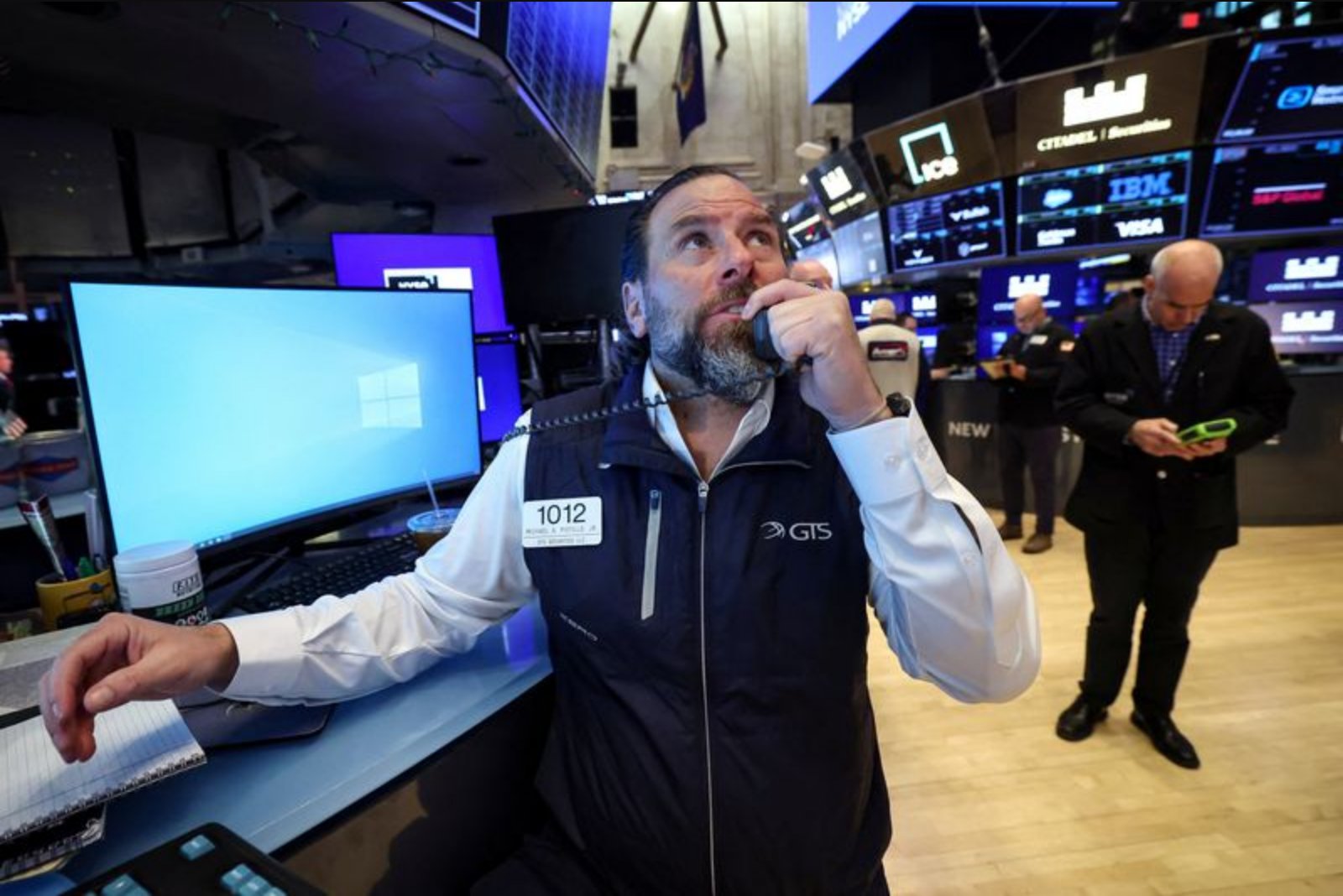
U.S. stock index futures moved higher on Thursday following labor-market data that showed stronger-than-expected job growth and a decline in the unemployment rate, developments that lessened some investor worries about the economy. Market participants trimmed bets on how quickly the Federal Reserve might cut interest rates, and attention is now concentrated on incoming inflation figures and a busy earnings calendar.
According to the CME Group's FedWatch tool, traders still see at least one rate cut as likely in June, but the probability that the central bank will leave rates unchanged has climbed to nearly 40% from 24.8%.
The next major data release is Friday's Consumer Price Index report for January, and weekly U.S. jobless claims are due later in the day.
Equity benchmarks had closed narrowly in the previous session after investors revised down expectations for rate reductions. In premarket activity at 04:58 a.m. ET, Dow E-minis were up 174 points, or 0.35%, S&P 500 E-minis were up 22.75 points, or 0.33%, and Nasdaq 100 E-minis were up 67 points, or 0.26%.
Corporate earnings continued to shape investor decisions. Notable before-the-open results included Restaurant Brands, Birkenstock, Howmet Aerospace and Exelon. Market observers noted that AI-driven disruption has placed pressure on businesses perceived to be vulnerable to new competitive dynamics, with trading quickly punishing sectors judged likely to face such competition.
Software shares extended their recent weakness on Wednesday after a three-session rebound, and brokerage firms also recorded losses. AppLovin's stock fell 4.8% following its fourth-quarter results; the marketing platform has lost almost one-third of its market value in the first six weeks of the year amid mounting competition.
Cisco shares declined 8% in premarket trading after the company reported quarterly adjusted gross margin below expectations.
Market participants will also be listening for comments from Bank of Dallas President Lorie Logan and Governor Stephen Miran for further signals on policy direction.
On trade and policy developments, a report cited that the United States and China may extend their trade truce for up to a year, with Presidents Donald Trump and Xi Jinping expected to meet in Beijing in early April.
In Washington, the U.S. House of Representatives narrowly approved a measure disapproving of President Trump's tariffs on Canada, voting in favor of a resolution to terminate the use of a national emergency to impose punitive trade measures on Canadian goods.
Among other movers, Applied Materials fell about 1% after the U.S. Department of Commerce announced a $252 million settlement with the company for illegally exporting chipmaking equipment to China.
Readers assessing individual equities saw promotional commentary on whether to buy Cisco, noting that an AI-driven stock-screening product evaluates CSCO along with many other companies using over 100 financial metrics to assess fundamentals, momentum and valuation. The promotional material cited past winners and suggested the tool identifies stocks offering favorable risk-reward based on current data.
Overall, the market response on Thursday reflected cautious optimism from improved labor data, tempered by reduced certainty about the timing of Fed cuts and a still-uncertain inflation picture. Investors remain focused on upcoming CPI data and a pipeline of corporate earnings that could influence rate expectations and sector performance.