
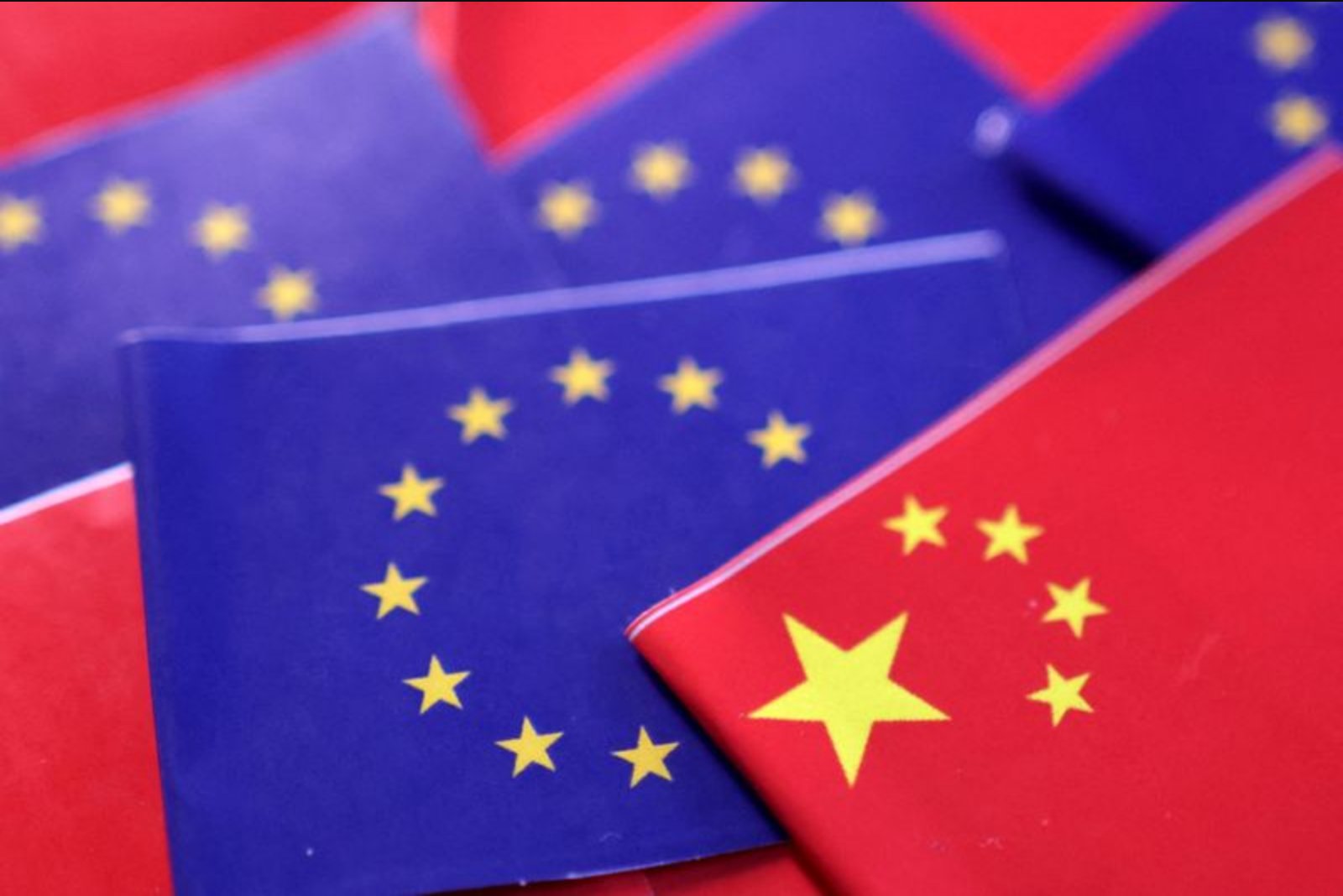
A French government strategy paper released on Monday calls for bold remedies to counter a sharp increase in low-cost Chinese imports, urging either an unprecedented 30% across-the-board tariff on goods from China or a 30% depreciation of the euro against the renminbi.
The study, prepared by the Haut-Commissariat à la Stratégie et au Plan - the advisory body that reports directly to the prime minister and shapes long-term public policy - concludes that Chinese firms have expanded market share across product categories, encroaching on industries that were previously dominated by European manufacturers.
The analysis identifies key sectors at risk, naming cars, machine tools, chemicals and batteries as central elements of Europe’s industrial base now under direct threat. According to the report, roughly a quarter of French exports and as much as two-thirds of German production are exposed to competition from China.
Consultations with European manufacturers cited in the paper suggest that the competitive push is driven by higher-quality Chinese products combined with sustained cost advantages in the order of 30% to 40%. The report also points to an "undervalued" Chinese currency as a compounding factor, warning that Beijing’s industrial advance could push Europe into a cycle of what it calls "destructive destruction" absent decisive action.
Clément Beaune, head of the advisory body, described current EU trade-defence mechanisms as inadequate for the scale of the challenge. He said existing tools - which have often relied on lengthy anti-dumping probes - do not match the speed or scope of the competitive shift and called for a "massive and vital" change in policy.
The paper weighs two stark policy options. One is a sizable tariff - an across-the-board 30% levy on imports from China. The other is an exchange-rate adjustment that would see the euro fall by about 30% against the renminbi, or alternatively a renminbi appreciation. Beaune noted that orchestrating a currency realignment would be more complex than imposing tariffs, while also acknowledging that tariffs would not be straightforward and would require a qualified majority among EU member states to implement.
Separately, French Finance Minister Roland Lescure said last week he could raise currency-market volatility on the agenda during France’s upcoming year-long presidency of the Group of Seven economic powers if necessary. Lescure has framed France’s G7 priorities around global macroeconomic imbalances that he characterises as driven by credit-fuelled over-consumption in the U.S., under-investment in Europe and export-led growth in China.
Implications for markets and industry
- Manufacturing sectors with significant exposure to Chinese competition face immediate risk of market share losses.
- Policy options presented would have broad effects on trade flows, currency markets and pricing structures in affected industries.