
The death of Iran's Supreme Leader, attributed to U.S. and Israeli air strikes, has injected what Capital Economics describes as "enormous uncertainty about Iran's political future," a development that could reverberate across the country, the wider region and global energy markets.
Iran's constitution sets out a formal succession mechanism: the 88-member Assembly of Experts is responsible for selecting the next supreme leader. Meanwhile, a transitional council that includes President Masoud Pezeshkian along with two close allies of the late leader is managing affairs in the interim. Despite this formal framework, Capital Economics warns there is a significant degree of unpredictability about how smoothly the process will unfold and what it will mean for Iran's external relations and economic direction.
Scenario analysis
Capital Economics, through comments by William Jackson, its chief emerging markets economist, sets out four plausible outcomes. Each scenario preserves the factual elements of succession procedures and the interim governance arrangement while mapping different political outcomes and economic consequences.
1) Status quo - the most likely outcome
In the most probable path, the succession process remains within the existing power structure. Jackson notes Khamenei may have "stacked it in favour of choosing someone in his mould," which would likely preserve a hardline posture toward the West and a state-centric economic model. Under this scenario, international sanctions would continue to weigh on Iran's economy.
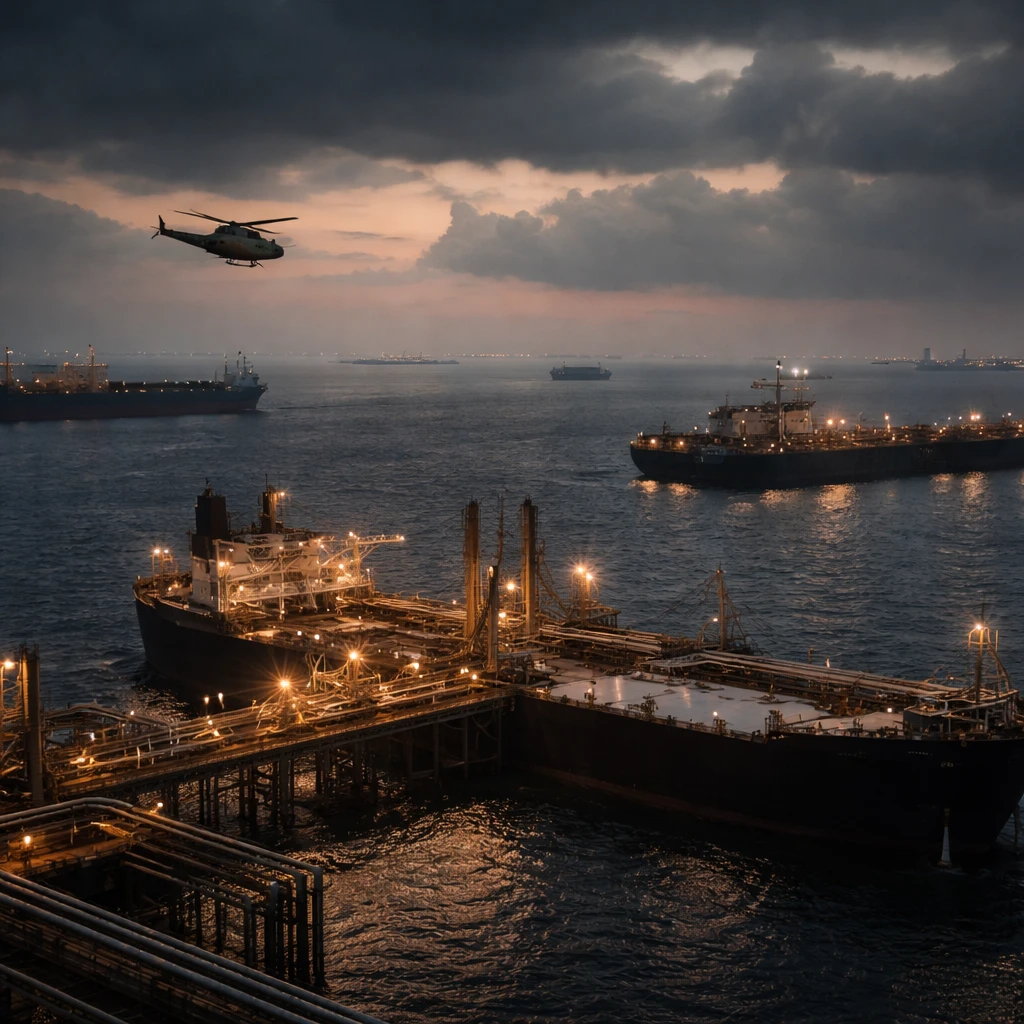
Persistent geopolitical risk tied to a hardline successor could keep oil prices elevated. In an extreme disruption, Capital Economics suggests crude could be pushed above $100 per barrel. Higher oil revenues would benefit Gulf states through stronger export receipts and government income, but threats to airspace and shipping lanes could hinder logistics and tourism sectors across the region, complicating diversification plans.
2) Rapprochement within the existing system
A second, less likely but still plausible trajectory involves the Assembly of Experts selecting a reform-minded figure from within the current political framework. Such a choice might be driven by public protests or continued external attacks that increase pressure for change. In this scenario, any easing of sanctions would be gradual because of "deep mutual suspicion between Iran and the West," and relief would not be immediate.
As tensions diminish over time, the political risk premium embedded in oil prices would likely unwind. Jackson estimates this could pull crude back toward a $50 to $60 per barrel range as the market discounts the earlier risk premium.
Capital Economics argues that Iran's modern political history makes either scenario one or two the most plausible outcomes since the political system has proved resilient through wars and widespread protests since 1979.
3) Democratic transition
A more profound transformation would be a move toward democratic transition. Capital Economics notes that humiliating military setbacks have in the past triggered substantial political change. The early phase of such a shift could be economically painful: recessions and high inflation might occur as previous distortions unwind.
However, in the longer term this pathway could yield stronger economic prospects, driven by faster reforms and deeper reintegration into global markets. From an energy market perspective, oil prices could spike initially on uncertainty and disruption, but over time they may decline as Iranian output is restored and possibly expanded.
4) Messy transition - the key tail risk
The most precarious risk identified is a fragmented, messy transition. If attempts at political change fracture central authority and create competing power centers, sanctions would likely remain in place and the economy could contract further.
Disruptions to Iran's oil production under this scenario could lift crude into an $80 to $100 per barrel range, Jackson notes. Capital Economics also points out a paradox: Gulf states might see a strategic benefit if Iran's military threat recedes even as oil prices stay elevated, supporting higher export and fiscal receipts.
Implications for markets and regional sectors
Across all scenarios the immediate uncertainties center on sanctions, Iranian oil output, and geopolitical risk premia embedded in crude. Sectors most directly affected include energy markets, regional logistics and shipping, and tourism. Gulf fiscal positions are sensitive to the direction of oil prices, while ongoing threats to airspace and maritime routes would weigh on trade flows and travel-dependent industries.
The path Iran follows after its leader's death remains unclear. Capital Economics emphasizes that while formal institutions establish a succession route, the political and economic outcomes will depend on the balance of forces during the transition and how external actors respond.