
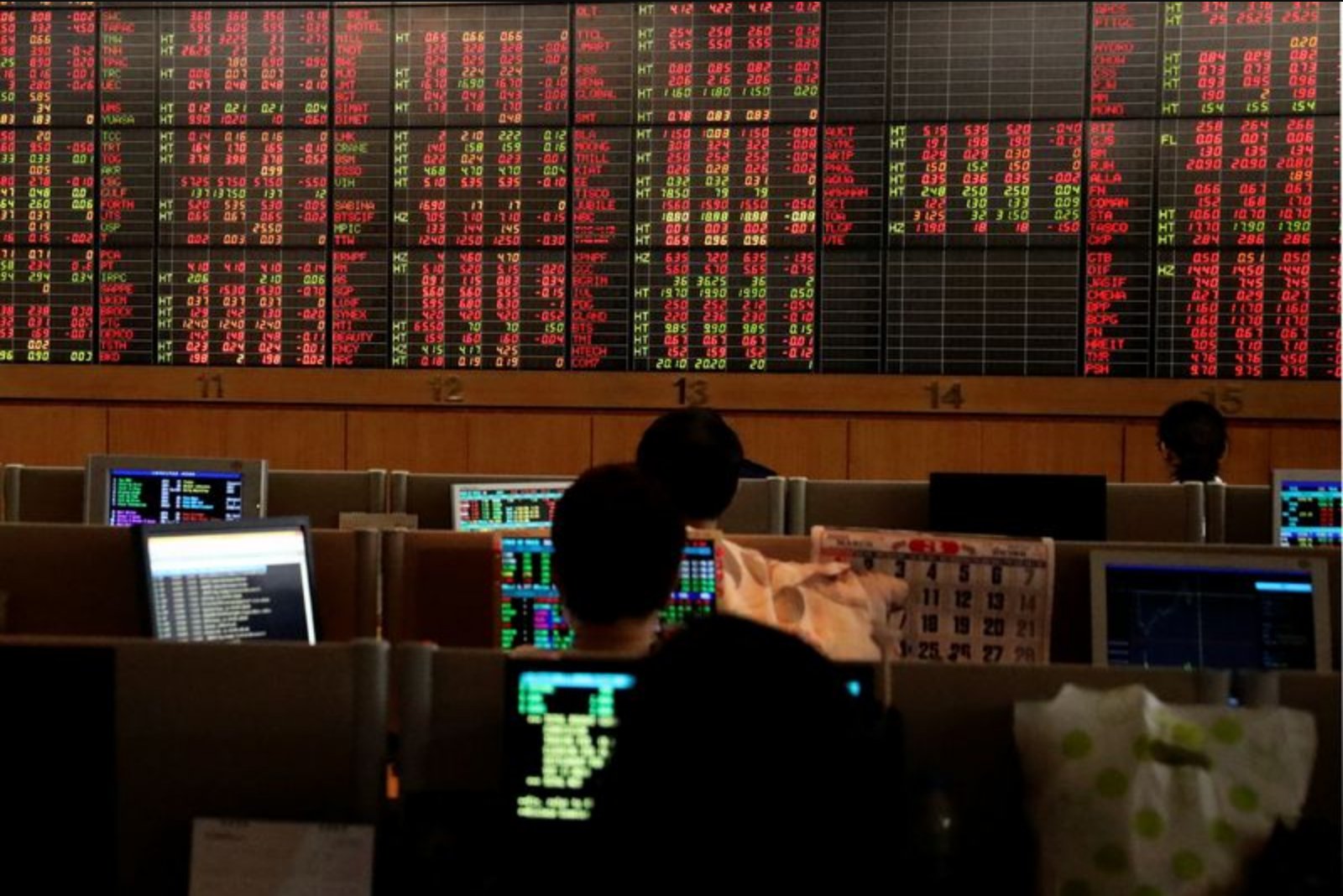
Foreign investors stepped back from Asian equities in the week ended February 6, accelerating net disposals as global technology shares tumbled on mounting concerns over heavy AI-related capital spending.
Data from LSEG covering stock markets in South Korea, Taiwan, Thailand, India, Indonesia, Vietnam and the Philippines show net foreign sales of $9.79 billion in that week, a sharp increase from roughly $3.9 billion in net disposals across the entire month of January.
The broader selloff in growth-oriented tech names was visible in U.S. markets as well, where the Nasdaq Composite slid as much as 4.27% during the week. Amazon, a bellwether for AI-related spending expectations, dropped about 12.11% after investors reacted to a forecast of more than a 50% increase in the company’s 2026 capital expenditure plan - a development that intensified concerns about elevated AI-driven investment across the sector.
“This shift in sentiment weighed on Asia tech stocks as well,” Nomura said in a report, linking global investor caution to the sell pressure observed across Asian markets.
Breaking down the regional flows, foreigners sold $7.48 billion worth of South Korean stocks in the week, reversing a monthly inflow of $446 million in January. Taiwan experienced a net foreign divestment of $3.43 billion in the latest week, after receiving $306 million in foreign inflows the previous month.
Nomura’s analysis added a portfolio note: "This past week’s moves in stocks reinforce, in our view, the message of maintaining some diversification and balance in portfolios, especially when positioning is crowded in some popular thematics." The bank framed the recent volatility as a reason for investors to reassess concentrated thematic exposure.
In contrast to the outflows elsewhere, cross-border investors were net buyers of Indian equities, adding $897 million worth of stocks on optimism tied to a trade deal with the United States that would cut U.S. tariffs on Indian goods to 18% from 50%. That buying comes after foreigners had sold $3.98 billion of Indian stocks in January - the largest monthly foreign exit in five months.
William Bratton, head of cash equity research, APAC at BNP Paribas, commented on the change in foreign sentiment toward India: "As such, it has to be assumed that the geopolitical cloud overhanging Indian equities, especially for foreign investors, has eased." He added: "We see the near-term risk/reward balance (for India) as now firmly skewed to the upside."
Smaller Asian markets registered mixed flows. Equities in Thailand, Indonesia and the Philippines attracted $332 million, $103 million and $23 million in foreign inflows, respectively, while Vietnam saw net foreign selling of $236 million.
Markets will likely monitor AI-related capital expenditure signals from large tech firms and cross-border policy developments that can shift investor appetite, particularly for markets with concentrated tech exposure or where geopolitical concerns have influenced prior flows.