
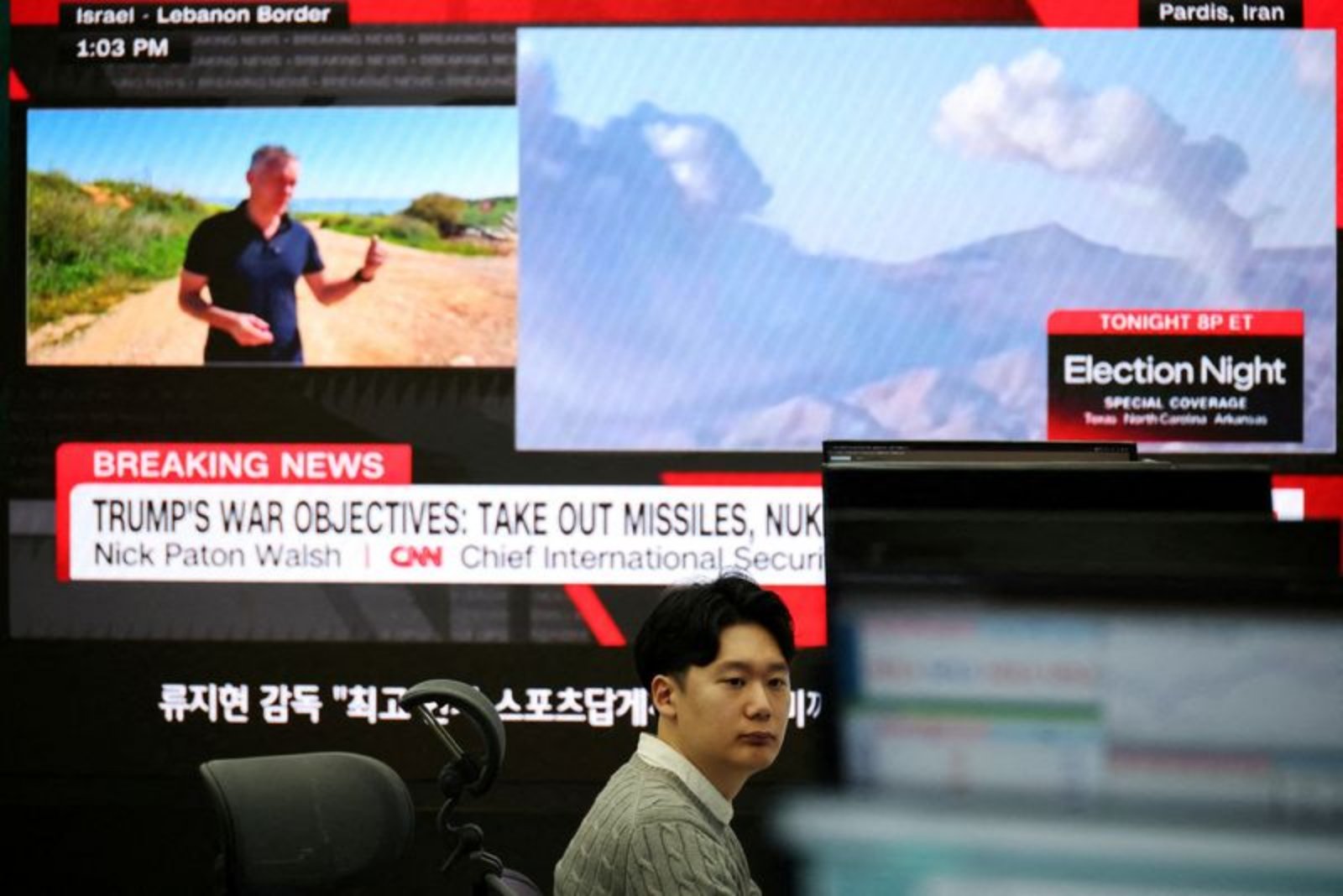
Foreign investors continued to trim positions in Asian stocks in February, marking a fourth month of net selling, according to regional exchange data compiled by LSEG. The decline was most severe in South Korea, which recorded an unprecedented $13.67 billion of foreign outflows last month.
Overall, those outflows from South Korea erased roughly $5.36 billion from the regional pool of equity capital measured across exchanges in South Korea, Taiwan, Thailand, India, Indonesia, Vietnam and the Philippines, per the LSEG figures.
Market participants cited profit-taking and a reassessment of tech sector valuations as central drivers of the pullback. The U.S. Nasdaq Composite fell 3.4% in February, a drop that market strategists said contributed to a more cautious stance among investors internationally as concerns mounted over lofty valuations and firms' artificial intelligence spending plans.
"AI-related valuation jitters were not confined to the U.S. but reverberated globally, contributing to a broader reduction in risk appetite," said Dat Tong, a Senior Financial Markets Strategist at Exness.
South Korea’s benchmark KOSPI has weakened sharply so far this month, sliding about 10.9% as investors unwound concentrated positions in chipmakers. Traders cited worries that an escalation of conflict in the Middle East could trigger an oil supply shock, lift inflation and delay expected interest rate cuts as factors prompting de-risking.
"We still see near-term upside on the memory super-cycle, but the non-tech sectors (in South Korea) are now expensive," said William Bratton, head of cash equity research, APAC at BNP Paribas.
Vietnam experienced notable foreign selling as well, with outflows of $301 million in February - the largest monthly withdrawal there since October 2025. By contrast, several regional markets continued to attract foreign capital: Taiwan drew $4.04 billion, India $2.5 billion, Thailand $1.75 billion, Indonesia $192 million and the Philippines $144 million during the month.
Analysts warned that Asian equities could remain under pressure as investors monitor geopolitical developments and their potential to reshape global financial conditions. Exness’ Tong cautioned that a sustained rebound in the U.S. dollar and rising U.S. Treasury yields could tighten global financial conditions and "likely exert additional outflow pressure."
Markets and sectors affected: Technology and semiconductor-related stocks in South Korea were most visibly impacted, while broader regional equity markets saw mixed flows depending on local fundamentals and investor appetite.