
Economy March 9, 2026

Finance Minister Fernando Haddad Poised to Resign to Run for São Paulo Governor, Sources Say

Lula presses for a high-profile candidacy in Brazil's most contested state amid tight national polling

By Ajmal Hussain
Finance Minister Fernando Haddad Poised to Resign to Run for São Paulo Governor, Sources Say

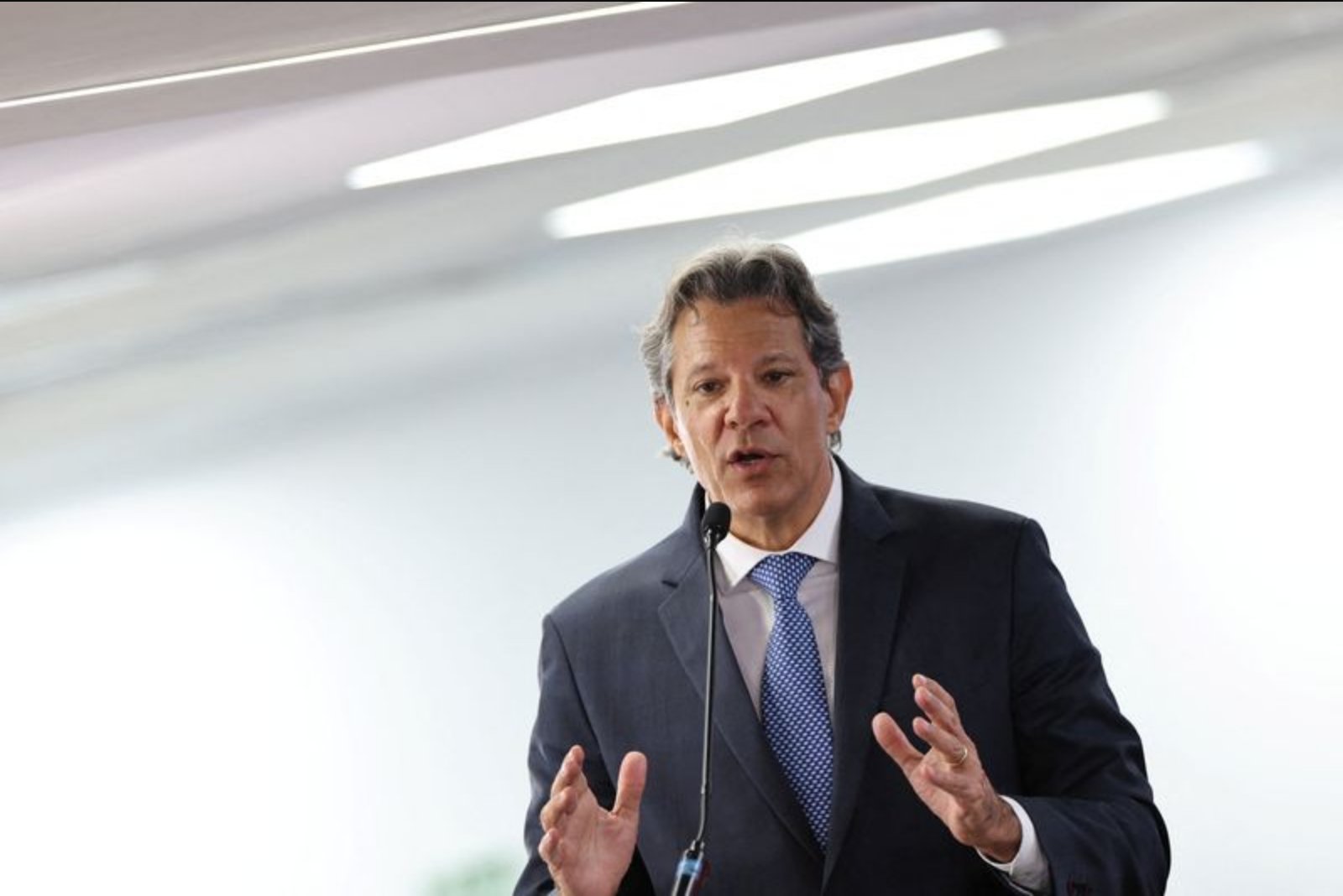
Brazilian Finance Minister Fernando Haddad is expected to leave his cabinet post by the end of next week to launch a campaign for governor of São Paulo, four sources said. The move, reportedly encouraged by President Luiz Inacio Lula da Silva, comes as polls show a close national race and ahead of a Datafolha survey in São Paulo that places Haddad behind the incumbent governor.

Key Points

  • Fernando Haddad is expected to resign as finance minister by the end of next week to run for governor of São Paulo, according to four sources.
  • President Luiz Inacio Lula da Silva has been encouraging Haddad to run in São Paulo to strengthen the left's presence in a state that often supports the right-wing opposition.
  • Recent Datafolha polls show a tight national race with a Lula-Flavio Bolsonaro second-round matchup in a technical tie, and Haddad trailing Governor Tarcisio de Freitas 31% to 44% in a first-round projection for São Paulo.

Brazil's finance chief Fernando Haddad is set to step down from his ministerial role by the end of next week to seek the governorship of São Paulo, according to four people familiar with the matter who spoke to Reuters on Monday. Those same sources said Haddad and President Luiz Inacio Lula da Silva have been in frequent discussions about the prospect, though a final, definitive conversation on the decision had not yet taken place at the time they spoke.

The development was also reported earlier in the day by a national newspaper. The finance ministry declined to comment on the possible resignation.

Sources described President Lula as encouraging Haddad to enter the São Paulo contest to bolster the left's standing in a state that is frequently a stronghold for the right-wing opposition. Lula's party views a weak showing in São Paulo as a potential threat to the president's broader re-election prospects.

Haddad had previously not intended to run for office this year and had signaled a wish to serve as one of the coordinators for Lula's re-election campaign. However, internal expectations that the upcoming national election will be hard-fought have increased pressure on Haddad to mount a candidacy in São Paulo, the sources said.

Recent opinion polling underscores the political calculus driving the possible move. A Datafolha poll released over the weekend showed a hypothetical second-round matchup between Lula and Senator Flavio Bolsonaro resulting in a technical tie. A separate Datafolha survey focused specifically on São Paulo found Haddad polling at 31 percent in a first round, with Governor Tarcisio de Freitas — backed by the Bolsonaro family and the candidate who defeated Haddad in 2022 — at 44 percent.

As the finance minister contemplates a transition from a national economic portfolio to a high-stakes regional campaign, the timing and ultimate impact of the decision remain contingent on the final discussions between Haddad and the president and on formal steps to resign and register a candidacy.


Quick takeaway: Fernando Haddad is expected to resign as finance minister to run for São Paulo governor, a move urged by President Lula amid narrow national polling and an uphill state-level polling position for Haddad.

Risks

  • Electoral uncertainty: A challenging gubernatorial campaign in São Paulo could weaken the left's standing and potentially undermine Lula's re-election prospects, impacting political risk premiums in markets tied to Brazil.
  • Polling disadvantage in São Paulo: Haddad's 31% first-round support versus Tarcisio de Freitas's 44% suggests an uphill battle that could divert campaign resources and attention from national strategy.
  • Tight national polls: The technical tie in a hypothetical Lula versus Flavio Bolsonaro runoff increases short-term political volatility, which may affect investor confidence and sectors sensitive to policy shifts, such as finance and infrastructure.

More from Economy

Soaring Oil Prices Unnerve U.S. Equity Investors and Raise Economic Concerns Mar 9, 2026 Putin Says Hormuz-Dependent Oil Flows Could Stop Within a Month as Prices Spike Mar 9, 2026 Adam Smith at 250: What his arguments still tell us about trade, wealth and power Mar 9, 2026 Stagflation Fears Escalate as Oil Surge Reawakens 1970s-Style Risks Mar 9, 2026 HSBC Affirms Long-Term Confidence in Gulf Economies Despite Conflict-Related Disruptions Mar 9, 2026