
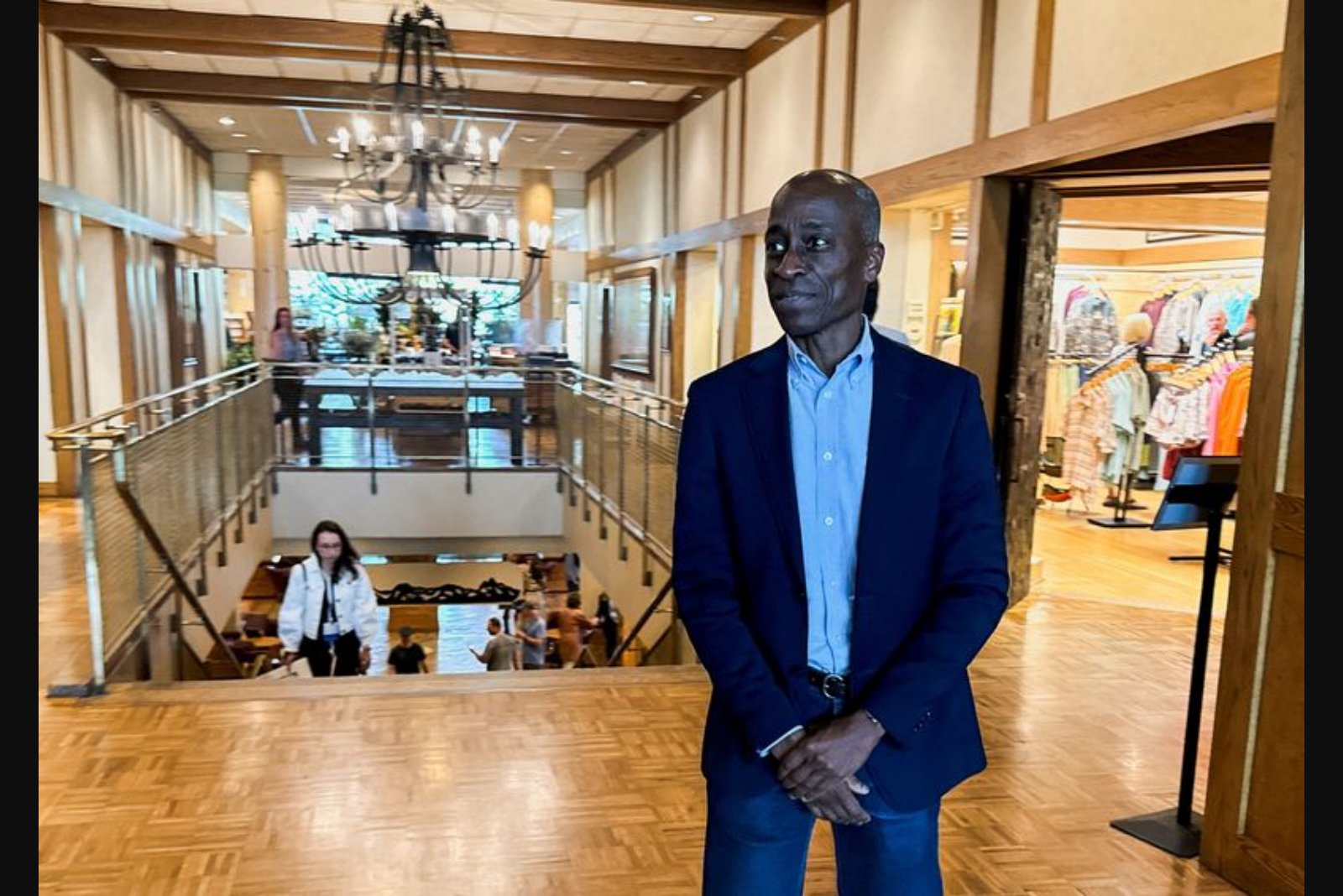
Federal Reserve Vice Chair Philip Jefferson on Friday described himself as "cautiously optimistic" about the 2026 economic outlook, saying he expects growth to stay a bit above trend, the labor market to reach a more stable footing, and inflation to resume its path toward the central bank’s 2% objective.
Delivering prepared remarks at a Brookings Institution event, Jefferson said the Fed’s current policy orientation is "well positioned" to respond to developments in the economy, language that aligns with expectations the central bank will pause further interest rate cuts while it gathers additional job and inflation data.
"The current policy stance is well positioned to address the risks to both sides of our dual mandate," Jefferson said. He added that "the extent and timing of additional adjustments to our policy rate should be based on the incoming data, the evolving outlook, and the balance of risks."
At its meeting last week, the Fed held its policy interest rate steady in the 3.50%-3.75% range. Jefferson reiterated that any future moves will depend on how the job market develops in the coming months and whether inflation resumes downward momentum after a year in which progress has been limited.
Jefferson noted that the Fed’s preferred inflation measure sits about a percentage point above the 2% target and said that "progress on disinflation has stalled over the past year." He nonetheless described the labor market as roughly "in balance," pointing to a still-low unemployment rate of 4.4% and slower job growth that he said aligns with a tepid expansion in the labor force amid tightened immigration policies.
"I see the overall labor market as roughly in balance, with a low-hiring, low-firing environment prevailing. In this less dynamic labor market, the downside risks to employment remain, but my baseline is for the unemployment rate to hold approximately steady throughout this year," Jefferson said, framing that outlook as another reason to defer additional rate reductions for now.
The event focused on how shifts in supply dynamics can influence inflation, a topic of heightened interest at the Fed as potential gains in productivity raise the possibility that the economy could expand faster without producing additional inflationary pressure.
Jefferson cautioned that it is too soon to determine whether recently observed higher productivity will persist. He warned that some short-run forces that could lift productivity - notably stronger capital spending on artificial intelligence - might also generate inflationary pressure if they trigger a surge in demand, for example through increased data center construction.
"A more immediate increase in demand associated with AI-related activity could raise inflation temporarily, absent offsetting monetary policy actions," Jefferson said. He framed that point as a counter to views held by some policymakers, including Fed chief nominee Kevin Warsh, who have suggested that AI investment could spark a productivity boom that lowers inflation and creates room for rate cuts.
Key points
- Jefferson is "cautiously optimistic" for 2026, expecting growth slightly above trend and a stabilizing labor market.
- The Fed's policy rate was left unchanged at 3.50%-3.75% last week, with further moves to be guided by incoming job and inflation data.
- Short-run productivity gains from AI investment could temporarily raise inflation by boosting demand, according to Jefferson.
Risks and uncertainties
- Inflation remains about a percentage point above the Fed’s 2% target and progress on disinflation has stalled - posing policy uncertainty for financial markets and interest-rate-sensitive sectors.
- Downside risks to employment persist in a low-hiring, low-firing labor market; slower labor market dynamics could affect consumer spending and sectors tied to labor demand.
- Near-term AI-driven capital investment, such as data center construction, could lift demand and temporarily increase inflation unless monetary policy offsets it - impacting technology, construction, and commercial real estate sectors.
Jefferson’s remarks underscore the Fed’s prudential approach: maintain a policy stance that can be adjusted based on fresh evidence from labor and price gauges, while remaining attentive to how shifts in supply and investment — especially in AI-related capital spending — might influence inflation trajectories.