
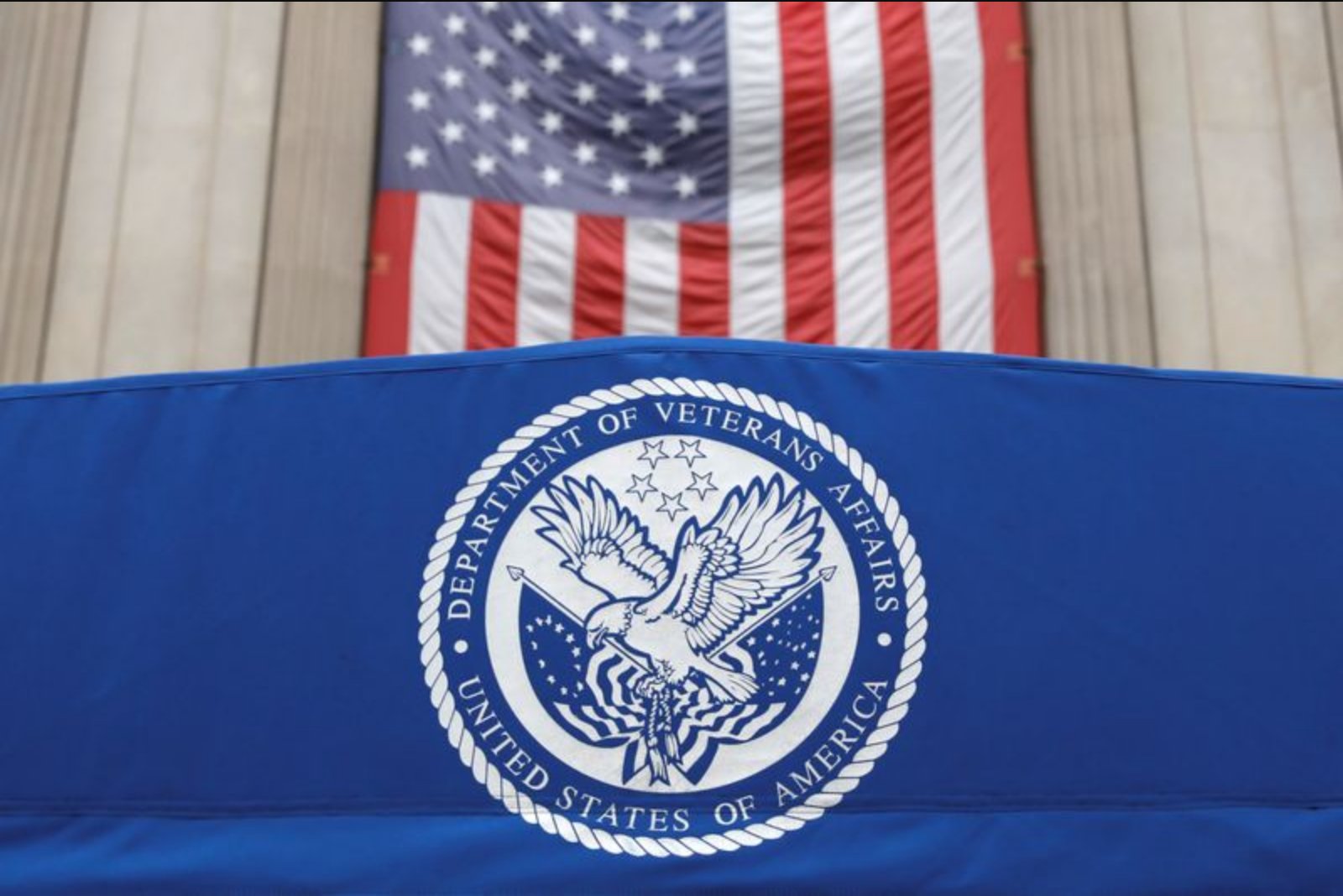
A federal judge has ordered the reinstatement of a bargaining agreement covering roughly 320,000 employees of the U.S. Department of Veterans Affairs (VA) after the agency canceled the contract as part of implementing President Donald Trump's 2025 executive order curbing collective bargaining for much of the federal workforce.
U.S. District Judge Melissa DuBose, sitting in Providence, Rhode Island, ruled in favor of the American Federation of Government Employees (AFGE), which contended the VA's action in August was taken in retaliation for the union's opposition to labor policy changes pursued by the Trump administration. AFGE represents more than 800,000 federal workers.
In federal court filings, the VA maintained that the president legitimately exempted the agency from collective bargaining because of the VA's function in national security. The agency described itself as "the primary backup" for medical services required by the military in the event of war or a national emergency and argued that role supported removal of bargaining obligations under the executive order.
"There is zero indication from the Defendants that the termination decision would have been made or implemented without the retaliatory motive," DuBose wrote, reinstating the agreement while the union's lawsuit advances through the courts.
DuBose's decision finds the VA provided no evidence that national security concerns were the motivating factor behind the cancellation. The judge's order restores the agreement until the litigation yields a final outcome.
The VA did not immediately provide a comment in response to requests. The agency runs a large network of hospitals and medical facilities serving veterans and employs more than 400,000 people, making it one of the largest federal employers.
AFGE President Everett Kelley criticized the VA's action as singling out the union for punitive treatment because of its opposition to proposed cuts and reforms the union says would harm veterans. In a statement, Kelley said the ruling "holds this administration accountable and makes clear: no one can retaliate against workers for standing up for their rights."
President Trump's executive order removed bargaining obligations from the VA and more than a dozen other federal agencies, including the departments of Justice, State, Defense, Treasury, and Health and Human Services. According to the text of the order quoted by the administration, it applies to agencies that "have as a primary function intelligence, counterintelligence, investigative, or national security work." The order broadened an existing exception that already applied to certain roles tied to national security, such as federal law enforcement agents.
The executive order has faced legal challenges. At least three lawsuits contest the order itself, and unions have pursued numerous challenges against individual agencies that canceled bargaining agreements. Most recently, a federal appeals court in San Francisco turned down an AFGE-led request to halt the executive order while their case proceeds.
Judge DuBose's ruling represents one of the more consequential judicial responses so far to litigation arising from the administration's changes to federal labor rules, reinstating the VA agreement while the courts consider the union's claims of retaliatory motive and the agency's national security defense.
What this means
- The reinstatement preserves collective bargaining terms for 320,000 VA employees while litigation continues.
- The decision challenges the VA's stated national security rationale as insufficiently supported in the record before the court.
- The case is part of a broader wave of litigation testing the scope of the 2025 executive order and its application across multiple federal agencies.