
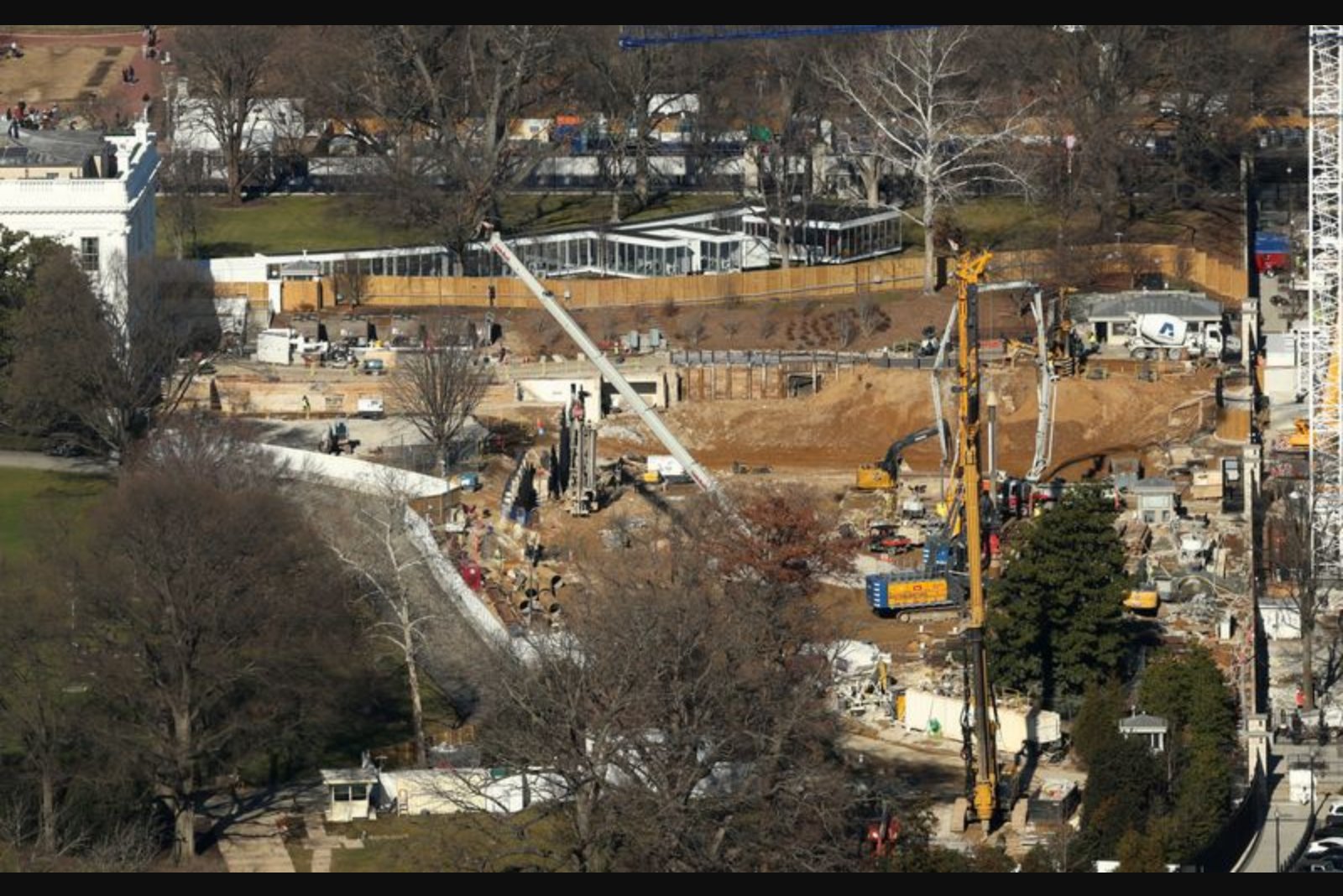
A federal judge in Washington is scheduled to take up new legal arguments on March 17 over the future of the planned $400 million White House ballroom, a project that has drawn a lawsuit from preservationists and raised questions about the limits of executive authority and federal agency approvals.
At 3:30 p.m. ET (1930 GMT), U.S. District Judge Richard Leon will hear a request for a preliminary injunction filed by the National Trust for Historic Preservation. The organization argues the ballroom construction should be halted while the court reviews whether the project proceeded without necessary approvals or congressional authorization.
The National Trust initiated litigation in December after demolition work began in October to remove the 120-year-old East Wing. According to the complaint, the demolitions preceded any congressional sign-off that would permit replacing the historic structure with a large, privately funded event space. The president has described the planned venue as the "finest" ballroom in the country.
The proposed ballroom would encompass roughly 90,000 square feet and is part of a set of sweeping changes the president has proposed for the capital. Those plans also include the construction of a 250-foot arch and a major overhaul of the Kennedy Center, a Washington cultural landmark and performance venue. A panel of the U.S. Commission of Fine Arts voted 6-0 in February to approve the ballroom proposal; the panel’s membership was appointed by the president in January.
Judge Leon previously denied the National Trust’s request last month for an injunction, finding the organization had not met the legal standard required to block activity based on its constitutional and administrative law arguments. The renewed filing presses again for a preliminary injunction, making the claim that the scope of presidential authority does not include demolishing the East Wing and erecting a large event facility in its place absent explicit congressional authorization.
In its court filing, the National Trust emphasized historical practice, saying that when Congress intends to permit the construction of privately funded structures on federal parkland in Washington, it has clear mechanisms to do so. The trust argued that those mechanisms were not followed in this case.
The Department of Justice responded in a March 12 filing, urging the court to deny the requested injunction. The DOJ told the court the National Trust had not met the high burden required to show the president exceeded his legal authority.
In its defense of the project, the government said the ballroom will modernize infrastructure on the White House grounds, improve security, and provide other benefits that would help relieve pressure on the historic Executive Mansion, aiding long-term preservation of the residence. The government also disputed the assertion that Congress must approve each individual structure built on Washington’s federal parks.
Procedural context
The hearing before Judge Leon will revisit legal questions the court considered in the earlier injunction bid and evaluate whether the arguments and evidence now presented justify a temporary halt to demolition and construction pending resolution of the lawsuit.
Next steps
The judge’s decision after the March 17 hearing will determine whether work on the ballroom project can continue immediately or will be paused while the litigation proceeds. The filings presented by both sides outline sharply different views of the legal authority for the project and the balance between preservation norms and proposed benefits cited by the government.