
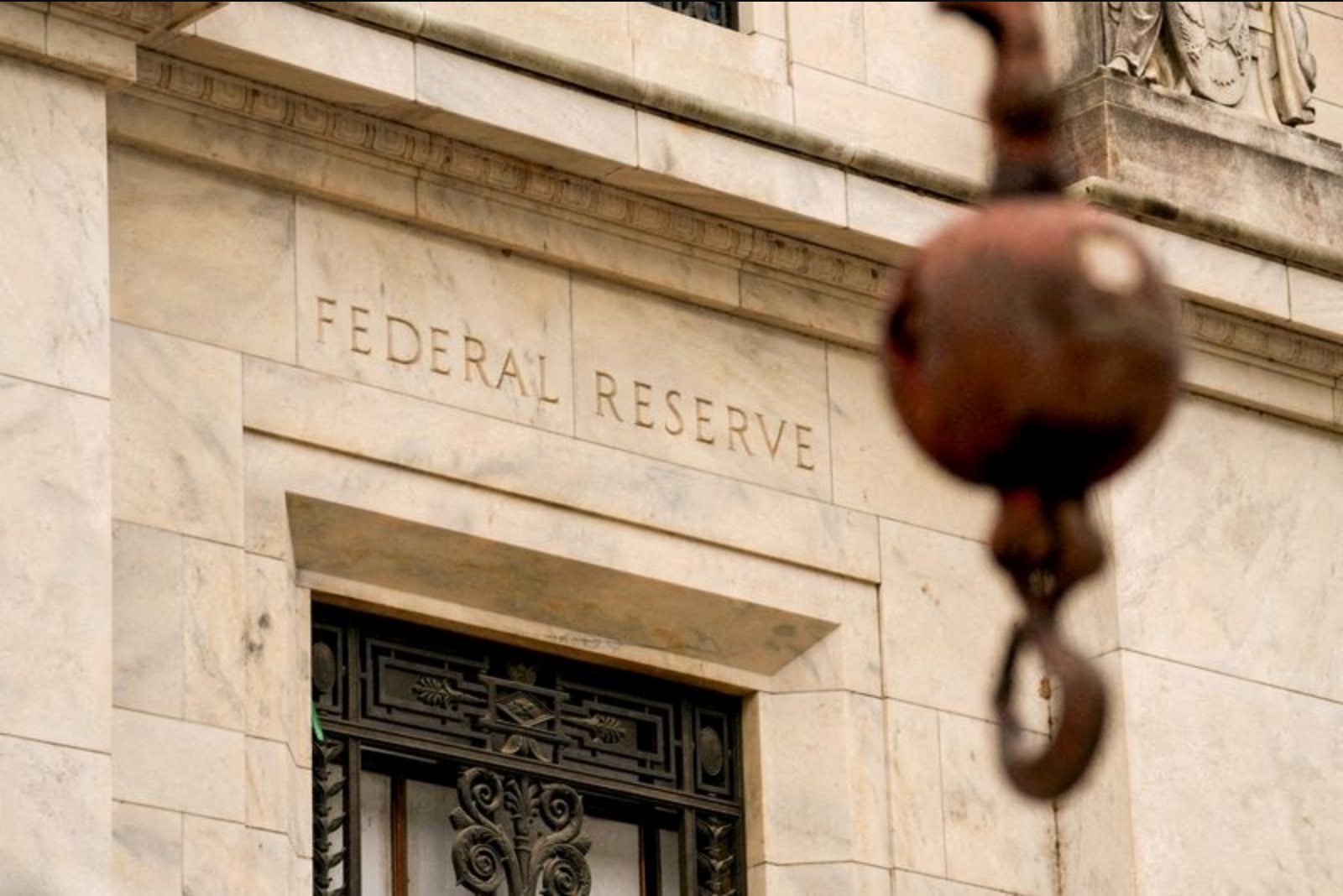
WASHINGTON - The Federal Reserve is not widely expected to raise interest rates at the conclusion of its two-day policy meeting on Wednesday, yet higher oil prices and renewed geopolitical strain have pushed the possibility back into the conversation. The Federal Open Market Committee (FOMC) is essentially certain to keep the policy rate in the 3.50%-3.75% range when it issues its post-meeting statement at 2 p.m. EDT (1800 GMT) on Wednesday.
Despite the anticipated hold, market participants and some economists say the Fed could still leave open the option of a future rate increase. That view has gained traction since the U.S. and Israel launched an aerial assault on Tehran on February 28, an event tied to a roughly 50% surge in crude oil prices and a sharp rise in U.S. gasoline costs. The conflict has been linked in commentary to disruptions that amount to around a fifth of global oil trade being halted.
Economists at BNP Paribas last week highlighted the risk, saying they saw a "significant, underappreciated tail risk that the FOMC moves toward a 'symmetric policy bias,' i.e., either a rate hike or a cut is roughly equally likely to follow." Deutsche Bank economists asked the pointed question: "Could the Fed hike rates in 2026?"
Policymakers have two principal means of telegraphing such an openness to a rate hike. The most direct, though judged less probable, would be a group decision reflected in the policy statement itself, explicitly recasting language so that a future increase appears as likely as a decrease. A more likely channel is through the Fed's quarterly economic projections, also scheduled for release at 2 p.m., where one or more policymakers could record forecasts that imply a possible rate rise later this year or next.
Any indication of an increased tolerance for higher rates would likely draw criticism from President Donald Trump, who continues to press Fed Chair Jerome Powell to cut borrowing costs. The president has nominated former Fed Governor Kevin Warsh, whom he regards as favorable to rate reductions, to replace Powell when the chair's term ends in mid-May, though there are acknowledged obstacles to Warsh's confirmation.
Inflation, as measured by the Fed's preferred gauge, has remained above the central bank's 2% target for five years. That persistence had already led several U.S. central bankers to want the option of a hike on the table prior to the recent spike in energy prices. With crude rising sharply and gasoline costs climbing, financial markets have shifted to price in higher rates from monetary authorities in energy-importing regions of Europe and Asia.
In the United States, traders have pared back expectations for near-term Fed cuts. Wall Street firms in recent days have revised away forecasts for a rate cut by June and now generally anticipate the Fed holding rates for longer than previously thought.
WATCHING FOR A STAGFLATIONARY LEAN IN NEW FORECASTS
One modest adjustment the Fed could make in its post-meeting language would be to alter a reference that has appeared since the central bank began a sequence of three reductions last September. Removing or modifying the reference to "additional" rate cuts would be a subtle way to reflect increased uncertainty about the next policy move.
Still, most analysts judge it unlikely that the recent rise in oil will penetrate the U.S. economy deeply or quickly enough to reverse an anticipated downward trend in inflation later this year as the effects of last year’s tariff shock fade. That view makes a rate increase this year a doubtful prospect and reduces the likelihood that Fed officials will collectively open the door to a hike this week.
BNP Paribas economists said their base case remains that policymakers will postpone changing the statement, citing a U.S. labor market that "does not seem to be overheating" and noting uncertainty over the war's duration, severity and economic impact.
Central bankers typically resist responding to potentially transitory commodity price spikes. At the same time, they are watching labor market dynamics closely after an unexpected net decline in employment last month. Higher fuel costs could also weigh on household budgets, leading consumers to reduce other forms of spending, which in turn could slow economic activity.
For these reasons, many analysts still expect the majority of Fed participants to project at least one interest-rate cut during the year. Fed Governor Stephen Miran is expected to dissent at Wednesday's meeting, reportedly favoring an immediate cut rather than waiting.
A separate survey conducted by John Hilsenrath, a Duke University visiting scholar and former Wall Street Journal reporter, canvassed former Fed officials and staff. Of 27 respondents, 13 said the Fed should hold rates steady all year, six recommended raising rates, and eight favored cutting them.
Policymakers are expected to show higher inflation in their projections for the year than they did in December, when they last published forecasts, while simultaneously penciling in higher unemployment and slower growth. That combination - higher inflation alongside weaker growth - is what Chicago Fed President Austan Goolsbee has described as leaning in a "stagflationary direction." It underscores a deepening split within the Fed over which problem - inflation or labor-market weakness - will demand action first.
The Fed's so-called "dot plot," which aggregates individual participants' projections for the policy rate, may expose the extent of that division. It could include one or more dots implying a higher year-end policy rate. "Those dissenting in favor of rate cuts will pencil in more cuts for the rest of the year, while we could see some of the more hawkish participants in the meeting pencil in a rate hike," KPMG economist Diane Swonk said. "Tension between the Fed's dual mandate of fostering price stability and full employment will be reflected in participant rate projections."
Summary
The FOMC is expected to maintain the federal funds rate at 3.50%-3.75% at its Wednesday meeting. Recent crude oil price gains tied to the Iran conflict have elevated inflation risks, prompting some economists to warn that the Fed could adopt a "symmetric policy bias" that keeps both hikes and cuts on the table. Official projections and the dot plot could reveal divisions among policymakers, even as most market participants still expect eventual rate cuts rather than increases.
Key points
- FOMC likely to hold the policy rate at 3.50%-3.75% at the close of the two-day meeting.
- Surging oil prices and the Iran conflict have increased the chance that policymakers will signal a willingness to consider hikes as well as cuts, potentially through changes in the policy statement or in quarterly projections.
- Financial markets have reduced near-term bets on Fed cuts; forecasts for higher inflation this year are expected to be balanced against projections for slower growth and higher unemployment, raising concerns of a stagflationary mix.
Risks and uncertainties
- Persistently higher oil and gasoline prices could feed into broader inflation, influencing monetary policy decisions - this affects the energy sector, consumer spending, and inflation-sensitive financial markets.
- Ongoing geopolitical uncertainty related to the Iran conflict creates ambiguity around the duration and economic impact of the energy shock, complicating forecasts for growth and inflation - this impacts energy markets and sectors sensitive to interest rates.
- Internal division among Fed officials over whether inflation or labor-market weakness requires priority action could produce volatile market reactions to official projections, especially in interest-rate-sensitive asset classes.
Tags: inflation, Fed, oil, policy, rates