
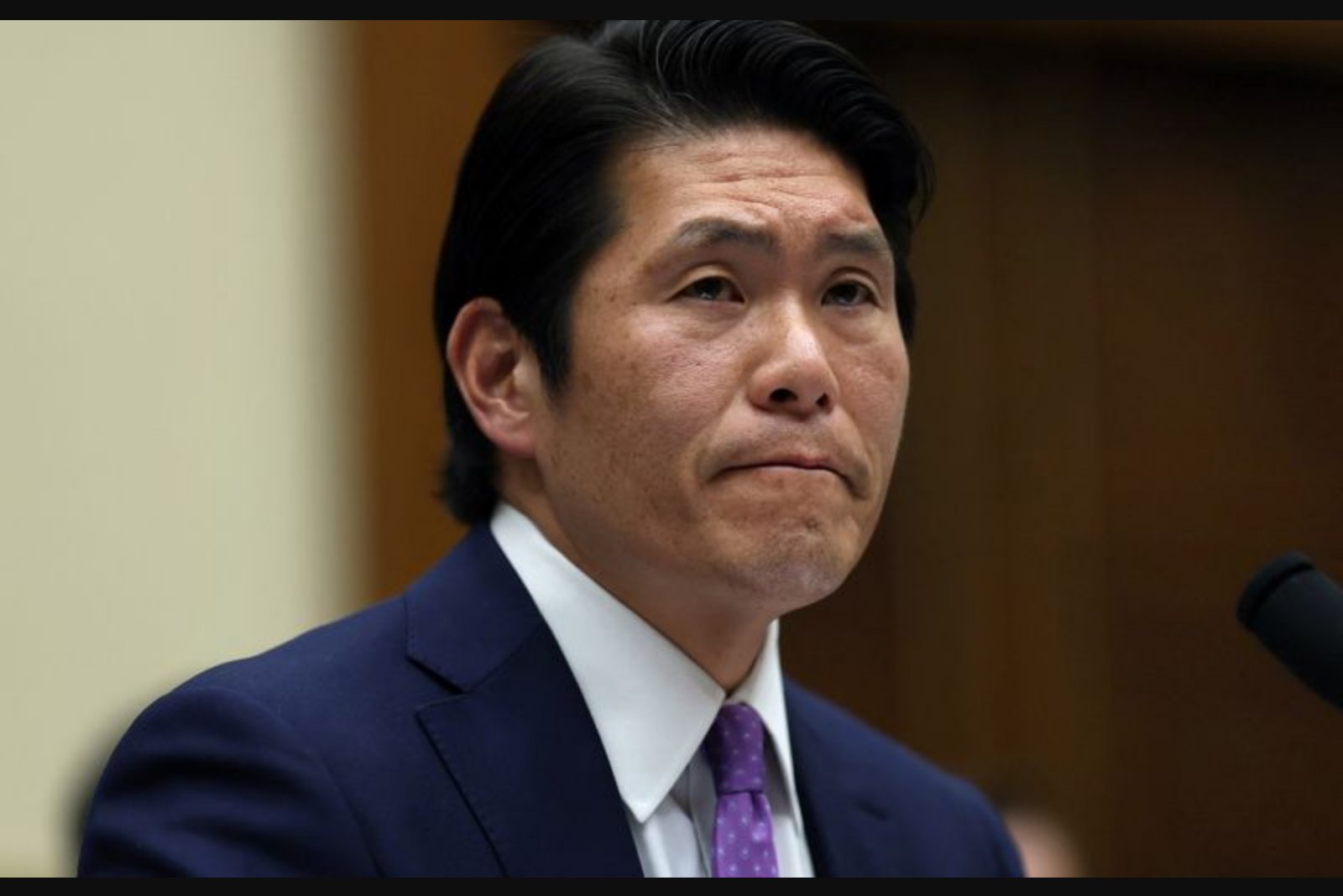
The Federal Reserve Board has retained Robert Hur, a former prosecutor who served as special counsel during President Joe Biden's administration, in its legal battle with the U.S. Justice Department over subpoenas seeking records related to Federal Reserve Chair Jerome Powell, court filings made public on Friday show.
The subpoenas were issued as part of a criminal inquiry into Powell's involvement with a project to renovate historic buildings at the Federal Reserve's Washington headquarters. The Justice Department sought documents about the renovations as well as materials connected to Powell's July 2025 testimony before the Senate Banking Committee.
In filings unsealed on Friday, Chief U.S. District Judge James Boasberg granted the Fed's motion to quash the subpoenas. The judge wrote that the government "offered no evidence whatsoever that Powell committed any crime other than displeasing the President," and said there is a "mountain of evidence" suggesting the investigation aimed to pressure Powell to lower interest rates or to prompt his resignation.
The court papers indicate the Federal Reserve Board turned to Hur for help in the dispute. Hur is a conservative attorney who was appointed special counsel during Biden's presidency to examine classified documents found in Biden's home and office. He chose not to bring charges in that matter but attracted criticism from Democrats for describing Biden as an "elderly man with a poor memory."
Hur was named Maryland's top federal prosecutor during former President Donald Trump's first administration. He is now a partner at the law firm King & Spalding. Jeffrey Bucholtz, another partner at King & Spalding who has represented the Federal Reserve Board in prior litigation, is also listed as part of the legal team in the subpoena case.
Hur and Bucholtz did not immediately respond to requests for comment. A spokesperson for the Federal Reserve's Board of Governors declined to comment on the filings.
The Justice Department's investigation is being led by Washington, D.C., U.S. Attorney Jeanine Pirro, whose office said it would appeal the court's decision. The filings show the Fed's Board of Governors moved on Feb. 24 to quash the subpoenas, arguing that their purpose was to "aid the president's quest to seize for himself a power specifically denied to him by federal law."
Powell, who is represented by attorneys from the law firm Williams & Connolly, disclosed in January that the Justice Department was probing the renovations project. Powell has characterized the investigation as a pretext. Separately, Republican President Donald Trump has publicly pressured the Federal Reserve to cut interest rates and has criticized Powell for not doing so more quickly.
The filings also note that Hur and King & Spalding represent Harvard University in separate litigation against the Trump administration concerning the school's federal funding and its enrollment of foreign students.
The court's ruling to block the subpoenas leaves unresolved whether the Justice Department will succeed on appeal. Jeanine Pirro's office has indicated it will challenge the decision, setting up further litigation in a contentious dispute that touches on the independence of the central bank, the scope of criminal investigations involving senior public officials, and the interplay between political pressure and law enforcement actions.
Contextual note: The unsealed filings and court decision detail the legal positions taken by both the Federal Reserve Board and the Justice Department, describe the personnel involved, and include language from Judge Boasberg questioning the basis for the subpoenas. The documentation also records the Fed's contention that the subpoenas were improperly aimed at advancing a president's political objectives.