
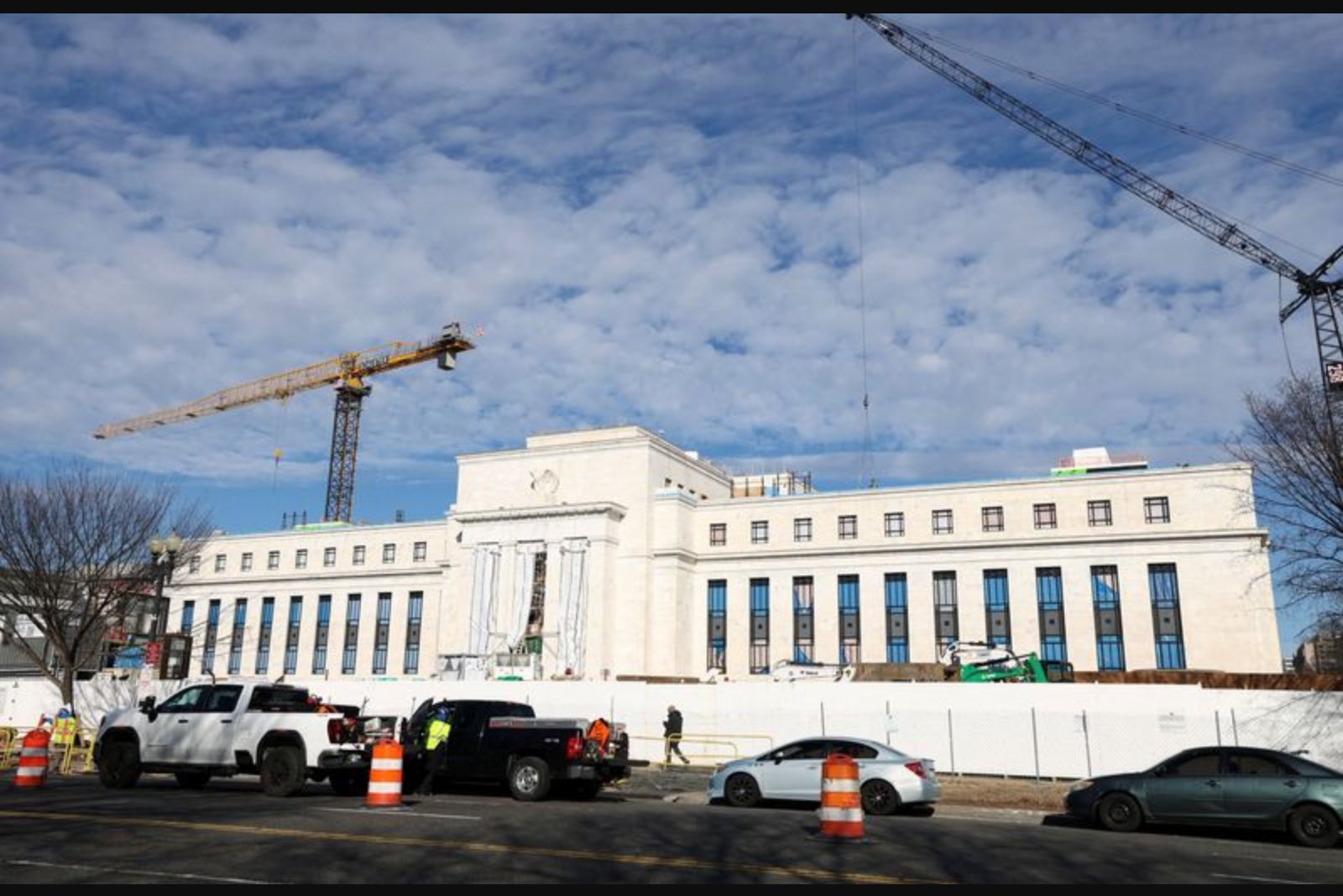
Fed policymakers are expected to maintain the current short-term interest rate target at their March 17-18 meeting, just as they did at the January meeting. Public statements and speeches from the Fed’s governors and regional bank presidents over recent weeks show a range of views on the appropriate path for monetary policy. Market participants and observers typically shorthand those views as "dovish" - more focused on downside risks to employment and therefore quicker to favor rate cuts - or "hawkish" - more focused on inflation risks and therefore more cautious about easing policy.
This piece groups recent, attributable comments under those broad labels and summarizes procedural facts about Fed governance that bear on how those views translate into policy decisions. The designations here are drawn from the officials' public comments and published remarks.
A spectrum of views in recent comments
Several officials have given public remarks that reflect confidence in recent labor-market data and a willingness to hold policy steady to assess incoming information. Others have urged caution, stressing that upside inflation risks or uncertainty over the durability of recent disinflation justify a more deliberate approach before signaling cuts.
Not all officials have spoken at length on monetary policy in the recent period. For example, the Boston Fed president has had no public remarks on monetary policy since December 15, 2025, according to the officials' public record.
Among explicitly recorded recent comments:
- Alberto Musalem, President of the St. Louis Fed (2028 voting eligibility): Musalem said, "You could have a risk of the labor market to deteriorate further; it’s not my base case, but I think it could happen…there is a possibility that inflation could stay higher than we would all like it to be for longer ... these two risks in my assessment are roughly balanced right now." That remark was recorded on February 25, 2026.
- Michael Barr, a Fed governor (voter in 2027): Barr noted that he has not made public comments on sustained monetary policy since October 9, 2025, and emphasized that recent inflation readings matter: "Today’s inflation numbers, regardless of the 'why,' significantly influence tomorrow’s inflation." That comment was recorded on February 3, 2026.
- Susan Collins, President of the Boston Fed (2028 voting eligibility): No public remarks on monetary policy have been recorded from her since December 15, 2025.
Other governors and regional presidents have also spoken publicly during the review period. Some of those remarks have been cited as signaling greater tolerance for holding policy in place while labor-market resilience persists; others have been taken as emphasizing the need to remain attentive to inflation and to avoid prematurely easing policy.
Policy context and governance
The current target range for the policy rate stands at 3.50%-3.75%. In December, the median of Fed policymakers’ projections showed an expectation for one quarter-percentage-point cut by the end of 2026. Those projections reflect the collective outlook published at that time, not a binding decision.
The Fed’s governance structure shapes how these views are aggregated into policy action. The Board of Governors comprises seven members, including the chair and vice chairs; they are nominated by the president and confirmed by the Senate. Each governor votes at every Federal Open Market Committee meeting, which are held eight times a year.
In addition to the Board, all 12 regional Federal Reserve Bank presidents participate in discussion and debate at FOMC meetings, but only five regional presidents cast votes at any given meeting. Those five include the New York Fed president plus four others who are selected on a rotating one-year schedule. Regional presidents are chosen by the boards of their regional banks, subject to confirmation by the Fed’s board.
Appointments, nominations and political notes recorded in the public record
- The record lists which governors and presidents were nominated by which president. A number of sitting governors and presidents were originally nominated by President Trump, while others were nominated by President Biden, and one governor was initially nominated by President Obama and later renominated. The public record notes that the president has indicated plans to nominate a successor for the Fed chair when the incumbent’s chair term ends in mid-May.
- The public record also notes specific personnel developments that have political dimensions, including that some governors were nominated by President Biden and that the president has attempted to remove certain governors. The record notes that the president plans to nominate former Fed Governor Kevin Warsh to succeed the current Fed chair when the chair term ends in mid-May.
Historical snapshot - policymakers by tilt
Public remarks have been used to place policymakers into rough categories - "dove," "dovish," "centrist," "hawkish," and "hawk" - depending on whether their commentary emphasizes labor-market risks and a quicker path to cuts, or inflation risks and caution on cuts. A running historical count of how many officials fall into each category, heading into successive meetings, illustrates that the distribution has shifted over time.
Below is a count of policymakers in each category, heading into Fed meetings (as recorded in the public dataset):

FOMC   Dove  Dovish  Centrist  Hawkish  Hawk   Date
March   3     2       4         6        3     '26
Jan.    3     2       5         6        3     '26
Dec.    3     1       6         6        3     '25
Oct.    3     2       9         4        1     '25
Sept.   2     3       8         5        0     '25
July    1     3       8         7        0     '25
Jan.-   0     3       9         7        0     June '25
Dec.    0     2       10        7        0     '24
Nov.    0     0       13        5        0     '24
Sept.   0     1       12        5        0     '24
May     0     1       10        6        1     through July '24
March   0     1       11        5        1     '24
Jan.    0     2       9         4        1     '24
Dec.    0     2       9         4        1     '23
Oct./   0     2       7         5        2     Nov. '23
Sept.   0     4       3         6        3     '23
June    0     3       3         8        3     '23
March   0     2       3         10       2     '23
Dec.    0     4       1         12       2     '22
That sequence shows how the balance of public remarks has evolved over a multi-year span. The most recent entries heading into the March meeting show a mixture of centrist and hawkish voices alongside a smaller set identified as dovish or dove.
What to watch next
Market participants and observers will be watching the March meeting for three things that are directly signaled by public comments and institutional details:
- Whether the committee again elects to hold the policy rate target steady at 3.50%-3.75% - a path widely expected heading into the meeting.
- Any shifts in language about the balance of risks to inflation versus employment - comments that could either accelerate or delay the timing of expected rate cuts.
- The evolution of the mix of views among voting members - including not only governors but the five regional presidents who will vote in 2026 - because the rotation of regional voters affects the committee's effective majority on any given decision.
Those watching markets should note that publicly available comments by Fed officials are the primary input used here to classify their policy leanings. Where officials have not commented publicly in the most recent period, that absence is recorded as such.
Concluding observation
As the Fed approaches its mid-March meeting, its public record shows a palette of views. Some officials express enough confidence in recent labor-market readings to favor holding policy in place and waiting for evidence of a sustained easing in inflation. Others point to the possibility that inflationary pressures could be more persistent and to risks that the labor market could deteriorate, arguing for continued vigilance and caution about the timing of cuts. The committee’s final decision will reflect how these competing assessments are weighed at the meeting and by the rotating set of voters who cast ballots on policy.