
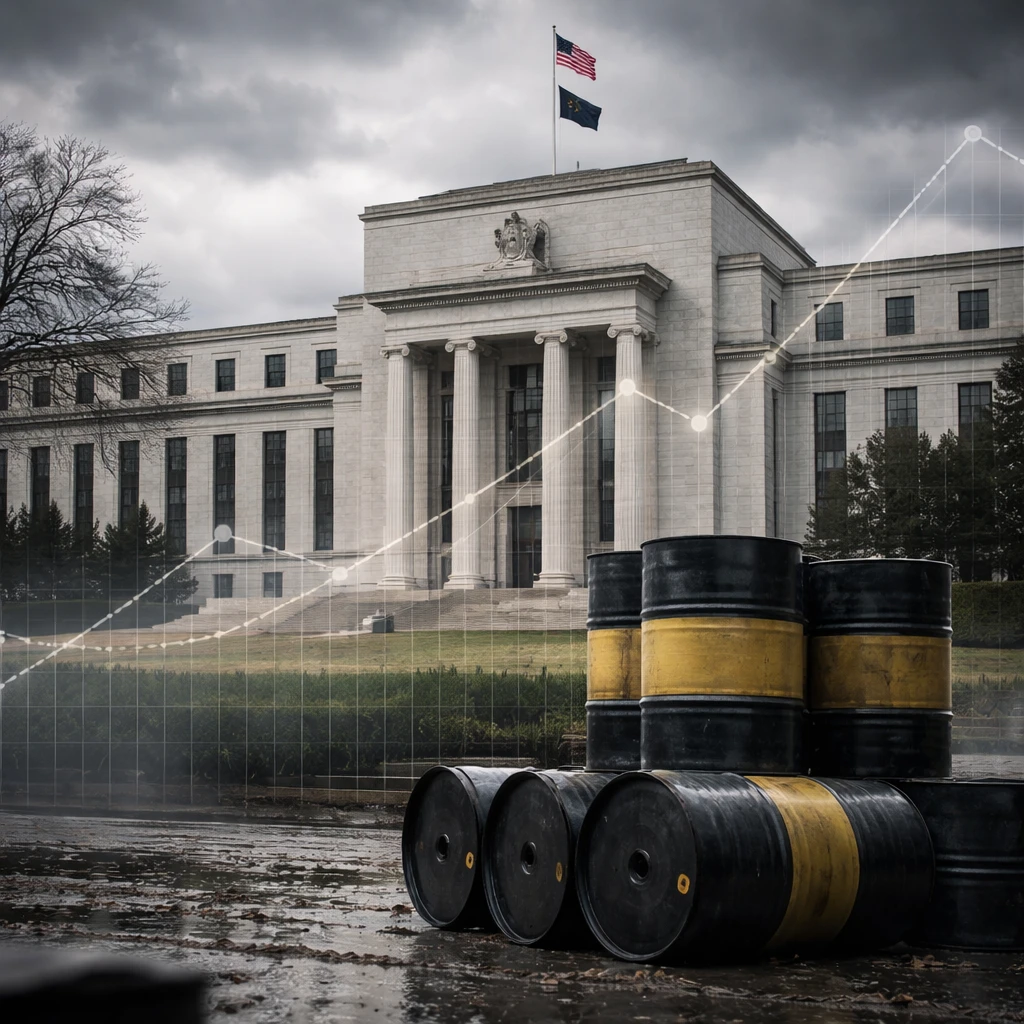
One member of the Federal Reserve's policy cadre now expects an interest rate increase next year, altering a long-standing pattern among officials and marking the first time in two-and-a-half years that any Fed official has penciled in a hike. The change appears alongside concerns tied to the Iran war and a near-term rise in oil prices, which have entered a third week.
The Fed left its target range for the federal funds rate unchanged on Wednesday at 3.5% to 3.75%. Despite the single projection for a hike, the majority of the central bank's policymakers continue to forecast the next move will be a rate cut this year, a stance consistent with their outlook published in December.
Looking further ahead to 2026, the distribution of views among the Fed's 19 policymakers remains mixed. Seven officials expect rates to be unchanged by the end of 2026. Another seven foresee one quarter-point cut as necessary this year, while the remaining five project at least two cuts will be required. These projections reflect a range of judgments about the path of policy over the medium term.
The Fed's forecasts also show a more pessimistic view on inflation compared with December. The personal consumption expenditures price index is now projected to reach 2.7% at year-end, up from the 2.4% estimate published in December. The central bank's 2% inflation target remains unchanged. Core PCE - which strips out volatile oil and food components - is likewise projected at 2.7%, compared with a prior forecast of 2.5%.
Fed Governor Stephen Miran dissented from Wednesday's decision to keep rates steady and was identified in the projections as the system's most dovish policymaker. Even so, Miran's outlook was scaled back: he now anticipates one percentage point of rate cuts this year, down from the 1.5 percentage points he projected in December.
On labor and growth metrics, the unemployment rate is forecast at 4.4% by year-end, a number that matches both the December projection and the actual February reading. Gross domestic product growth is seen at 2.4% for the year, a slight upward revision from the 2.3% forecast in December.
Key points
- One Fed official now projects a rate hike next year - the first such forecast in two-and-a-half years.
- The Fed kept the federal funds rate at 3.5% to 3.75%; most policymakers still expect the next move will be a cut this year.
- Inflation forecasts were raised: headline PCE and core PCE are both now projected at 2.7% by year-end.
Sectors to watch
- Energy - due to the link between the Iran conflict and higher oil prices.
- Financials - given sensitivity to interest rate expectations.
- Equities and broader markets - because changing policy forecasts can alter risk pricing.
Risks and uncertainties
- Geopolitical risk: Continued escalation in the Iran war and persistent higher oil prices could alter inflation and policy calculations - this primarily affects energy markets and inflation-sensitive sectors.
- Policy divergence: A split among Fed officials on whether to hike or cut introduces uncertainty for financial markets and institutions pricing interest rate risk.
- Inflation trajectory: Upward revisions to both headline and core PCE add uncertainty to the outlook for monetary policy and real returns across asset classes.