
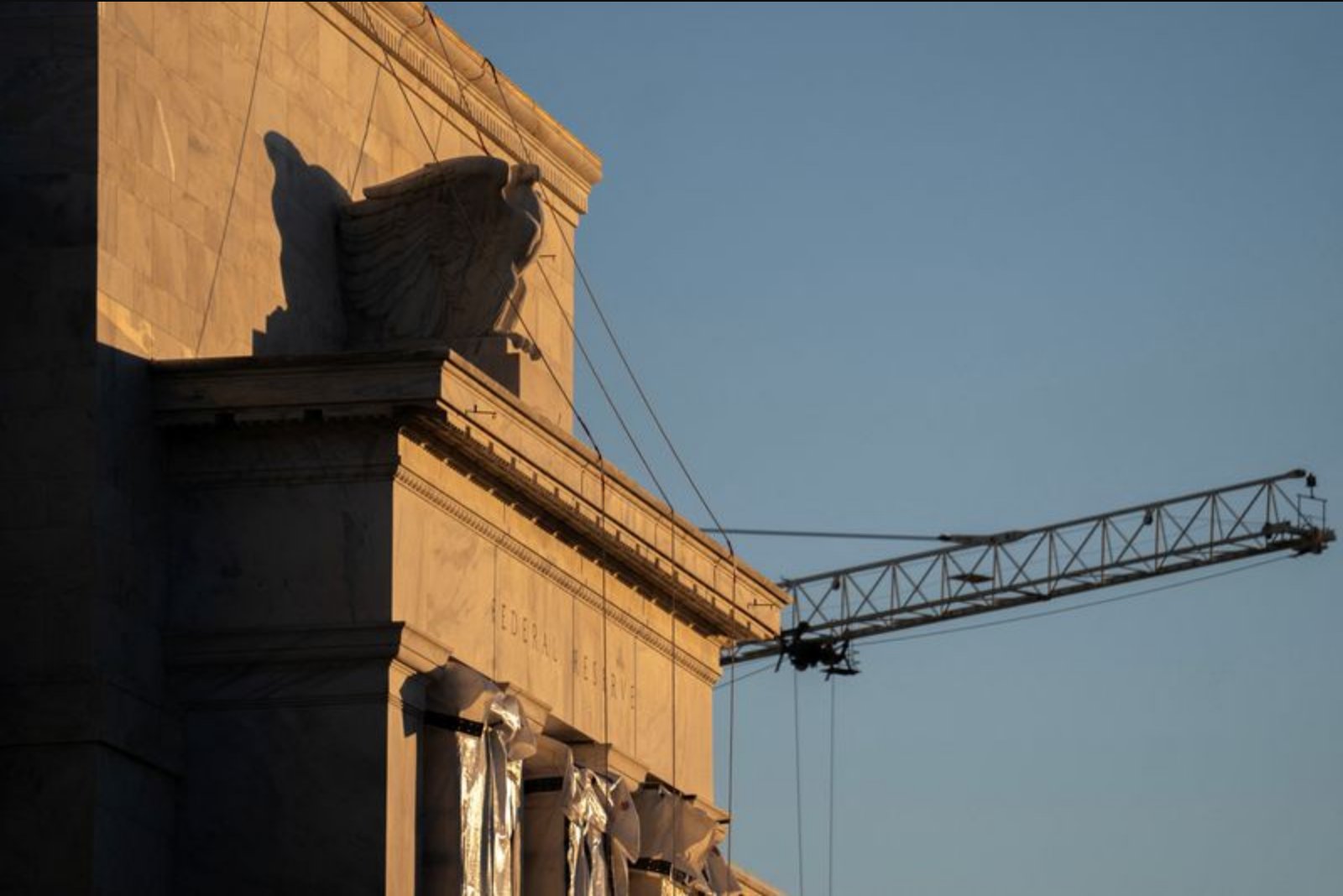
The Federal Reserve is expected to name Randall Guynn as its next director of supervision and regulation, according to people familiar with the decision. If confirmed by the Fed's board of governors, Guynn - a veteran banking lawyer who spent decades at Davis Polk & Wardwell LLP - would take the helm of the central bank unit charged with overseeing the largest and most complex U.S. financial institutions.
Guynn would step into the role after Michael Gibson, who announced his retirement in July after more than three decades at the central bank, left the post. Since May 2025, Guynn has been serving as an advisor to Fed Governor and Vice Chair for Supervision Michelle Bowman - the Republican President Donald Trump’s pick to lead the Fed's regulatory agenda - and he is expected to continue reporting to Bowman if the appointment is finalized.
The proposed appointment remains subject to a private vote by the Fed's seven-member board of governors. Sources said the timing of that vote was not clear.
If the Fed proceeds with Guynn's selection, it would mark a break from a longstanding pattern: since at least 1977 the position has typically been filled by long-serving career staff from within the Federal Reserve system. Guynn's background is primarily in private practice rather than long-term Fed service.
Guynn's legal career centers on banking regulation. He joined Davis Polk in 1986 and led the firm's Financial Institutions Group. His bio at the firm notes work for a range of banks and other financial institutions, including the eight largest U.S. lenders and several industry trade associations, advising them on regulatory proposals and related matters.
Across a number of high-profile episodes, Guynn has worked alongside public-sector and private-sector actors. During the 2008 financial crisis, he advised the Federal Reserve Bank of New York on its intervention related to American International Group and assisted Freddie Mac with aspects of its government conservatorship. More recently, during the 2023 banking turmoil, he helped guide large banks on a $30 billion rescue liquidity injection for First Republic Bank and advised JPMorgan when the bank later acquired First Republic following its collapse.
Guynn has also publicly critiqued certain Fed policy choices. In 2024 congressional testimony he questioned the Federal Reserve's effort to raise bank capital requirements, saying the Fed had not provided sufficient data to justify the change. He stated that banks should be subject to robust capital standards, but argued that such requirements should be tailored to institutions' size and risk profiles.
Bowman has brought Guynn into her office to help implement an ambitious program to reshape the Fed's regulatory framework and supervision practices that were introduced after the 2008 financial crisis. Bowman has argued that some post-crisis rules and supervisory practices have become overly burdensome and are weighing on economic growth, while also asserting that her objective is to sharpen oversight rather than loosen it.
As part of the restructuring, Bowman has announced plans to reduce the supervision and regulation division's headcount by roughly 30 percent to about 350 staff. The Fed plans to achieve most of the cuts through natural attrition, retirements and voluntary departures. Michael Gibson himself accepted a voluntary buyout as part of those changes.
The supervision and regulation division exercises broad authority over bank rules and examinations for the nation’s largest, most complex firms. Guynn's appointment would place him squarely in charge of that regulatory apparatus at a moment when Bowman is pursuing significant organizational and policy revisions.
Guynn's move from private practice into a senior Fed role raises questions about potential conflicts of interest and recusals. Other Wall Street lawyers who have taken government regulatory positions have recused themselves from matters involving firms they previously represented. Bowman’s Republican predecessor, Randal Quarles, recused himself from matters related to Wells Fargo because of prior financial interests he and his family had held in the bank.
A Fed spokesperson said that since joining the Federal Reserve last May, Guynn has recused himself from any matters involving specific firms for which he did legal work in the preceding year. The spokesperson declined to provide additional comment.
Observers inside and outside the institution will be watching how Guynn balances his private-sector background with the demands of overseeing a supervision infrastructure in the midst of an organizational downsizing and a policy review. The role requires setting rules and conducting examinations for the industry’s largest banks at a time when the Fed's regulatory approach is under active reconsideration.
Summary
Randall Guynn, a longtime Davis Polk banking lawyer who has been advising Fed Vice Chair for Supervision Michelle Bowman since May 2025, is expected to be named director of supervision and regulation at the Federal Reserve. The appointment would replace Michael Gibson and must be confirmed by a vote of the Fed's seven governors. Guynn would lead a division undergoing significant restructuring and a planned roughly 30 percent headcount cut to about 350 people. He has a long track record representing major banks and has previously been involved in crisis interventions and high-profile regulatory debates.
Key points
- Randall Guynn is expected to be named director of supervision and regulation and would report to Vice Chair Michelle Bowman, keeping his advisory relationship intact in the new role.
- Guynn's appointment departs from a decades-long practice of filling the job with long-serving Federal Reserve career staff - a pattern dating back at least to 1977.
- Bowman's planned overhaul of the supervision division includes reducing headcount roughly 30 percent to around 350 staff, mainly through natural attrition, retirements and voluntary redundancies.
Risks and uncertainties
- Conflict of interest and recusal concerns - Guynn's extensive private-sector legal work for major banks raises potential recusal issues; the Fed has said he has recused himself from matters involving firms he worked for in the last year.
- Governance and confirmation timing - the appointment remains subject to a private vote by the Fed's seven governors, and the timing of that vote was not disclosed, creating near-term uncertainty about when Guynn would formally assume the role.
- Operational disruption during restructuring - the planned roughly 30 percent reduction in supervision staff could affect the division's capacity and workload allocation while it implements new supervisory and rulemaking priorities.
Tags
- FederalReserve
- Regulation
- Banking
- Supervision
- Finance