
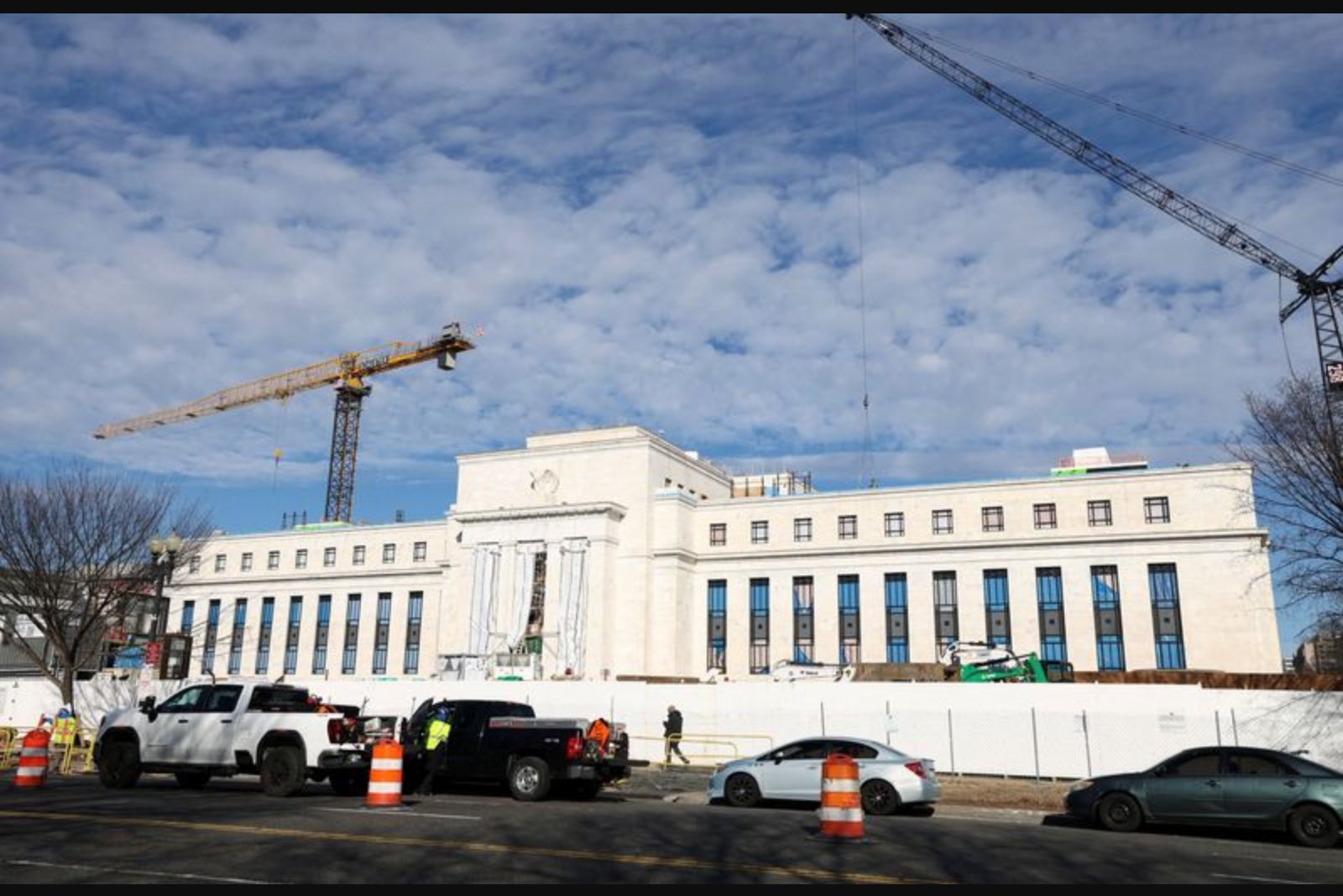
After reducing interest rates by three-quarters of a percentage point in 2025, Federal Reserve policymakers left the policy rate unchanged in January, pointing to a labour market that appears to be stabilizing and inflation that remains somewhat above the central bank's 2% goal. Public comments from Fed officials in recent weeks show a clear split in emphasis: some prioritize risks to employment and lean toward faster easing, while others are focused on inflation and prefer a more guarded approach to cuts.
For clarity, the shorthand labels used here - dove and hawk - capture those diverging priorities. A dove is an official who places greater weight on downside risks to the labour market and may favour more prompt rate reductions. A hawk is someone more focused on the risk of higher inflation and likely to be more cautious about loosening policy.
Designations below are based on officials' public comments and speeches. The account that follows presents those comments grouped by the broader policy leanings they reflect, retaining the exact phrasing and dates of officials' recorded remarks where those were provided.
Doves and Dovish Centrists
The dovish camp includes officials who have stressed downside risks to employment and have indicated a preference for earlier or larger cuts than colleagues who emphasize inflation risks. Among the remarks attributed to officials in this category are comments that highlight concerns about the labour market and express openness to additional easing.
- One set of remarks reads: "There is a lot of upside on inflation and the pipeline risks to growth since Jan uary 14, 2026. t have and I assess that a diminishe think the substanti d. But that impact of al they given recent deteriora still where the rate tion in exist ... labor reduction the labor We think market s and market is our is, where monitor a policy is inflation how the significa in a good is, this economy nt risk." (January 30, 2026; January 28, 2026)
- Another recorded comment in this cluster states: "I’d ble doubt remarks about on inflation into the err on the side of patience and (it) suggests a diminishe impact of employment and I assess that a substanti al they given recent deterioration in the labor market" (February 10, 2026; February 4, 2026).
- Additional public lines attributed to officials in the dovish grouping include: "sit back and wait to see what happens." (February 4, 2026).
These quotations reflect officials who have publicly emphasized monitoring employment developments and have signalled a willingness to let recent easing take effect before committing to further reductions.
Centrist and Mixed-Signal Officials
A number of policymakers have offered comments that sit between the dovish and hawkish poles, acknowledging both persistent inflationary pressures and the importance of the labour market. Their remarks frequently highlight the need for careful evaluation of incoming data.
- One statement captured in the centrist category says: "Right now, I am worried about inflation remaining stubbornly high." (January 14, 2026).
- Other officials in this group observed: "I think we need to be more supportive of monetary policy now, I am worried about labour market stress." (February 12, 2026; February 10, 2026).
- Another recorded centrist comment reads: "I thought on January 14, 2026. frankly, since January 12, 2026, I see going signs... you could make a case for some taking a little more off." (February 9, 2026).
These centrist remarks illustrate officials who are weighing both sides of the policy trade-off and are responsive to recent data while not committing to a single course of action.
Hawks and Hawkish Centrists
Officials classified as hawks or hawkish centrists have underscored risks that inflation could remain elevated and have tended to advocate for prudence in moving to ease policy. Their public comments emphasize the continued need to watch inflation closely and to avoid premature loosening.
- One voice recorded in this grouping said: "We put a lot of downside risks to employment and the pipeline on inflation into the future monetary policy considerations. I’d prefer to err on the side of caution." (February 10, 2026).
- Another hawkish line notes: "Further rate cuts should not imply the policy is for an extended period of time to hold approximately steady throughout this year." (January 30, 2026; February 6, 2026).
- Additional comments included: "With inflation above target and the risks to the outlook evenly balanced, I believe it would be unadvisable to lower the rate into accommodative territory at this time." (January 30, 2026).
These comments reflect caution about moving the policy rate into what some officials regard as accommodative territory while inflation remains above target.
Selected individual remarks and status notes
Several officials and their recent public remarks or status updates were recorded as follows. The text below preserves the original phrasing and dates provided:
- "I think interest rates was lower on monetary policy since January 14, 2026." (Public remarks on January 14, 2026).
- "Seeing signs... ahead and of taking a little more off." (February 10, 2026; February 9, 2026).
- "In this dynamic market, we also not allow the policy downside since inflation expect to persist the unemployment rate remain, 2026." (January 11, 2026; February 6, 2026).
- "I take this monetary policy miss since October 9, 2025. Today's inflation numbers, regardless of the 'why,' significantly influence tomorrow's inflation." (February 3, 2026).
- No public remarks on monetary policy since December 15, 2025 were recorded for one official. (Date: December 15, 2025).
- "This is the time to be patient." (February 6, 2026). This line was recorded for a non-voting regional president who is retiring in February 2026.
Some entries noted voting status and terms. The current policy rate target range is recorded as 3.50% - 3.75%.
Projections, governance and voting mechanics
Policymakers' projections from December showed a median expectation for a one quarter-percentage-point cut by the end of 2026. Among the 19 participants at that time, four wanted exactly that outcome, seven saw less easing as appropriate, and eight favoured more easing. The composition and appointment process for the Fed's governance structure was also noted.
- The Fed's seven governors, including the central bank chief and vice chairs, are nominated by the president and confirmed by the Senate. Each of those seven votes at every Federal Open Market Committee meeting, which are held eight times a year.
- All 12 regional Fed presidents take part in discussions and debates at the meetings, but only five cast votes at any given time - always including the New York Fed president and four others who rotate one year at a time.
- Regional bank presidents are chosen by the directors of their own regional banks, subject to approval by the Fed's board.
The account of officials' leanings also recorded political nomination backgrounds for several policymakers: Miran, Waller and Bowman are identified as nominees of former President Trump. Barr, Jefferson and Cook were nominated by former President Joe Biden and one of those officials has been noted as a target of an attempt to remove them from office. Powell's trajectory was recorded as initially nominated to the Fed's Board of Governors by former President Barack Obama, elevated to the chair by former President Trump in his first term, and later renominated to the top job by President Biden.
A rolling count of policy leanings
The following tabulation traces how the count of policymakers in each category changed over time heading into Fed meetings. The numbers are presented in the sequence provided for each date:
FOMC     Dove Dovis Centr Hawki Hawk  Date
March    3    2     4     7     3    '26 Jan.
3        2    5     6     3    '26 Dec.
3        1    6     6     3    '25 Oct
3        2    9     4     1    '25 Sept
2        3    8     5     0    '25 July
1        3    8     7     0    '25 Jan.-
0        3    9     7     0    June '25 Dec.
0        2   10     7     0    '24 Nov.
0        0   13     5     0    '24 Sept
0        1   12     5     0    '24 May
0        1   10     6     1    through July '24 March
0        1   11     5     1    '24 Jan
0        2    9     4     1    '24 Dec
0        2    9     4     1    '23 Oct/Nov
0        2    7     5     2    '23 Sept
0        4    3     6     3    '23 June
0        3    3     8     3    '23 March
0        2    3    10     2    '23 Dec
0        4    1    12     2    '22
These counts reflect shifts in public statements and evolving circumstances that have influenced how officials are classified for the purposes of this tally.
What this means going forward
Officials' division in emphasis - between those prioritizing labour market risks and those prioritizing inflation risks - leaves the Fed's path conditional on incoming economic data. The policy rate currently sits in a 3.50% - 3.75% range, and December projections show that the median view among policymakers called for a modest cut by the end of 2026, although individual views ranged from less easing to more easing. Policymakers' nomination histories and the Fed's voting mechanics remain relevant context for how decisions will be made in coming meetings.