
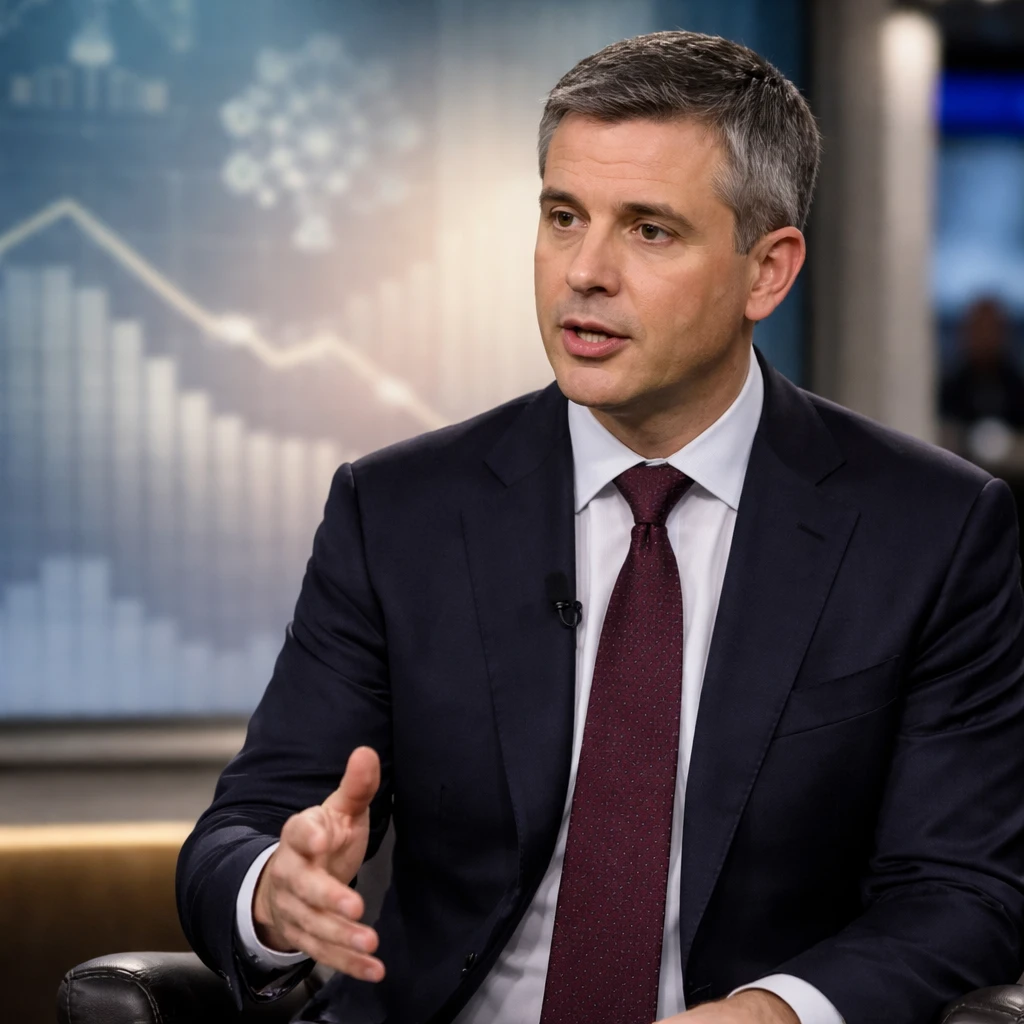
Federal Reserve Governor Stephen Miran said in a television interview that the central bank will need to trim interest rates by roughly one percentage point in 2026, citing what he described as stable price behavior and the influence of new technology on inflation dynamics.
Speaking on Fox Business Network, Miran said current price readings "appear stable" and described artificial intelligence as "profoundly disinflationary." He presented those observations as part of the rationale for a meaningful easing of policy next year.
On labor market conditions, Miran urged caution. He said it is still premature to declare an all-clear on employment, indicating that labor dynamics remain a factor the Fed will watch closely before making further judgments about policy normalization.
Miran also addressed the effects of regulation on the banking system. He argued that overly strict oversight can harm the ability of banks to generate credit for the economy, a concern about the transmission of monetary policy and the flow of financing to households and businesses.
Turning to the growing private credit sector, Miran said the expansion does not yet present macroeconomic risks. He noted, however, that monetary policy tools are available to the Fed to offset potential negative effects, including those that could arise in the event of limits on credit card interest rates.
The comments arrive as the central bank continues to weigh its policy path amid shifting economic signals and technology-driven changes that could alter the inflation outlook. Miran's remarks highlight the interplay among price trajectories, labor market readings, regulatory stances, and alternative credit channels as officials consider the timing and scale of rate cuts.
In sum, Miran signaled an expectation for about a one percentage point reduction in policy rates in 2026 while urging vigilance on employment and cautioning that regulation and changes in credit intermediation can affect the economy's ability to extend credit.