
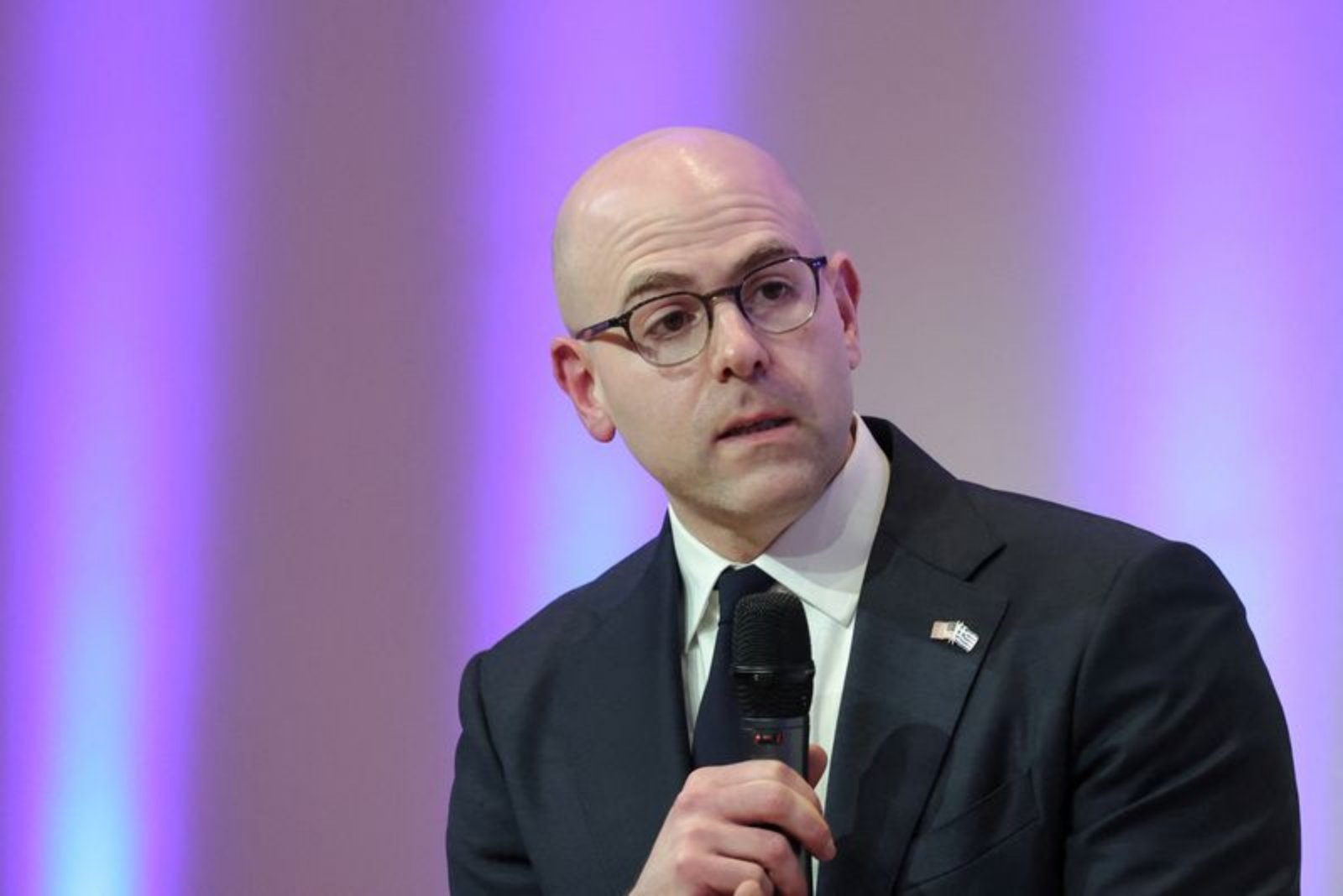
WASHINGTON, March 4 - Federal Reserve Governor Stephen Miran said on Wednesday that the inflationary and other economic risks tied to the recent U.S. military confrontations with Iran do not, in his assessment, justify pausing planned interest-rate reductions this year.
Speaking on Bloomberg TV, Miran acknowledged that higher oil prices stemming from the conflict "will feed into headline inflation, but the evidence that it feeds into core inflation ... is quite limited. ... It is difficult for me to get very excited about a policy implication of what’s happened so far," he said.
On the number and size of cuts, Miran urged a program of four quarter-point rate reductions in 2026 to move policy toward what he views as a roughly neutral rate. That stance contrasts with some of his more hawkish colleagues, who already consider the current policy rate to be at or close to neutral with the federal funds rate in a 3.5%-3.75% range.
Miran drew a distinction between the present conflict and the global shock that followed Russia’s 2022 invasion of Ukraine, noting that the earlier episode coincided with a more pronounced surge in oil and other commodity prices that helped broaden price pressures. By contrast, he said, monetary policy is now tighter and fiscal policy less expansionary, which reduces the risk that any inflationary impulse from the Iran episode will become persistent.
He also said the Fed should not lose sight of what he described as "two plus years of a trend of gradually weakening labor markets." Miran argued there remains evidence the labor market still needs support from monetary policy, citing, for example, the difficulties recent college graduates have faced in finding jobs.
The conflict's escalation over the weekend, with large-scale U.S. and Israeli strikes on Iran, has injected additional uncertainty into a policy debate already marked by divisions among officials. Inflation remains roughly 1 percentage point above the Fed's 2% target and has shown little net improvement for about a year. At the same time, job growth has slowed significantly, although policymakers differ on whether that slowdown reflects weak demand for labor or adjustments tied to tighter immigration rules that have limited available worker supply.
January payroll data surprised on the upside, with job gains stronger than expected, and market participants and officials alike are watching February employment figures for confirmation of any shift in the labor market trend. An ADP employment report from the private payroll processor recorded its largest increase in seven months, exceeding forecasts.
With the Iran conflict potentially in an early phase and U.S. officials indicating military pressure will continue until Iran’s hardline Islamist leadership is replaced, Fed officials have largely noted the new uncertainties without making immediate policy changes. Cleveland Fed President Beth Hammack, in a New York Times interview, said she was monitoring the economic consequences of the conflict but has been firm that the Fed should keep rates on hold because inflation appears stuck at a high level.
Hammack, unlike Miran, regards the current policy rate as at or near neutral and said, "We’re in a good spot from a policy perspective," adding the central bank remains positioned to respond as incoming data reveal how prices and labor market conditions evolve. "I think we could be on hold for quite some time," she added.
The Federal Reserve is scheduled to meet on March 17-18 and is widely expected to leave policy unchanged at that gathering. Market expectations for rate cuts this year have been tempered by the conflict; investors still anticipate two cuts in 2026, but the expected timing has shifted later, with an initial cut now priced more toward the July meeting rather than June.
Summary
Governor Stephen Miran told Bloomberg TV that while the Iran conflict has pushed up oil prices and headline inflation, the limited evidence of spillover into core inflation and the current tightening of monetary policy mean the Fed should proceed with planned easing. Miran recommends four quarter-point cuts this year to approach a roughly neutral policy stance, and he emphasized the need to support labor markets that he sees as gradually weakening.
Key Points
- Miran favors four quarter-point rate cuts in 2026 to reach a roughly neutral federal funds rate from the present 3.5%-3.75% range.
- He views the inflationary impact of higher oil prices from the Iran conflict as mainly limited to headline inflation with little evidence of transmission to core inflation.
- He stressed the Fed should consider two-plus years of weakening labor-market trends when setting policy, pointing to challenges for recent college graduates as an example.
Risks / Uncertainties
- Geopolitical escalation - Continued military actions related to Iran could sustain higher oil prices, which would feed into headline inflation and create uncertainty for sectors sensitive to energy costs, such as transportation and consumer staples.
- Labor market ambiguity - Slower job growth and debate over whether weakness reflects demand shortfalls or supply-side shifts tied to immigration policy add uncertainty for payroll-sensitive sectors and financial markets.
- Inflation persistence - With overall inflation roughly 1 percentage point above the Fed's 2% target and little progress over the past year, there is risk that price pressures could remain elevated, complicating policy decisions for the central bank and affecting interest-rate-sensitive asset classes.
Tags: inflation, Fed, rates, employment, oil