
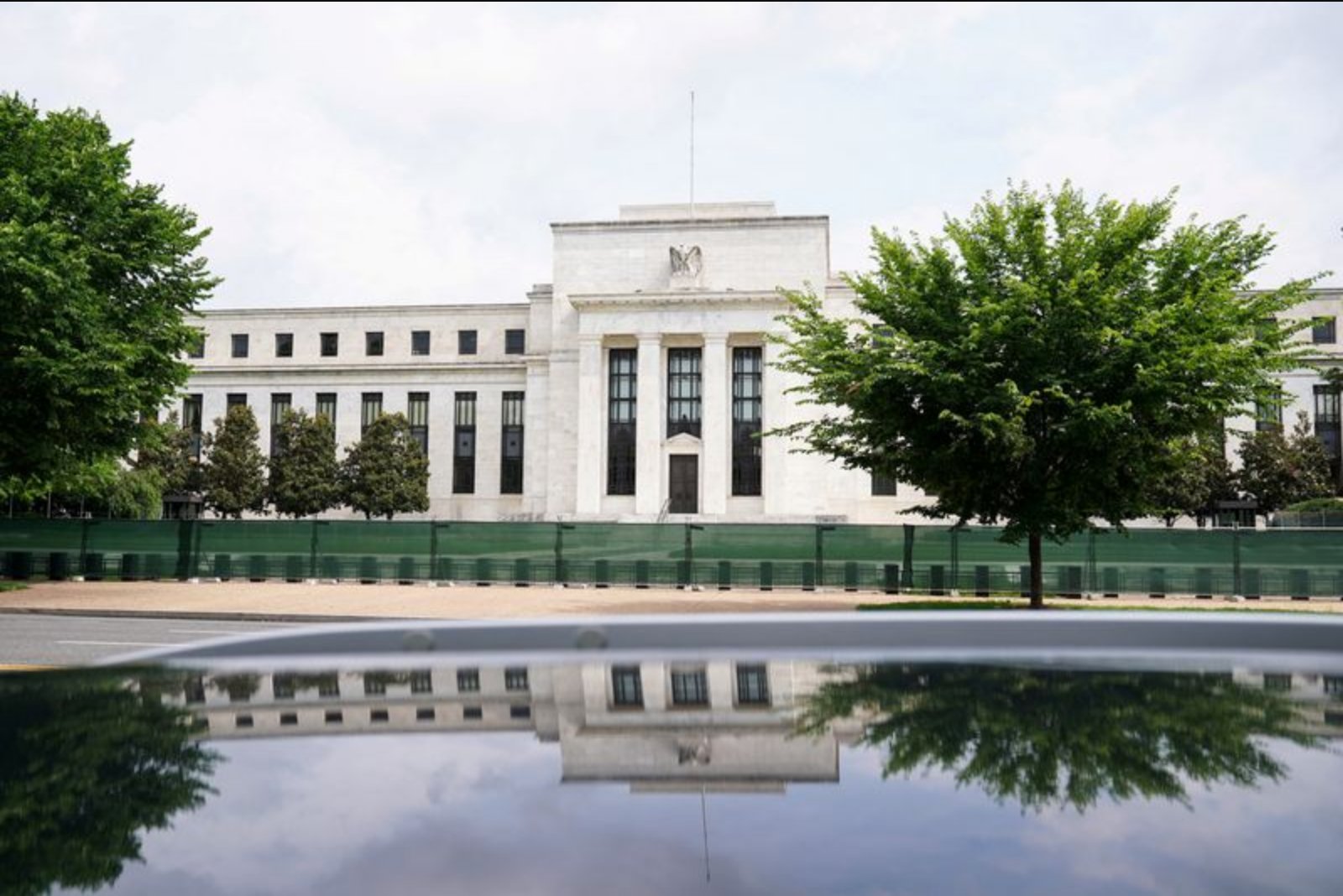
WASHINGTON, March 16 - Federal Reserve policymakers enter a highly uncertain policy meeting this week as a Middle East conflict that has effectively sidelined one-fifth of global oil supply forces them to consider a range of possible economic outcomes. Officials must judge whether the Iran-related shock is most likely to amplify inflationary pressures, suppress growth, or produce the complex combination of rising prices and weaker activity that would complicate monetary strategy.
The backdrop for the discussion is an inflation rate that remains around a percentage point above the central bank's 2% objective and the prospect of further upside if oil prices, which surged almost 50% over two weeks, stay elevated. That spike in energy costs arrived after intensive U.S. and Israeli strikes and Iranian counterattacks that have put near-term oil flows under strain and disrupted the strategic Strait of Hormuz.
Analysts and some Fed watchers are already debating scenarios that until recently seemed unlikely. "A question that was almost unthinkable two weeks ago is now being more heavily debated: Could the Fed raise rates in 2026?," wrote Matthew Luzzetti, chief U.S. economist for Deutsche Bank Securities. At the same time, Luzzetti noted that rate hikes in 2026 remain unlikely unless there is a clear rise in inflation expectations - an outcome the Fed will be watching closely.
Officials will also need to weigh broader economic consequences beyond headline inflation. The conflict is expected to tighten financial conditions by lifting yields, pressuring asset prices and increasing uncertainty - all channels that could dampen activity. Policymakers must judge whether these headwinds will erode the resilience the U.S. economy has shown through prior shocks or whether the disturbance will be short-lived.
"Just when it seemed the worst of the policy chaos was over, there is the Iran war to deal with," Dario Perkins, chief economist for global macro at TS Lombard, wrote recently. He recounted a series of stresses the economy has navigated since the pandemic - from supply disruptions and rapid Fed tightening to tariff and immigration policy shifts - and raised the question of whether the current energy shock might be "one shock too many." Perkins framed the outlook around the possibility that, even if the conflict is resolved swiftly, cumulative stresses could still leave the economy more vulnerable.
Potential fault lines are evident in the labor market and among consumers. February brought a loss of 92,000 jobs, and middle- and lower-income households remain stretched by elevated prices. Concerns about tighter credit conditions could intensify if asset prices continue to slide, creating additional headwinds for spending.
Energy costs have already shown rapid transmission to consumer prices: as of Sunday, the average U.S. retail gasoline price had climbed nearly 25% in the two weeks since U.S. and Israeli strikes on Iran, reaching the highest levels since October 2023, according to AAA. U.S. officials have expressed expectations that hostilities will conclude sooner rather than later. U.S. Energy Secretary Chris Wright told ABC's "This Week" program that "this conflict will certainly come to the end in the next few weeks - could be sooner than that. But the conflict will come to the end in the next few weeks, and we'll see a rebound in supplies and a pushing down in prices after that."
PROJECTING THROUGH THE FOG OF WAR
The Federal Open Market Committee is widely expected to hold its policy rate steady at its meeting on Tuesday and Wednesday. Economic reports released since the prior meeting showed no dramatic change in the underlying outlook, and the central bank is also in a period of leadership transition: Kevin Warsh, nominated by President Trump, is expected to be confirmed by the Senate and to succeed Jerome Powell after mid-May.
Yet the most recent data now appear dated, given the onset of intense hostilities that tightened oil markets. With no clear objectives or timeline announced for ending the conflict, policymakers must update their projections under significantly altered conditions. Fed officials will publish fresh economic forecasts that reflect their best collective view about whether circumstances ahead require maintaining tight policy to contain inflation or loosening policy to blunt a slowdown.
Officials have faced similar judgment calls before. In the Fed meeting that followed Russia's invasion of Ukraine in 2022, Chair Powell described the impact as "highly uncertain," noting that higher global oil and commodity prices, supply chain disruptions and tighter financial market volatility could all restrain activity abroad and create spillovers to the U.S. economy through trade and other channels.
THE OUTLOOK HAS GROWN MURKIER
Current conditions are arguably more dynamic because the United States is a combatant in the present conflict and a substantial share of global oil production and other goods have been rendered less mobile. Analysts are debating whether the recent rise in Treasury yields signals a loss of U.S. privilege in global markets, a market judgment about higher inflation, or something else. At this stage, much of the commentary reads as scenario analysis rather than firm forecast, with the base case typically assuming a short-lived conflict followed by easing oil prices, while more damaging outcomes envision a protracted standoff that further disrupts markets.
Fed officials were surprised in recent years by the economy's capacity to absorb shocks - from higher tariffs and labor market frictions to geopolitical unpredictability - while output continued to grow and job creation moderated as inflation remained above the central bank's target. That experience may influence the current debate, with some policymakers prepared to treat recent disturbances as transient and others cautious that this episode could produce more persistent effects.
Given the present uncertainty, one pragmatic approach for officials would be to hew close to the December outlook, which projected a median of just one rate cut this year. But the dispersion within that forecast set is notable: following a quarter-point rate reduction in December, six of 19 officials indicated rates should have remained higher. Minutes from the January meeting showed an uptick in hawkish sentiment, with several policymakers signaling that upward adjustments to the federal funds target could be appropriate if inflation remained above target.
Since then, inflationary concerns have increased, even as worries about growth and the economy's tipping point have intensified - a combination that presents the central bank with a particularly difficult communication and policy task. "The economic outlook has turned murkier as the conflict drags on and oil prices remain high and volatile," Subadra Rajappa, head of research at Societe Generale, wrote. She added that although her "base case continues to assume a timely resolution and no sustained economic fallout from this conflict...higher inflation and deteriorating labor market conditions make it difficult for the Fed to balance its dual mandate."
As officials prepare to release updated projections, markets and sectors sensitive to energy, interest rates and financial conditions will be watching for how the Fed describes the trade-offs it faces. Energy-intensive sectors and consumer-facing businesses are particularly exposed to elevated fuel costs, while financial markets may react to any shift in the Fed's assessment of inflation persistence or growth risks. The coming projections will attempt to distill policy direction despite a rapidly changing global scene - a challenging task that will shape market expectations in the weeks ahead.