
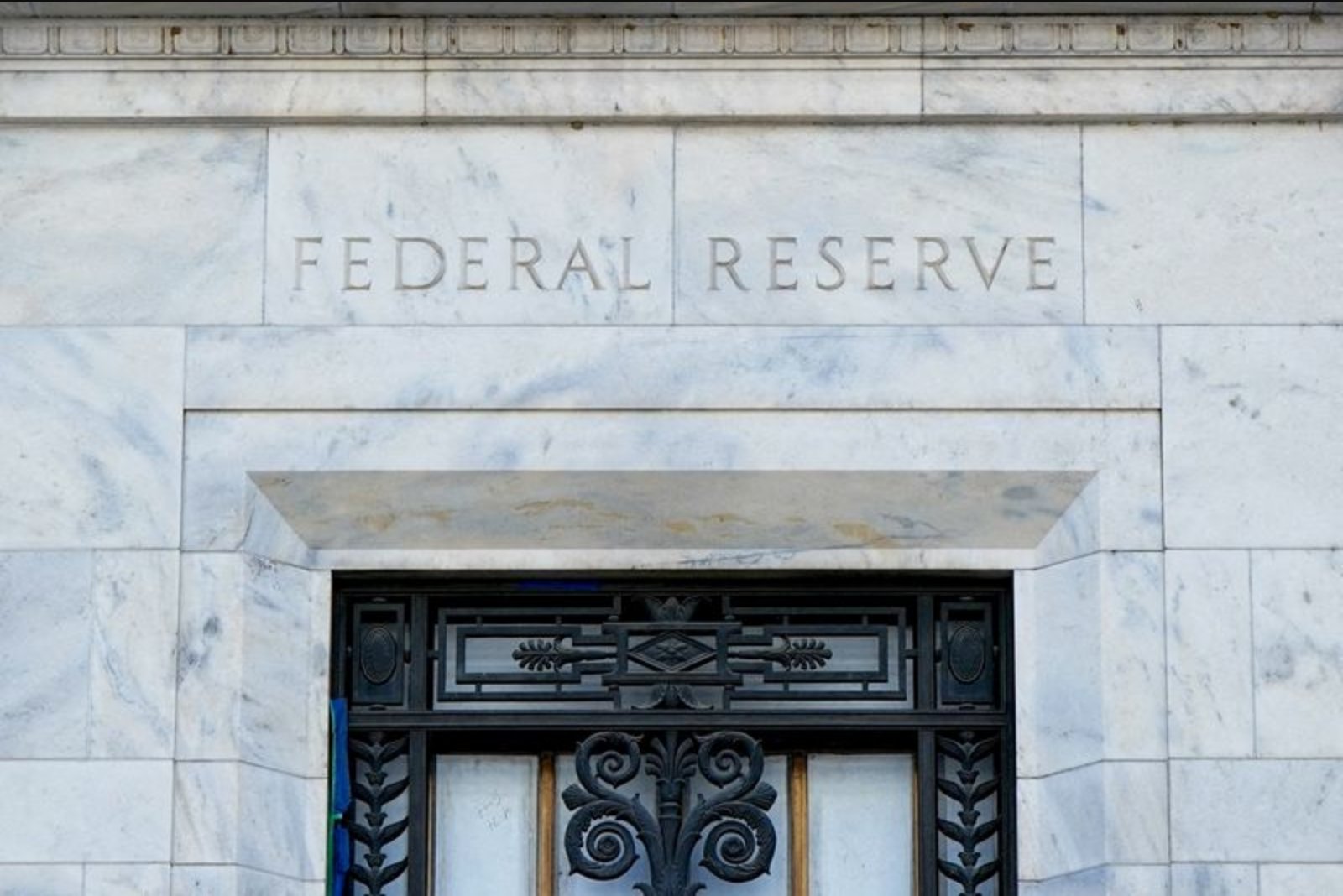
The Federal Reserve is wrestling with how to incorporate the disruptive potential of artificial intelligence into monetary policy, as officials acknowledge sizable economic shifts are under way but remain sharply divided over the speed and scale of those changes.
Recent developments in the technology sector have put the question into stark relief. Tech firm Block said on Thursday it would cut about 40% of its workforce, roughly 4,000 employees, telling investors that "something has changed" in how it uses labor because of AI. That kind of move highlights the stakes for central bankers: traditional logic suggests rising layoffs point to weaker demand and would normally argue for easier monetary policy. The AI transition, however, is prompting a different calculus inside the Fed.
Several policymakers and outside economists have suggested higher unemployment could be part of the adjustment period, as displaced workers take longer to find new positions. At the same time, higher returns on invested capital and increased wages for workers who remain productive could maintain upward pressure on prices.
"We’re in the part of the cycle where this is a positive, real shock, but most of it is in the form of positive real income and very little disinflation," said Adam Posen, president of the Peterson Institute for International Economics, during a discussion about inflation. He noted that stock market gains are boosting some household wealth and that large-scale capital investment associated with an AI buildout can squeeze electricity and construction costs in certain areas. On that basis, Posen predicted U.S. price pressures would build from here and cautioned that those expecting AI to produce near-term disinflation "have got it exactly wrong."
Divergent views in the Fed and beyond
Opinions among policymakers about AI’s likely effects on inflation and unemployment are split. One prominent voice in the camp viewing AI as disinflationary is Kevin Warsh, a nominee for Fed chair who has yet to be formally nominated and confirmed. In a November Wall Street Journal op-ed, Warsh described AI as "a significant disinflationary force, increasing productivity and bolstering American competitiveness," and argued that the Fed could best accommodate those gains with lower interest rates. He frames his view as forward-looking, drawing a parallel in tone to the stance former Fed Chair Alan Greenspan took in the mid-1990s.
But many Fed officials are more cautious. They recognize productivity gains appear to be rising, yet they are not ready to assign those gains primarily to AI rather than to other efficiencies developed during pandemic-era labor shortages. Several policymakers have expressed concern that AI could raise structural unemployment in a way that lowering rates would not easily ameliorate without reigniting inflationary pressure.
Fed Governor Lisa Cook articulated that concern explicitly, noting the centrality of the long-run "natural" unemployment rate in the Fed’s framework. That rate is currently thought to be about 4.2%, and Cook warned that if AI boosts productivity while creating churn in the labor market that raises unemployment, such a rise might not indicate a surplus of slack in the economy. "If AI continues to raise productivity, economic growth could remain strong, even as churn in the labor market leads to an increase in unemployment. In a productivity boom such as this, a rise in unemployment may not indicate increased slack. As such, our normal demand-side monetary policy may not be able to ameliorate an AI-caused unemployment spell without also increasing inflationary pressure," she said.
Not all analysts reach the same conclusion. Evercore ISI Vice Chair Krishna Guha has argued that AI could weaken worker bargaining power, leading employees to accept lower wage increases and reducing the natural rate of unemployment. That channel would exert downward pressure on inflation, and it aligns with the broad implication of proponents such as Warsh who see room to lower interest rates, albeit for different reasons.
Corporate behavior and the job mix
Block’s announcement underlined how AI might affect not only blue-collar roles historically associated with automation but also white-collar jobs such as coding and data analysis. Block’s CEO Jack Dorsey said AI "paired with smaller and flatter teams, are enabling a new way of working which fundamentally changes what it means to build and run a company. And that’s accelerating rapidly."
Research cited by Fed-watchers points to broad potential disruption in knowledge-sector tasks. A 2024 Brookings Institution paper found that more than 30% of U.S. workers could see half of their job tasks "disrupted," a share that is likely to have grown since that estimate. Analysts and policymakers are therefore trying to assess which roles are most exposed to AI substitution and which will see productivity complements that preserve or enhance human employment.
Fed research and discussion pick up pace
The Fed’s internal engagement with AI-related research and speeches has accelerated markedly. An AI-assisted count of Fed research articles and policymaker speeches referencing AI, machine learning, and related topics showed only a small number prior to the release of ChatGPT in late 2022. That rose to five in 2023, around 17 last year, and 14 already this year, signaling a much faster pace of attention. Minutes from the Fed’s January meeting documented an extensive conversation about productivity and AI, including what those trends might mean for monetary policy, and at least five policymakers spoke on the topic in the following month.
Despite the uptick in discussion and research, Fed officials as a group are not leaning on AI as a near-term justification for cutting rates. They broadly acknowledge productivity appears to be increasing but are not ready to attribute the change primarily to AI rather than to other causes. Many are inclined to see the risk that AI will produce higher structural unemployment, which could complicate the usual policy response of lowering rates to cushion job losses without stoking inflation.
Complex economic picture and lingering uncertainty
The public comments of Fed officials sketch a multifaceted outcome: some workers may face job pressure, while others benefit from new productivity; some households gain wealth that supports consumption; and large-scale investment to deploy AI may create resource constraints that push up costs in energy and construction. Higher expected returns on AI-related investments could also be a factor pushing up underlying interest rates.
Richmond Fed President Tom Barkin underscored the deep uncertainty surrounding forecasts about AI. "There are lots of forecasts about both the rollout of AI, the effectiveness of AI, the energy efficiency of AI, the labor market implications of AI, and the only thing you know for sure is those forecasts are going to be wrong," he said. "Whether they are going to be too optimistic or too pessimistic you’ll have to sort out as you go."
That caution reflects the core challenge facing the Fed: sorting through conflicting signals and modeling risks without firm empirical precedent. Policymakers are increasing research and discussion, but they remain divided about how and when AI’s effects will manifest in labor markets and price dynamics.
What is clear and what remains unsettled
- AI appears likely to raise productivity for some firms and roles, but the distributional effects across the workforce are uncertain.
- Displaced workers may take longer to relocate to new jobs, creating upward pressure on measured unemployment even as output and growth remain strong.
- Higher returns to capital and wealth gains in financial markets could sustain consumption and contribute to inflationary pressures in certain sectors.
The Fed’s stance is evolving as new data and corporate actions like those at Block emerge. For now, officials have stepped up analysis and public discussion without coalescing around a single interpretation of AI’s net impact on inflation and labor markets.