
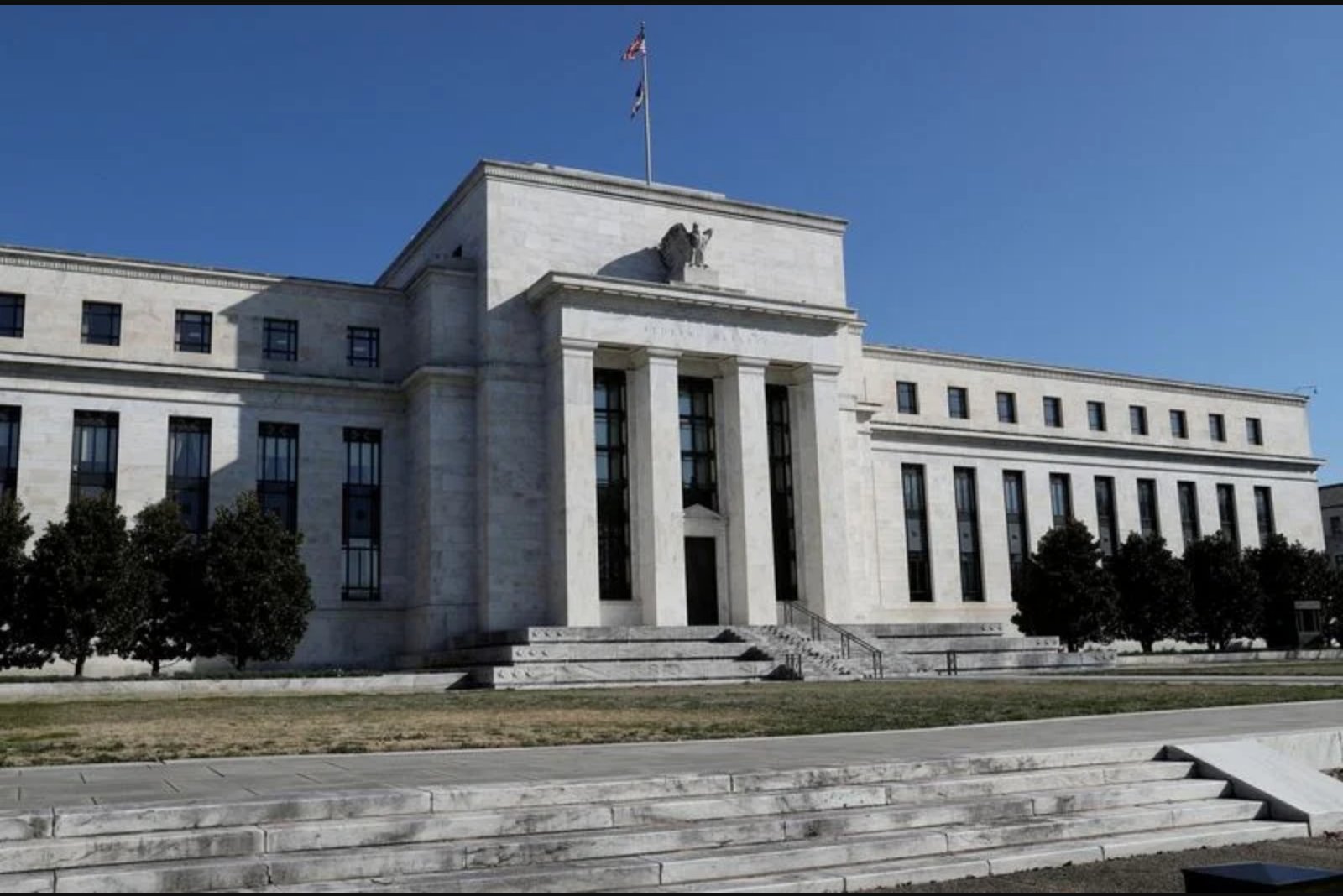
The Federal Reserve's most recent Beige Book, a collection of qualitative economic reports from across the nation's Fed districts, records a small rise in U.S. economic activity in recent weeks while noting that employment levels were largely unchanged.
The report highlights a pervasive influence from rising energy prices associated with the war in the Middle East. According to the Beige Book, districts repeatedly identified energy-related cost increases as the main source of inflationary pressure, with knock-on effects showing up in shipping, packaging, groceries, and fertilizer.
Business sentiment for the next six months showed little change in expected growth, the Fed said, even as elevated uncertainty and early signs of softer consumer spending weighed on outlooks. The account portrays a U.S. economy that is neither accelerating strongly nor deteriorating sharply, but one facing specific sectoral cost pressures tied to higher energy costs.
Inflation, measured by the Fed’s preferred gauge, rose to 3.8% in April from 3.5% in March, a continuation of a trend that has kept inflation above the central bank’s 2% objective for more than five years. The Beige Book notes that the recent run-up in energy costs has been a primary driver of those rising price readings.
Labor market indicators described in the report suggest a stabilization after signs of weakening observed the prior year. Employment was described as "little changed" across districts. Economists polled ahead of the government's May jobs report expect the unemployment rate to hold at 4.3% when that data is released.
The report arrives as Kevin Warsh prepares to chair his first Federal Open Market Committee meeting. Warsh replaced Jerome Powell in late May. The Beige Book's emphasis on energy-driven inflation and the constrained business outlook may bolster the arguments within the Fed against cutting the policy rate in the near term.
Public commentary and the minutes from the Fed's April 28-29 meeting reflect a shift in expectations among some policymakers - away from a consensus view that an interest rate cut later this year was likely, toward a growing view that maintaining current rates for an extended period - or even raising them - could be appropriate.
The Federal Reserve has held its policy range at 3.50% to 3.75% so far this year. Those settings, combined with the Beige Book's assessment of inflation trends and energy-related spillovers, have influenced public debate about the timing and direction of future policy moves.
Political considerations also intersect with policy discussions. The president selected Warsh with the explicit expectation that he would cut rates, but that immediate demand was moderated in light of the recent jump in gasoline prices. The Beige Book's observations about inflation and the breadth of energy-related cost impacts may add weight to arguments by Fed officials who oppose a near-term easing of policy.
Overall, the Beige Book presents a picture of modest economic growth, broadly stable employment, and pressure on prices driven largely by energy costs linked to conflict in the Middle East. The report underscores the specific channels - shipping, packaging, groceries, and fertilizer - through which those energy price movements have propagated across the economy.
Data and context noted in this article are drawn from the Federal Reserve's latest Beige Book and contemporaneous public commentary regarding Fed policy and economic readings.