
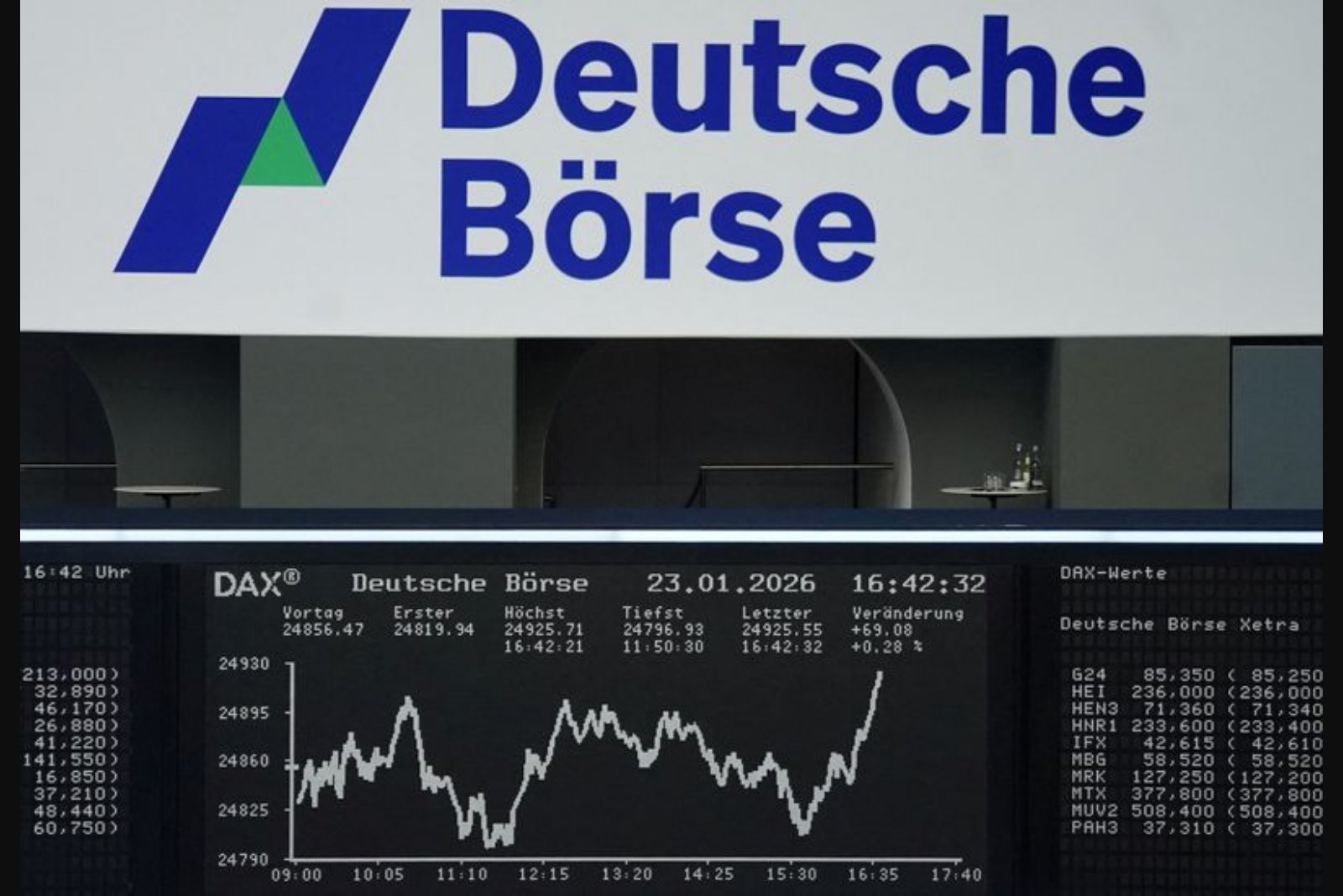
Markets in Europe inched higher after a volatile session in Asia, but gains remained fragile as rising oil prices continued to weigh on currencies and sovereign bonds. The escalation of hostilities in the Middle East, combined with reports of outreach toward ending the conflict, produced a mixed response across asset classes.
Iran launched a wave of missiles at Israel early on Thursday, an action that came just hours after Republican Senators in Washington blocked a bipartisan effort to halt the U.S. air assault. The security shock pushed energy prices up, with Brent crude trading around $83 per barrel in London after briefly touching $84.25, and added to pressure on the euro, the pound and the region's government bond markets.
U.S. Energy Secretary Chris Wright framed the impact of the fighting on energy markets as a "small price" to pay for achieving military objectives. At the same time, International Monetary Fund head Kristalina Georgieva warned that the situation was already testing the resilience of the global economy, underscoring how geopolitical shocks can ripple through macroeconomic conditions.
Asia's sharp rebound
Equity markets in Asia staged dramatic recoveries overnight. South Korea's benchmark KOSPI surged almost 10%, reversing most of the previous day's record rout after the country's president, Lee Jae Myung, ordered activation of a $68 billion market stabilisation fund to temper extraordinary volatility tied to "the escalating crisis in the Middle East." Japan's Nikkei rose nearly 2%, and Chinese shares advanced almost 1% following the announcement of a 4.5%-5% economic growth target as part of Beijing's longer-term plans.
Some traders attributed improved sentiment to a report that Iran's intelligence agency had made early contact with the CIA about a possible path toward ending the war. That report was later rejected by a source at the Iranian intelligence ministry.
Oil and energy markets
Energy markets remained central to investor assessments. Brent crude has gained roughly 15% since the weekend's U.S. and Israeli air strikes on Iran and spiked to $84.25 before settling back near $83 in London trade. Ship-tracking data showed about 300 oil tankers currently inside the Strait of Hormuz, with traffic into and out of the chokepoint all but halted after the outbreak of war.
Royal London Asset Management's Trevor Greetham said that the lack of relief in oil prices was notable and pointed to skepticism among experts about recent pledges by U.S. President Donald Trump to provide insurance for tankers against attacks. "What is quite notable is that the oil prices haven’t come down," he said, adding that he was not reading too much into the stock-price recovery and that the situation "could go on for some time." Natural gas prices were also reported to be surging, further complicating the inflation outlook for bond market participants.
Fixed income and currencies
Bond markets reacted to the evolving energy-led inflation risk. The yield on the benchmark U.S. 10-year note rose almost 4 basis points to 4.12%, reflecting a recalibration in expectations around the path of global interest rates. Moves in European bond markets were smaller and choppier, but the German bund market was on course for its steepest weekly selloff in a year.
The dollar resumed its advance after a pause in the previous session. The dollar index rose 0.2% to 98.9. The euro fell 0.2% to $1.1610, and the yen slipped to 157.20 per dollar, while traditional safe-haven gold inched up 0.3% to $5,153 an ounce, off its overnight peak of $5,175 an ounce.
Central bank comments and projections
With inflationary pressures potentially amplified by a prolonged conflict, market participants were awaiting remarks from several European Central Bank officials, including ECB President Christine Lagarde, to gauge how monetary policymakers might be adjusting their outlook. Germany's Bundesbank chief Joachim Nagel warned that a protracted war in Iran would elevate inflation and damage growth, though he said it was too early to draw definitive conclusions.
Commerzbank strategist Erik Liem highlighted the potential for recent market dynamics to influence the ECB's March projections, noting the usual cutoff date is about two weeks before the central bank meeting. "The recent dynamics could also be relevant for the March ECB projections," Liem said, signaling that the timing of data and geopolitical developments can shape official macro forecasts.
What this means for markets
The combination of higher energy prices, safe-haven flows and abrupt policy responses in Asia produced a market environment defined by rapid reversals and heightened volatility. While equity indices in Europe managed modest gains, investors remained cautious given the uncertain trajectory of the Middle East conflict, the persistence of oil-price pressure and the potential implications for inflation and interest-rate paths.
For traders and portfolio managers, the near-term landscape looks conditioned by three interacting forces cited throughout the session: ongoing military activity and related disruptions to shipping and energy infrastructure, evolving political signals that could either open or close avenues for de-escalation, and central bank communications as officials reassess growth and inflation projections in light of these developments.
Key takeaways
- Asia's markets rallied sharply after reports of outreach and policy moves, notably a $68 billion South Korean stabilisation fund and Beijing's 4.5%-5% growth target.
- Higher oil prices - with Brent around $83 and having jumped roughly 15% since recent strikes - kept upward pressure on inflation expectations and bond yields.
- Currencies and sovereign debt in Europe remained under strain despite modest equity gains, while the dollar and gold saw safe-haven interest.