
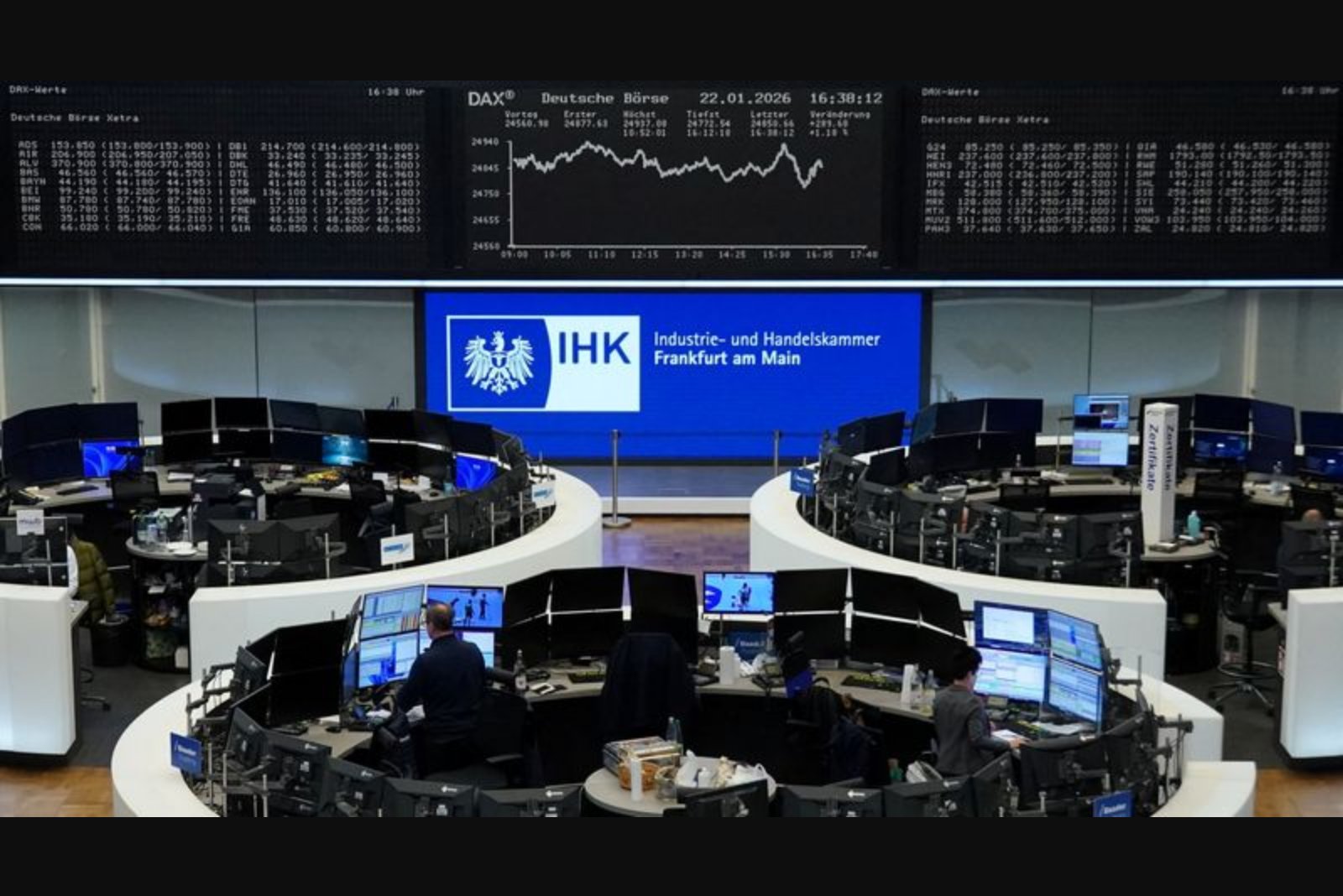
LONDON, March 2 - European markets came under pressure as a renewed air campaign in the Middle East raised fresh concerns about an energy supply shock and the inflationary consequences that could follow. Analysts say the euro zone is particularly exposed to such a development, reversing some of the gains the region had secured by diversifying investor interest away from the United States.
Energy markets led the move. Since Friday, Brent crude has climbed nearly 10%, and European natural gas prices surged about 50% over the same period. The region remains heavily reliant on imports for both oil and gas, and the major liquefied natural gas exporter QatarEnergy announced on Monday that it had halted production. These shifts brought memories of the 2022 disruption triggered by Russia’s invasion of Ukraine, when Europe experienced a sharp energy crunch.
But observers highlight several differences this time. Europe is not being forced to pivot away from a single dominant supplier in the same manner as during the Ukraine crisis. The current tensions have coincided with the tail-off in winter heating demand, and the euro is roughly 4% stronger than it was in February 2022 - a currency move that helps blunt the cost of energy imports. That contrasts with some other large importers such as Japan and South Korea, whose currencies have weakened and so are less insulated from higher commodity bills.
The primary market question is how the jump in oil and gas prices will filter through to inflation and therefore to central bank decisions. Market pricing for the European Central Bank has shifted quickly: traders now assign only about an 8% probability to another ECB rate cut by December, down from roughly 40% a week earlier. The market reaction was visible in fixed income too, with German two-year yields, which are sensitive to rate expectations, rising 6 basis points on Monday.
Official ECB modelling still projects that inflation will undershoot the 2% target this year and next, giving the bank some latitude. On the bank’s calculations, a sustained 14% increase in energy prices would trim growth by approximately 0.1% this year while potentially lifting inflation by as much as 0.5 percentage points. Oil is already more than 20% above the ECB’s December forecast, which the bank will update on March 19.
Commerzbank’s chief economist Joerg Kraemer warned of the trade-offs facing policymakers. He said a maintained rise in oil to around $100 a barrel would push inflation to just under 3% from the current 1.7%, while at the same time damaging euro zone growth. He described that combination as a "dilemma" for the central bank.
Currencies reflected the stress. The euro was among the weakest developed-market currencies on Monday, slipping 0.7% to $1.1732 and hitting a more-than-10-year low versus the Swiss franc, which provoked comments from Swiss authorities about potential intervention to weaken the franc. Market strategists warned the euro could decline further if the economy feels the full effect of higher energy costs and investors unwind previous positions that had bet on euro appreciation.
JPMorgan outlined a scenario under which Brent crude reaching $100 to $120 - a level that could be reached if the conflict persists beyond three weeks - would pressure the euro down to about $1.10 to $1.13. In that context the bank advised clients: "We recommend tactically unwinding euro/dollar longs today." Derivative markets also signalled a subtle shift; three-month risk reversals indicate investors are now paying a small premium to hedge against euro depreciation, whereas a month ago the cost of protection against euro appreciation was at its highest in nine months.
British markets were similarly affected. Sterling fell to its weakest level against the dollar since December and gilt yields rose as participants recalibrated inflation expectations in light of higher oil prices. The Bank of England estimates that a 10% rise in the price of Brent crude contributes roughly 0.2 to 0.3 percentage points to UK inflation. Although UK inflation has been on a downtrend, the country still records the highest inflation among the Group of Seven economies, prompting traders to pare back expectations of a March rate cut by the BoE.
FX strategists also warned of compounding effects. "Although you could say that (the change in rate cut bets) is sterling supportive in the short term, the reality is higher energy prices in the UK at a time when taxes have gone up would have a very negative business impact, growth impact, and political impact," said Rabobank’s head of FX strategy Jane Foley.
Equities, especially financial stocks, bore the brunt of risk-off flows. European banks extended Friday’s declines on Monday amid concerns about private credit, with the sector shedding around 5% over two trading sessions - the biggest two-day percentage drop since last April’s tariff-related volatility. Portfolio manager Rory Dowie characterised the move as broad-based risk aversion: "It’s very classic risk-off. Just broad selling of equities across the board." Analysts note that banks, as cyclical names, generally underperform when investors shift into risk-off mode.
Some exposure to the Middle East exists among European lenders, but regulatory analysis suggests it is limited. The European Banking Authority’s 2024 risk assessment highlighted that such exposure accounts for only a fraction of the EU/EEA banking sector’s total, reducing the likelihood of a systemic banking shock originating from direct regional counterparty risk.
Market participants also discussed potential longer-term policy implications. A minority of commentators pointed to the possibility that renewed security tensions might spur public policy efforts - particularly if allied policy in Washington shifts - to accelerate defense and infrastructure investments in Europe, which could underpin growth over a longer horizon. "The European story is underappreciated and growth will surprise on the upside this year," said Lloyds FX strategist Nick Kennedy. He added that recent strikes serve as a reminder of geopolitical friction and could galvanise moves to invest more in defense and to increase strategic independence.
For now, though, the immediate market response has been to price greater inflation risk, to re-evaluate the timetable for central bank easing, and to punish cyclically exposed assets and vulnerable currencies. How long these pressures persist will hinge on the trajectory of the conflict and whether commodity supply disruptions prove sustained or short-lived.
Key points
- Energy prices jumped sharply - Brent crude up nearly 10% since Friday and European natural gas up about 50% - prompting inflation and rate-outlook concerns.
- Traders cut the probability of an ECB rate cut by December to about 8%, while German two-year yields rose 6 basis points in one day.
- European banks and currencies, including the euro and sterling, experienced notable weakness amid risk-off moves.
Risks and uncertainties
- Further escalation or a prolonged conflict could push oil toward the $100-$120 range envisioned by some strategists, adding risk to inflation and growth - affecting the euro zone, UK inflation, and monetary policy paths.
- Persistent higher energy costs would further compress growth while raising inflation, creating a policy dilemma for central banks and pressuring cyclically sensitive sectors such as banking and exporters.