
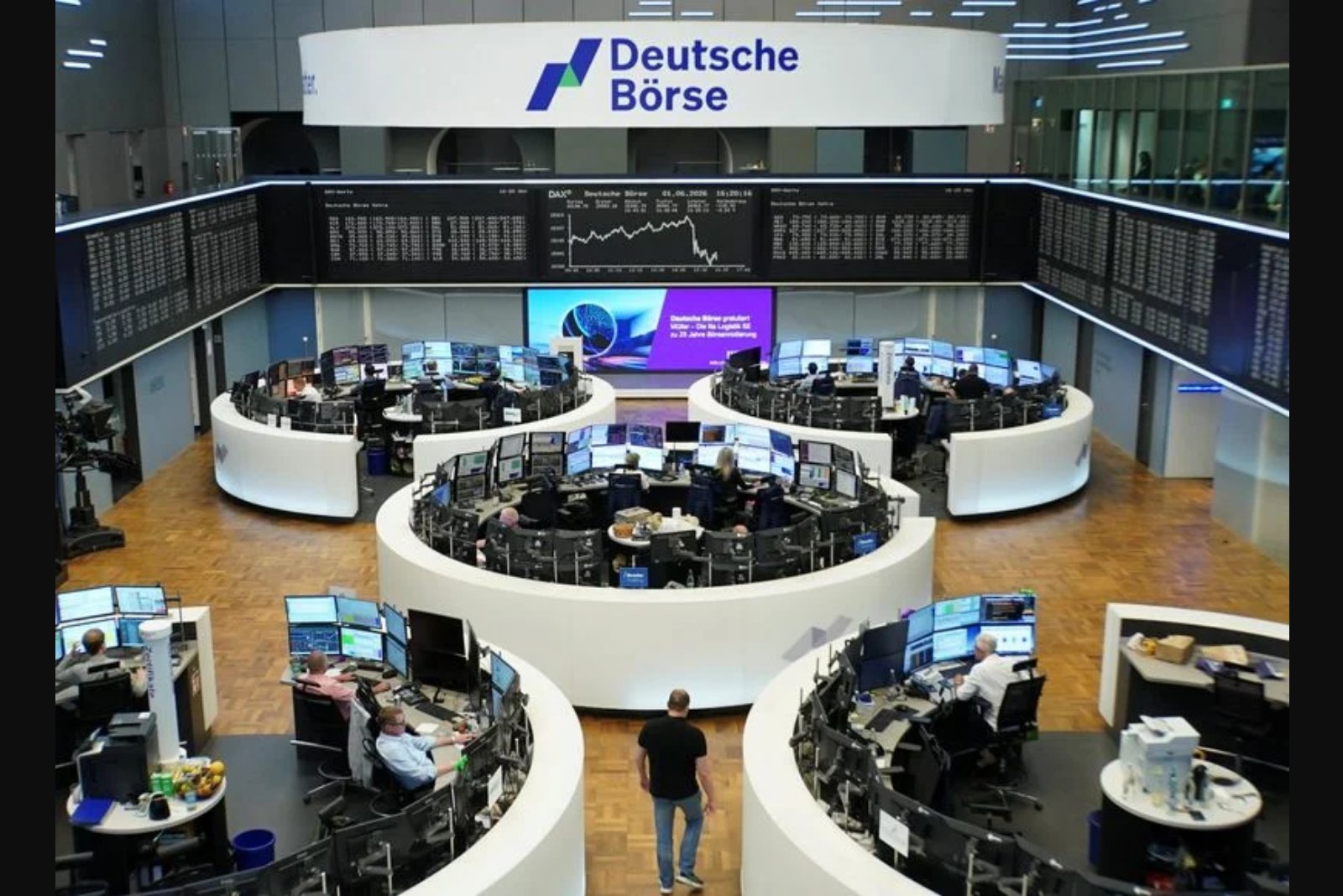
European equities started Tuesday on a firmer footing as upbeat guidance from chipmaker STMicroelectronics lifted technology sector sentiment and traders positioned ahead of a key euro zone inflation print due later in the day.
By 0715 GMT the pan-European STOXX 600 index had climbed 0.7% to 625.20 points, with technology stocks leading the advance after rising 2.4% across the sector.
STMicroelectronics was a notable driver of the move, jumping 9.8% to 65.1 euros - its highest intraday level since September 2000 - after the company raised revenue targets for its data-centre business. The guidance was interpreted by markets as a sign of robust demand linked to the artificial intelligence boom.
Other companies tied to AI and semiconductors recorded gains as well. Infineon rose 5.2% and Schneider Electric added 2.4%, reflecting a broader lift across AI-related hardware and infrastructure names.
Geopolitical developments also supported risk appetite. Lebanon announced a partial ceasefire between Hezbollah and Israel on Monday following a brief escalation of hostilities, a move that helped ease investor concerns in the region.
Energy markets saw some relief as crude oil prices eased by about 1%. Traders had been encouraged by comments from U.S. President Donald Trump that talks with Iran were ongoing, even as a report said Tehran had suspended indirect negotiations with Washington. Despite the moderation, crude remained around $94 a barrel, a level that analysts cited as likely to keep energy costs burdensome.
Attention was focused on an upcoming euro zone consumer inflation report expected to show consumer prices rose 3.2% year-on-year in May versus the prior month. That data comes ahead of a European Central Bank meeting next week, where traders currently expect a 25 basis-point interest rate increase, according to data compiled by LSEG.
Among individual stocks, French biotech Abivax dropped 27% after it published the late-stage trial results for its inflammatory bowel disease drug.
With central bank policy and energy costs both in focus, market participants continued to weigh corporate earnings and sector-specific catalysts - such as demand for data-centre capacity - against broader macroeconomic signals from inflation and geopolitical developments.
Below are concise takeaways, key risks, and the sectors most directly affected by the developments described above.