
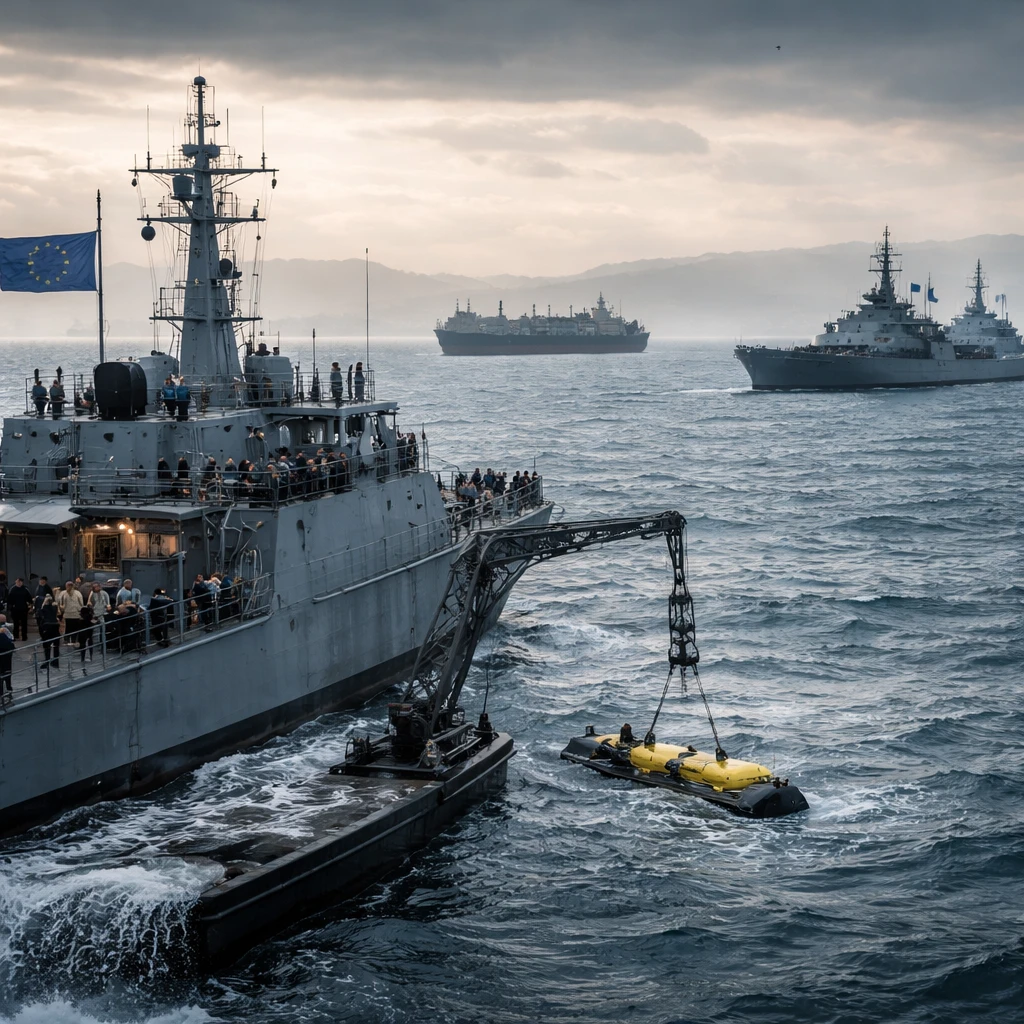
The European Union has put forward a proposal to elevate the Aspides naval mission to the primary operator for clearing mines in the Strait of Hormuz when conditions allow, according to an internal document dated May 26 circulated by the EU's diplomatic service.
The European External Action Service said in the note that the current situation demands "the Union to provide a meaningful contribution" to a coalition that is being spearheaded by France and Britain. The document states that the EU role would materialize "once conditions allow and separated from the belligerents."
Any adjustment to Aspides' mandate would need the unanimous agreement of all 27 EU member countries. The Aspides operation, established in 2024, was initially set up with the task of protecting commercial vessels from attacks by Yemen's Houthi rebel group in the Red Sea.
EU officials framed the proposed contribution as a way to demonstrate collective responsibility across member states in response to a disruption that affects all. The diplomatic note argued that a European presence would also signal EU ownership of the response vis-a-vis NATO allies.
The diplomatic service described the de facto closure of the Strait of Hormuz as having "immense shared consequences for the region and Europe," adding that Iran has at times been selectively allowing passage. The closure has coincided with a broader bout of hostilities in the region.
On the ground, violence continued while the proposal was circulated. Iranian actions that struck infrastructure in Kuwait damaged its airport and injured dozens, and U.S. forces carried out strikes in the vicinity of the Strait of Hormuz. Observers and participants in the diplomatic track say that efforts to stop the fighting have shown little sign of progress.
France and Britain have taken the lead in building an international coalition intended to restore safe transit through the Strait once the situation stabilizes or the conflict is resolved. At the same time, Western allies have not reached consensus on the question of whether Iran has placed mines in the waterway.
The strategic importance of the Hormuz corridor is underscored in the note: roughly a fifth of global oil and liquefied natural gas supplies transit the strait. That scale of energy flows helps explain why European diplomats say a coordinated contribution would be necessary to address disruptions that have cross-border economic consequences.
For now, the Aspides proposal remains a draft to be discussed among member states. The requirement for unanimity means the plan could be delayed, altered, or blocked depending on the outcome of internal EU deliberations. The document and the current security dynamics make clear that any operational move toward mine clearance hinges on both political agreement and changes in conditions on the water.
In sum, Brussels is signaling its intent to play a central role in future mine-countermeasure efforts in the Strait of Hormuz while leaving execution conditional on evolving security and political circumstances.