
Economy June 17, 2026 07:57 AM

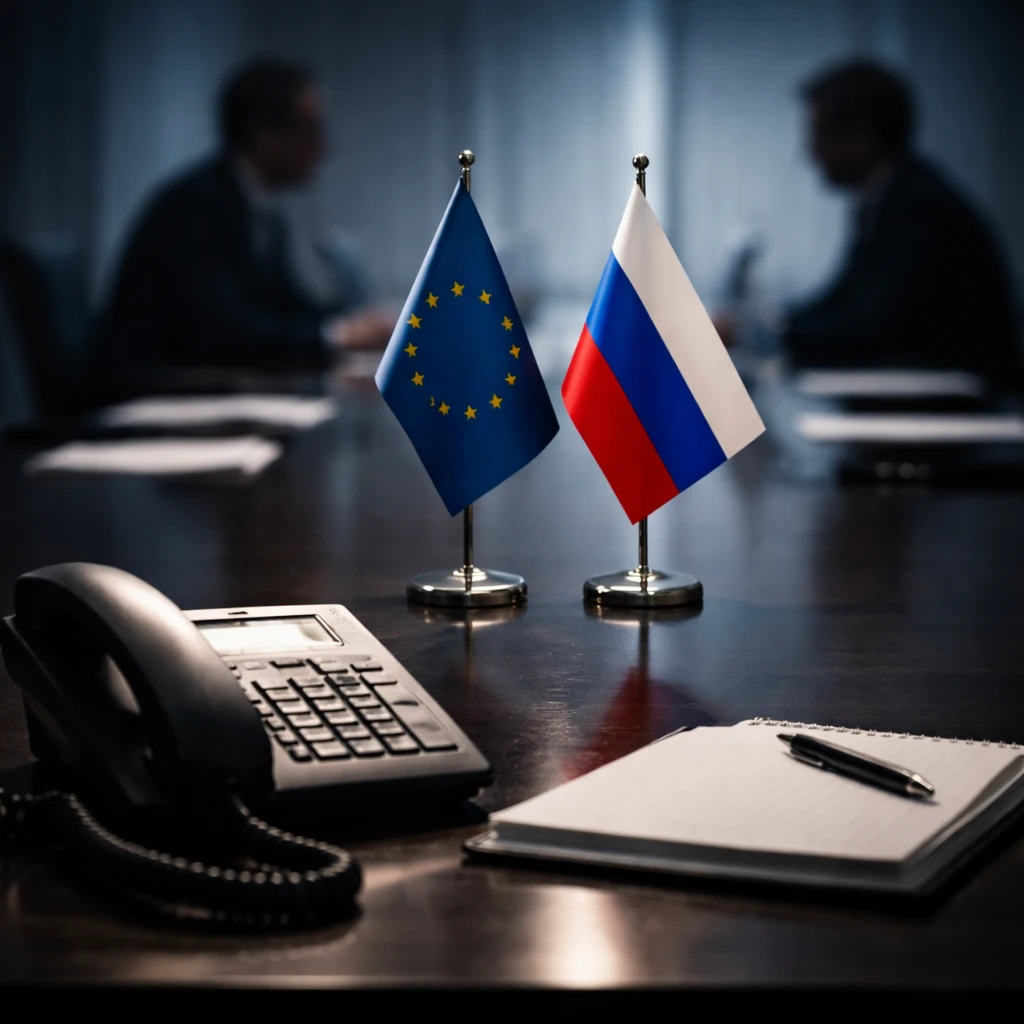
EU President Opens Channels to Moscow Seeking Possible Peace Talks on Ukraine

Antonio Costa's office has initiated contacts with Kremlin officials as EU capitals remain split on negotiation strategy

By Avery Klein
Share
Twitter Reddit Facebook LinkedIn

European Council President Antonio Costa has initiated outreach to the Kremlin to probe prospects for peace negotiations over the war in Ukraine. Preparatory phone calls were made by a senior adviser to a senior Russian official close to President Vladimir Putin. EU members are divided on how to approach talks, while Germany, France and the UK coordinate separately with Kyiv. European officials cite battlefield stagnation, rising strikes on Russian soil and mounting economic pressure as factors that could make negotiations feasible, with potential effects on energy revenues if oil prices fall.

EU President Opens Channels to Moscow Seeking Possible Peace Talks on Ukraine
Summarize with
ChatGPT Perplexity Claude Grok Gemini

Key Points

  • Antonio Costa has initiated Kremlin contacts through a senior adviser who held two preparatory calls with a Russian official close to Vladimir Putin - impacts diplomatic channels and political risk.
  • EU member states remain divided on negotiation tactics; proposals for a special envoy have become controversial after Putin suggested Gerhard Schroeder - relevant to political and diplomatic sectors.
  • European officials point to limited Russian battlefield gains, increased Ukrainian strikes on Russian territory, and mounting economic pressures as conditions that could favor negotiations; potential shifts could affect the energy sector if oil prices fall.

European Council President Antonio Costa has opened a line of communication with the Kremlin to explore whether peace negotiations over the conflict in Ukraine might be possible, according to a Bloomberg News report citing unnamed sources.

Sources told the news service that a senior adviser to Costa conducted two preparatory telephone conversations with a senior Russian official who is known to have close ties to President Vladimir Putin. The contacts were described as exploratory in nature.

Costa has publicly said that the European Union will at some point need to confront shared security concerns with Russia. Within the bloc, however, member states are split over how and when such engagement should occur.

Several EU countries have proposed designating a special envoy to take the lead on negotiations. That proposal has become contentious, particularly after President Putin suggested former German Chancellor Gerhard Schroeder - a figure who has longstanding links to the Russian state energy company Gazprom.

Meanwhile, Germany, France and the United Kingdom are conducting parallel efforts to align strategy with Ukrainian President Volodymyr Zelenskyy on any approach to direct engagement with Putin.

European officials cited a combination of military and economic developments that they say could make talks more likely. Those factors include limited Russian advances on the battlefield, an uptick in Ukrainian strikes into Russian territory, and growing economic strains on Moscow.

Officials additionally noted that a possible peace agreement between the United States and Iran - if it occurred - could reduce global oil prices, which would in turn put further downward pressure on Russia's energy revenues.

Requests for comment were made to representatives of Costa and to Dmitry Peskov, the spokesman for President Putin. According to the reporting, Costa's representatives and Peskov either declined to comment or did not respond to the inquiries.


Context and next steps - The contacts described were preliminary and framed as an initial step to gauge whether discussions could be possible. EU positions remain divided, and multiple national-level efforts are under way to coordinate policy with Kyiv.

Risks

  • Internal EU divisions over negotiation strategy could delay or complicate any unified diplomatic approach - this affects political risk and market sentiment.
  • Controversy around the appointment of a special envoy, particularly after Putin's suggestion of Gerhard Schroeder, could undermine consensus and credibility - relevant to diplomatic relations and energy-sector perceptions.
  • Uncertainty about battlefield dynamics and economic pressures means conditions for talks are not guaranteed; changes in military or economic indicators could rapidly alter prospects - relevant to defense and energy markets.

More from Economy

Central Bank of Chile Lowers 2026 Growth Outlook to 1%–1.75%, Lifts 2027 Forecast Jun 17, 2026 ECB's Sleijpen Signals Elevated Uncertainty, Stresses Vigilance on Inflation Expectations Jun 17, 2026 ECB's Sleijpen: 2022-Style Inflation Surge Less Probable but Not Impossible Jun 17, 2026 Warsh's First Press Conference Could Roil Bond Market, Fidelity Managers Warn Jun 17, 2026 RBI Temporarily Lifts Rate Ceilings on Select Non-Resident Deposits Jun 17, 2026