
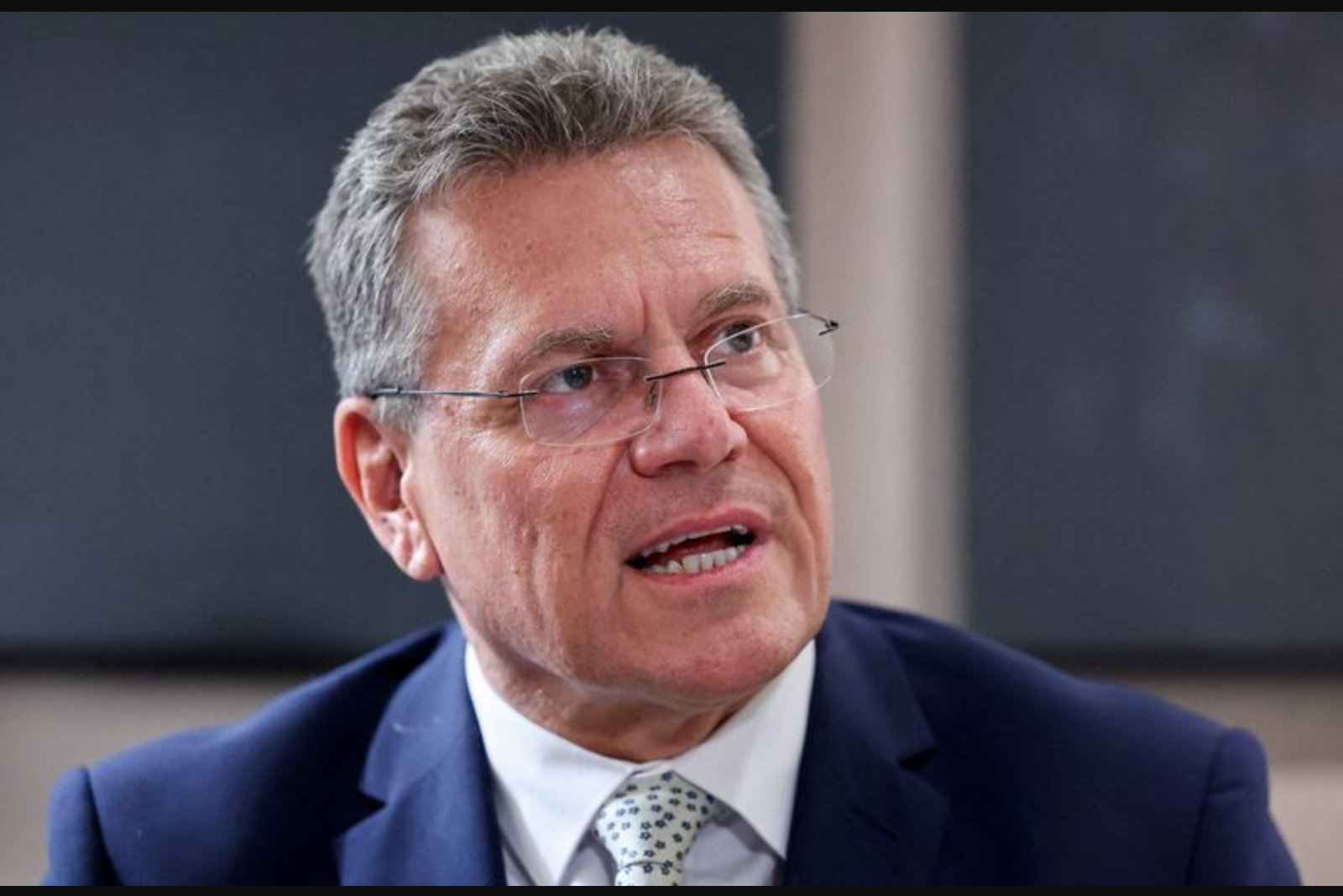
EU trade commissioner Maros Sefcovic told reporters that the European Union needs to be prepared to bring into force its free trade accord with the Mercosur countries as soon as those partners complete their ratification processes. The pact, covering Argentina, Brazil, Paraguay and Uruguay, is designed to remove about 4 billion euros - roughly $4.7 billion - in tariffs on EU goods exports, and would represent the bloc's largest free trade agreement by potential tariff reductions.
Signed in January after 25 years of negotiations, the agreement has won solid backing from a number of EU capitals, notably Germany and Spain. But it faces staunch opposition led by France, where policymakers warn that a surge of lower-priced commodities - including beef and sugar - could damage domestic farmers.
Complicating the pathway to implementation, the European Parliament voted last month to take the agreement to the bloc's top court. That legal challenge could delay the deal by as much as two years and in the most extreme scenarios could prevent it from taking effect.
Despite that, the European Commission retains the option to apply the accord provisionally before full ratification by all parties. Sefcovic said on Friday that provisional application is a realistic possibility once Mercosur partners move through their own ratification steps.
"When our Mercosur partners will be ready with the ratification, we should be ready as well," Sefcovic said, speaking ahead of a meeting of EU trade ministers in Cyprus. "We expect that Argentina might be the first one to ratify. I think they’re going through the decisive phase already this week."
Officials in Brussels are discussing the timing and legal route forward with Mercosur representatives, member states and members of the European Parliament. Part of the debate concerns how long the Court of Justice of the European Union might take to issue a ruling on the Parliament's challenge. Bernd Lange, chair of the European Parliament's trade committee, said the bloc should first assess whether a ruling could be obtained within six months - in which case the agreement might be paused - and if not, the pact could be provisionally applied in April or May.
Sefcovic also flagged that delays in enacting trade deals carry economic costs for the EU. He highlighted the Commission's discussions on reducing reliance on external markets for critical inputs and offsetting lost business related to U.S. tariffs. He referenced a study by the ECIPE think-tank which estimated that failing to ratify the Mercosur accord earlier cost the bloc 291 billion euros in gross domestic product between 2021 and 2025.
In parallel, Sefcovic said he would raise with EU ministers the possibility of accelerating the implementation of trade agreements more broadly. He noted that recently concluded deals with India and Indonesia could serve as pilot cases for a faster, more streamlined approach to putting agreements into force.
The trade chief's comments underscore the balancing act facing Brussels: responding to domestic political resistance and legal scrutiny while seeking to secure economic opportunities and diversify trading relationships. For the moment, the timetable for full implementation remains contingent on a mix of ratification steps by Mercosur partners, the Court of Justice's schedule, and political decisions within several EU member states.
($1 = 0.8500 euros)