
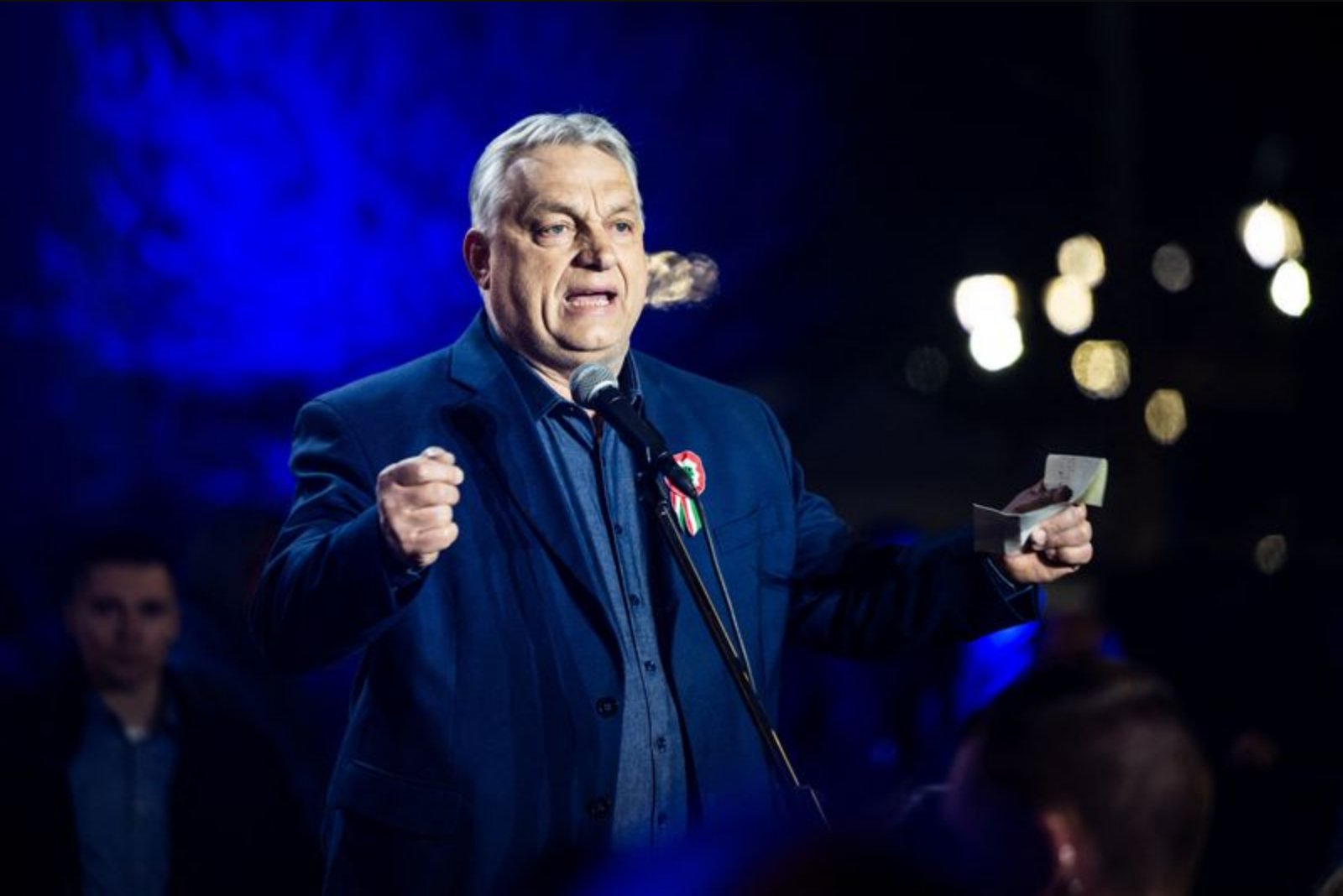
European Union leaders are expected to confront Hungarian Prime Minister Viktor Orban at a summit in Brussels on Thursday, urging him to lift his recent blockade of a 90-billion-euro loan package intended to support Ukraine's defense against Russia's invasion.
The loan was approved by EU leaders in December. Implementation was halted by Orban last month after he cited a dispute concerning the Druzhba pipeline - a conduit that transported Russian oil through Ukraine to Hungary and Slovakia - which officials say was damaged by a Russian attack in January.
Kyiv has said repairs to the pipeline will take time, while Hungary contends the facility is already capable of operation. Diplomats attending the summit say that other EU heads of state and government will highlight an agreement reached this week by Ukrainian President Volodymyr Zelenskiy to undertake repairs with technical assistance and funding from the EU, and will press Orban to withdraw his opposition to the loan.
Political and financial stakes
Orban's decision to block the loan has provoked anger among many EU counterparts, in part because Ukraine is projected to run short of cash within weeks without the fresh funding. Officials warn the standoff threatens the authority of the European Council, the EU's highest decision-making body, by undermining a collective decision taken by all 27 leaders.
Cypriot President Nikos Christodoulides underscored that point on Wednesday, saying the political decision made in December must now be implemented. "In December, we took a political decision - a political decision at the level of the European Council. Now is the time to deliver," he said at a Brussels event hosted by the European Policy Centre think tank. He added that he did not want to contemplate a scenario where a decision by the 27 leaders is not carried out.
Domestic politics and bargaining
Orban, described in diplomatic commentary as a nationalist and an ally of U.S. President Donald Trump who is engaged in a difficult re-election campaign, has frequently clashed with mainstream EU politicians. Diplomats note, however, that he has not previously reneged on an agreement reached by EU leaders at the European Council.
Many EU officials are particularly frustrated because Orban obtained an exemption - alongside the Czech Republic and Slovakia - from contributing to the costs of the loan. Despite the mounting pressure, Orban has shown no sign of reversing course. On Tuesday he posted on X: "No oil deliveries? No money. It’s that simple."
Implications for markets and sectors
- Public finance and sovereign funding - The loan's release is critical to Ukraine's near-term financing needs; a delay risks immediate fiscal stress for Kyiv.
- Energy sector - The dispute centers on the Druzhba pipeline, linking energy infrastructure and political bargaining.
- EU governance - The standoff raises questions about the effectiveness of collective decision-making within the European Council.
Exchange rate note
The reporting includes the exchange rate $1 = 0.8726 euros.