
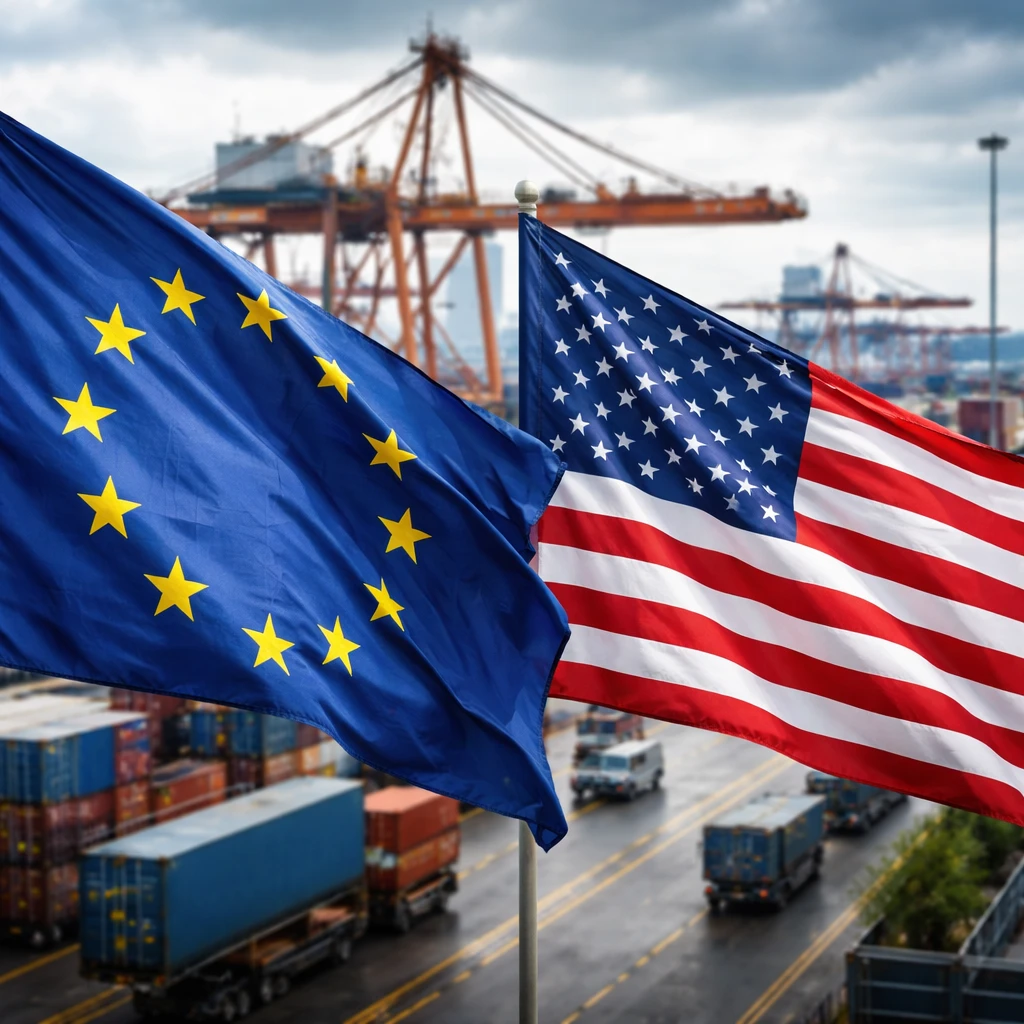
The European Commission has urged the United States to provide clear guidance on its trade policy after last week's Supreme Court ruling touched the legal foundation for U.S. tariffs. In a statement, the Commission emphasized that "a deal is a deal," signaling an expectation that Washington continue to honor the terms of its trade arrangements with the European Union even as legal circumstances evolve.
The appeal for clarity comes after President Donald Trump responded to the court decision by proposing a new 15% global tariff. That proposal has amplified concerns among EU officials in Brussels, who worry that sudden shifts in U.S. tariff policy could unsettle established transatlantic trade rules and the legal basis of previously negotiated agreements.
EU representatives said the bloc remains committed to constructive engagement with the United States but warned that unpredictable tariff actions risk creating uncertainty for businesses and supply chains. The Commission made clear it expects the United States to uphold fair and balanced trade conditions while both sides work to assess the implications of the ruling.
Officials in Brussels pointed to the scale of the relationship as a reason for urgent clarification: the EU and the U.S. continue to be each other's largest trading partners, making prompt agreement on tariff rules essential for policymakers trying to preserve momentum in ongoing talks and avoid a resurgence of trade tensions.
Summary
The European Commission has demanded that the United States clarify its trade policy following a Supreme Court ruling affecting the legal grounding of U.S. tariffs. The Commission reiterated that "a deal is a deal," and urged continued respect for existing trade commitments despite a U.S. proposal for a 15% global tariff. EU officials warned that unpredictable tariff moves could harm businesses and supply chains while both sides evaluate the ruling's consequences.
Key points
- The European Commission called for clarity from the United States after a Supreme Court ruling altered the legal landscape for tariffs.
- President Donald Trump proposed a new 15% global tariff in response to the court decision, prompting concern in Brussels about stability in transatlantic trade rules.
- Clarity is seen as critical because the EU and U.S. are each other's largest trading partners, and uncertainty could hamper ongoing negotiations and economic activity across trade-dependent sectors such as businesses and supply chains.
Risks and uncertainties
- Unpredictable tariff actions could create uncertainty for businesses, affecting investment and operational decisions - particularly for firms that rely on stable cross-border supply chains.
- The legal uncertainty stemming from the court ruling may complicate the enforcement or interpretation of previously negotiated trade agreements, potentially disrupting market conditions and planning for exporters and importers.
- Ongoing negotiations could lose momentum if clarity is not provided, increasing the risk of renewed trade tensions that would affect market sentiment and policymaking on both sides of the Atlantic.
The Commission's statement underscores a broader call for steadiness in trade relations at a time when legal developments and policy proposals are creating fresh questions about the durability of current arrangements. Both sides now face the task of assessing the ruling's implications while attempting to preserve a predictable framework for commerce between two of the world's largest trading partners.