
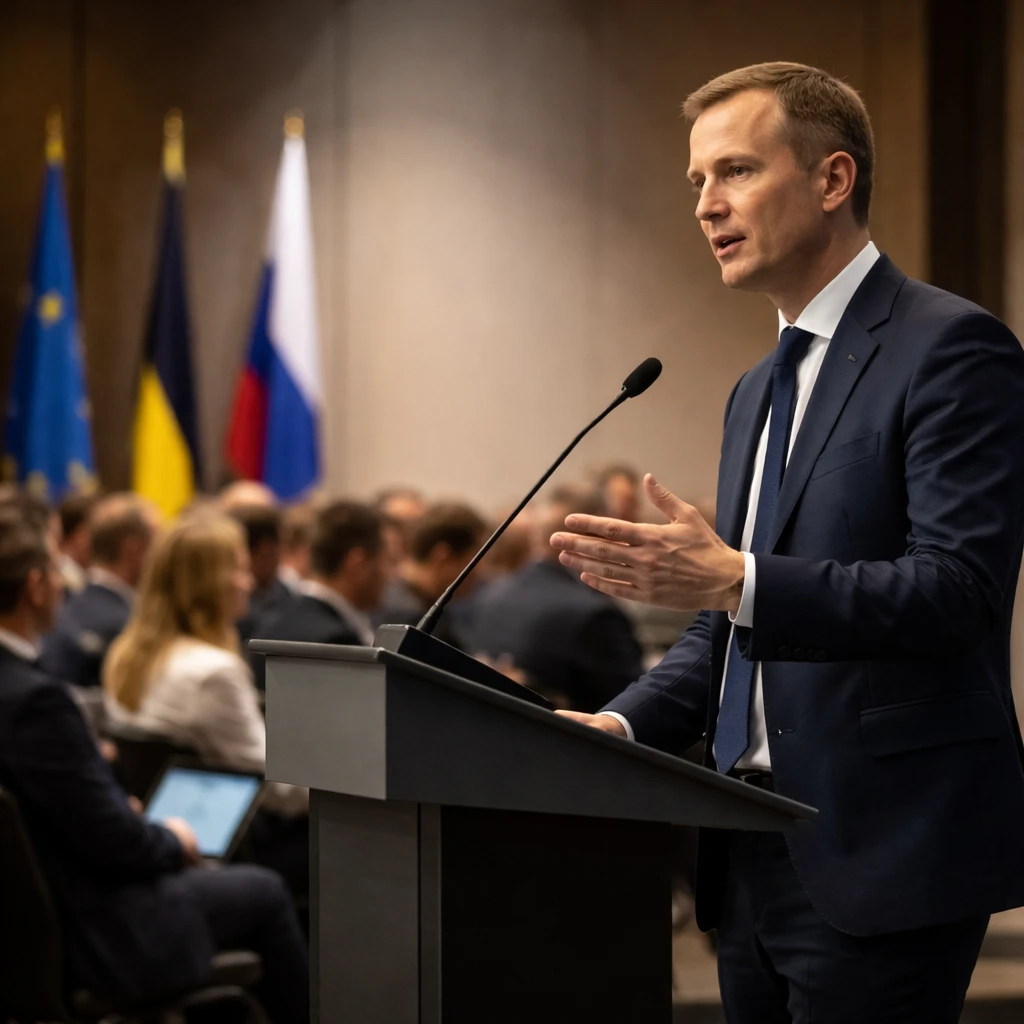
At a conference in Vilnius, Estonian central bank Governor Madis Muller said the odds that the European Central Bank's next adjustment to policy rates will be an increase have climbed in the last couple of weeks.
Speaking in a panel discussion, Muller singled out the recent surge in energy prices as a key factor the ECB must evaluate. He said policymakers need to determine whether the energy move and its subsequent impact on inflation will prove short-lived or endure for a longer period.
On the likelihood of tightening, Muller said: "Even if we shouldn’t rush into decisions, the probability of the next change in the policy rates now being more towards an increase, rather than the opposite, that probably has gone up in the last couple of weeks."
At the same time, he emphasised that there is no imperative to act hastily. In his remarks he reiterated that the central bank should take time to observe how energy prices transmit into broader inflation dynamics before committing to a change in rates.
The comments delivered in Vilnius reflect a cautious recalibration of the near-term policy outlook rather than a firm commitment to immediate action. Muller presented the situation as one requiring careful analysis of evolving price pressures, and he underlined the distinction between a rising probability of a hike and a definitive policy decision.
For markets and economic actors, the governor's remarks highlight an elevated degree of uncertainty tied to energy costs and inflation pass-through. While he indicated the balance of probability has shifted, his insistence on patience signals that any decision will be made only after observing whether the recent developments prove transitory or persistent.
Contextual note: Muller made these remarks during a panel discussion at a conference held in Vilnius. He identified the surge in energy prices and the resulting inflationary impact as the primary considerations for the ECB in assessing the next move on policy rates.