
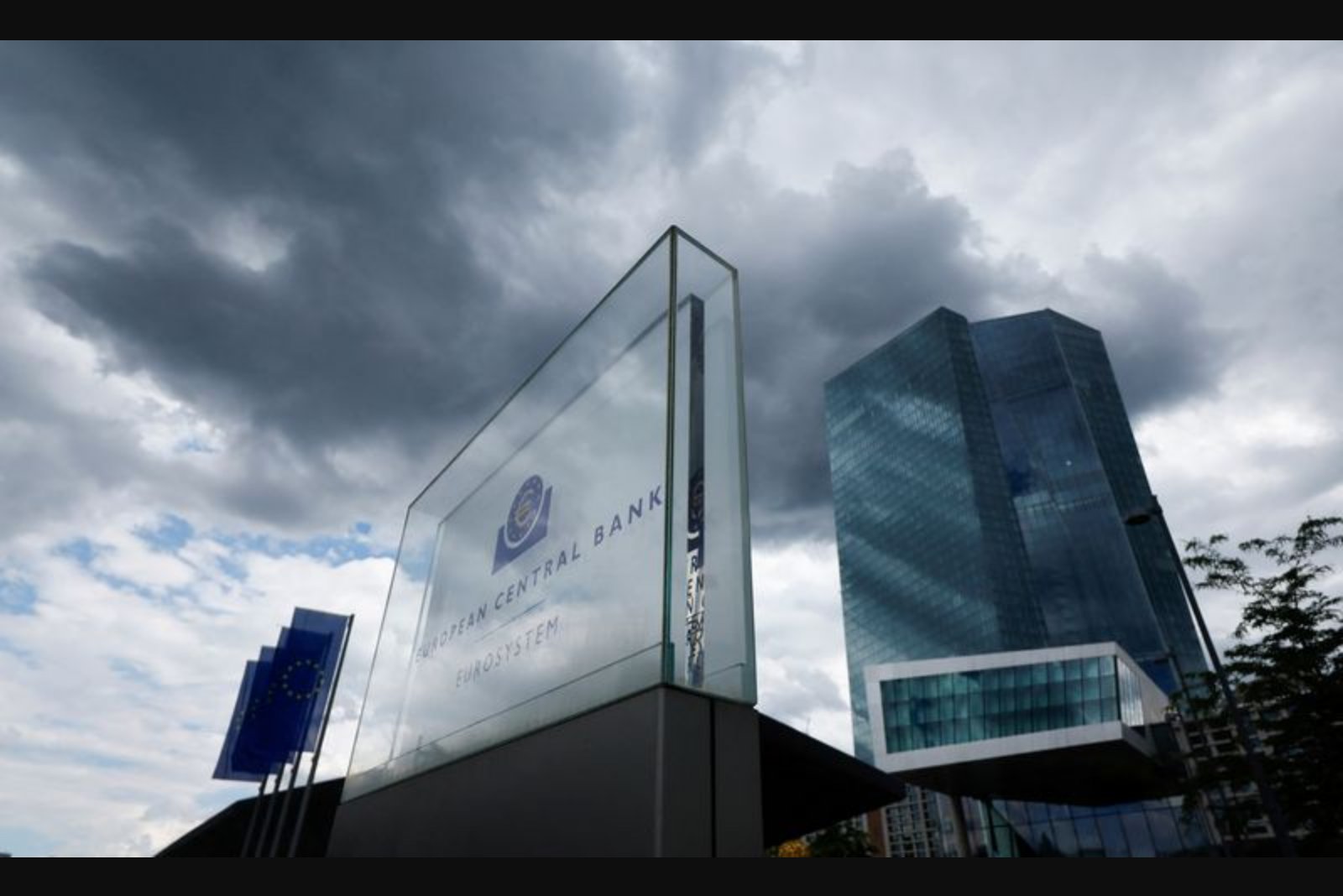
The European Central Bank convenes on Thursday, March 16, as a renewed surge in energy prices has forced the institution to reassess an outlook it had considered stable only weeks ago. Rising crude and gas costs since the outbreak of hostilities in the Middle East have revived concerns that energy could trigger another bout of elevated inflation at the same time memories of the 2022 shock remain recent.
Market participants and officials alike now find themselves operating under a high degree of uncertainty. "They are in the hands of military generals," one source said, reflecting how geopolitical developments have suddenly become central to the bank's policy calculus. President Christine Lagarde has signalled she will do everything needed to keep inflation under control, but the precise policy path remains unclear.
1) What will the ECB decide on Thursday?
Markets expect the bank to leave its policy rate at 2% at this meeting. Given the unknown duration of the conflict and the uncertain trajectory for energy prices, policymakers are likely to emphasize the fluidity of the situation. UBS chief European economist Reinhard Cluse said the ECB "can no longer say they’re in a good place because they don’t know whether they’re in a good place," underlining that near-term decisions will depend on how events unfold.
2) Is the region facing a fresh energy-driven inflation shock?
Inflation is widely expected to rise, though whether it becomes a sustained shock depends on how long the conflict lasts and on when shipping through strategic routes such as the Strait of Hormuz normalizes. Oil peaked near $120 last week and was trading at about $105 on Monday - roughly 40% higher since the war began and 70% higher year-to-date. European gas prices have climbed roughly 60% this month alone. These moves, if maintained, would exert significant upward pressure on consumer prices.
An earlier ECB assessment found that a permanent 14% increase in oil and gas prices would lift inflation by 0.5% and reduce growth by 0.1%, with a similar effect in a second year before fading. Investors' inflation hedges for the euro area over the next two years have reacted: a derivative used for that purpose has risen to around 2.70% from 1.75% prior to the conflict.
Before the latest hostilities, ECB projections had anticipated inflation undershooting the 2% target this year and next, which provided some policy buffer. Compared with the 2022 episode, risks now appear more tilted toward a growth impact than an inflation surge, TS Lombard economist Davide Oneglia said, pointing to the economy's weaker state and a cooling jobs market relative to the run-up before the earlier shock.
3) How might the ECB respond if energy-driven inflation intensifies?
At present, expectations of policy loosening have receded: the outlook for any rate cut this year looks remote, and traders are pricing in one rate increase this year with a considerable probability of a second by year-end. Lessons from 2022, when the bank was caught late to a rapid inflation acceleration, appear to have altered the rhetoric and stance. Officials are likely to avoid describing inflation as "transitory" and have pledged to act swiftly only if they judge inflationary pressures risk becoming entrenched through higher inflation expectations, wage demands or broader price-setting.
Some economists represented in market commentary argue that oil sustained above $100 for several months, accompanied by evidence of second-round effects on wages and prices, would be a trigger for tightening. Absent such evidence, the ECB may opt for caution, balancing the risk of inflation becoming persistent against the danger of harming growth.
4) What will the ECB's updated projections show?
The bank's new macro projections will incorporate only the initial days of the conflict and therefore are unlikely to capture the full amplitude of the recent spike in energy costs. Attention will focus on any scenario analysis included in the projections - Vice President Luis de Guindos has said the ECB is likely to present such analysis, as it did when Russia invaded Ukraine. Oil prices were already rising before the latest escalation and euro zone inflation unexpectedly accelerated last month, which had already put upward pressure on the December projections the ECB published earlier.
5) What about leadership continuity at the ECB?
Speculation persists over whether President Lagarde might leave before her term ends, though she has sought to temper such talk without offering an explicit denial. The possibility of an early departure would invite greater political involvement in selecting a successor. Market observers have identified former Dutch central bank head Klaas Knot and former Bank of Spain chief Pablo Hernandez De Cos among likely candidates. Knot is seen as hawkish but pragmatic, while De Cos is viewed as somewhat more dovish; neither is expected to fundamentally alter how the ECB conducts policy.
Analysts also note the succession remains uncertain because Lagarde herself was not an initial frontrunner in 2019 - suggesting a new leader could imprint a different style if inflation were to trend higher. At the same time, the emergence of a renewed inflation threat increases the odds that Lagarde may remain in office through the scheduled end of her term in October 2027, according to Deutsche Bank.
The ECB meets against a backdrop where energy markets and geopolitical developments have reasserted themselves as central determinants of near-term inflation and growth. For markets and policymakers, the immediate tasks are assessing how persistent the price shocks will be and whether they are already seeding broader inflationary dynamics that would require earlier or larger policy tightening.
Observers will watch the bank's language closely for signals about scenario work, the projected path for inflation and growth, and any indications of how the institution intends to balance the competing risks to price stability and economic activity as the year progresses.