
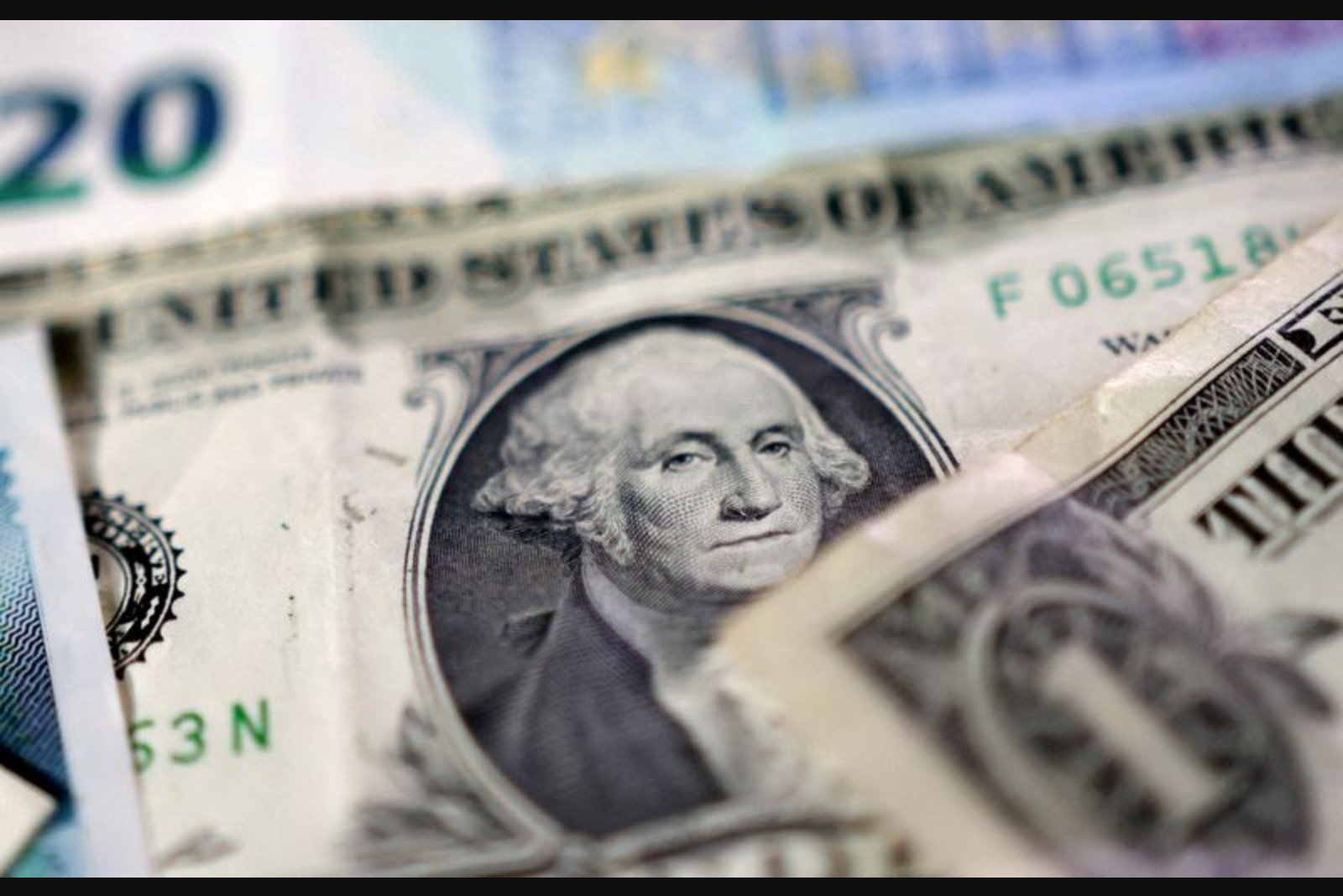
The U.S. dollar slid from recent multi-month highs this week as a surge in energy prices reshaped expectations for global interest rates. The price shock tied to Middle East energy flows left the Federal Reserve standing apart as the major central bank that markets do not expect to raise rates this year.
Prior to the outbreak of the U.S.-Israeli war on Iran at the end of February, investors had been pricing in two Federal Reserve rate cuts for the year. Those expectations have been materially revised and market participants now see even a single Fed cut as a remote possibility.
Across developed markets, currencies were on track for weekly appreciation against the dollar as policymakers signalled an increased willingness to consider tightening in response to disruptions to oil and gas supplies. The euro was trading at $1.1569 in the Asia morning and was up 1.4% for the week. The yen steadied near 157.88, recording a 1.2% gain on the week. Sterling, at roughly $1.3422, was up a bit more than 1.5% for the week, while the Australian dollar traded just under $0.71, posting a weekly advance of about 1.5%.
Benchmark Brent crude futures have risen about 50% since the U.S. and Israel began hostilities with Iran last month, a move that has effectively closed much of the sea lane used for Middle East energy exports. That jump in crude has been a fulcrum for central bank messaging and market repricing this week.
The European Central Bank left policy rates unchanged on Thursday but highlighted the inflationary impulse stemming from higher energy costs. According to people briefed on the deliberations, ECB policymakers are likely to start discussing rate hikes at upcoming meetings - a stance that contrasts with the Fed’s more cautious wait-and-see posture. Markets rapidly abandoned the view of a protracted hold on European rates at 2% and moved to price in a hike by June.
Reflecting the divergence, analysts at J.P. Morgan said: "While the Fed is willing to display patience in the face of a shock generating two-sided risks to its mandate, the ECB seems unusually sensitive. There appears to be a genuine tilt towards a rate hike this year, even if it remains uncertain how quickly it will translate into action."
The Bank of England also kept rates on hold, but its comment that it was ready to act triggered one of the sharpest routs in short-dated gilts on record. Markets that had been pricing lower rates have since put roughly 80 basis points of tightening into expectations for the remainder of the year.
In Asia, the Bank of Japan surprised some investors by leaving open the prospect of tightening as soon as April, undermining positions that had anticipated further depreciation of the yen and contributing to the currency's weekly gain.
Australia's central bank raised rates for the second consecutive month, and market participants now expect further increases, supporting the Australian dollar's advance.
Crude prices eased slightly on Friday after U.S. President Donald Trump advised Israel not to repeat strikes on Iranian energy infrastructure, following a series of exchanges that included damage to a Qatari gas facility. Earlier in the week, the Fed left policy unchanged as widely expected, with Chair Jerome Powell cautioning that it was too early to determine the scale and duration of any economic impact from the conflict.
The dollar index was relatively steady at 99.359 on Friday but was set to record a weekly decline of about 1.1%, the largest weekly fall since late January. Despite the recent pullback, a number of analysts warned against assuming a long-term slide. Carol Kong, a currency strategist at Commonwealth Bank of Australia, noted: "The longer the war drags on, the higher the U.S. dollar will go, because it will benefit from safe-haven demand arising from higher uncertainty (and) also from the U.S. being an energy exporter."
Market moves this week reflected a rebalancing of rate and risk assumptions across regions as higher energy prices feed directly into inflation considerations and thereby into central bank reaction functions. The combination of a sharp crude price rise, explicit central bank language and a visible shift in rate-linked market pricing has underpinned currency, bond and interest rate volatility across several major markets.
Summary
Soaring crude prices linked to the U.S.-Israeli war on Iran have pushed investors to reprice interest rate paths outside the United States, lifting the euro, yen, sterling and Australian dollar against the U.S. dollar. While the Fed has retained a patient tone, other central banks have signalled readiness to consider hikes, prompting market moves in FX and fixed income.
Key points
- Energy prices - Brent crude is up roughly 50% since the conflict began, tightening global energy supply prospects and influencing rate expectations.
- Central bank divergence - The ECB, Bank of England, Bank of Japan and Reserve Bank of Australia signalled greater sensitivity to energy-driven inflation risks compared with the Fed.
- Market reactions - Major currencies and short-term bond markets have repriced to reflect higher near-term tightening risks, notably a sharp move in short-dated gilts and increased odds of hikes in Europe and Australia.
Risks and uncertainties
- Duration of the conflict - If hostilities persist, safe-haven flows and additional disruptions to energy exports could alter currency and rate dynamics, affecting currencies and energy-exposed sectors.
- Inflation pass-through - Rising energy costs pose an upside risk to inflation in affected regions, creating uncertainty for central bank policy paths and fixed income markets.
- Policy divergence - Different central bank responses may lead to volatility in FX and bond markets as investors adjust expectations for interest rate differentials.