
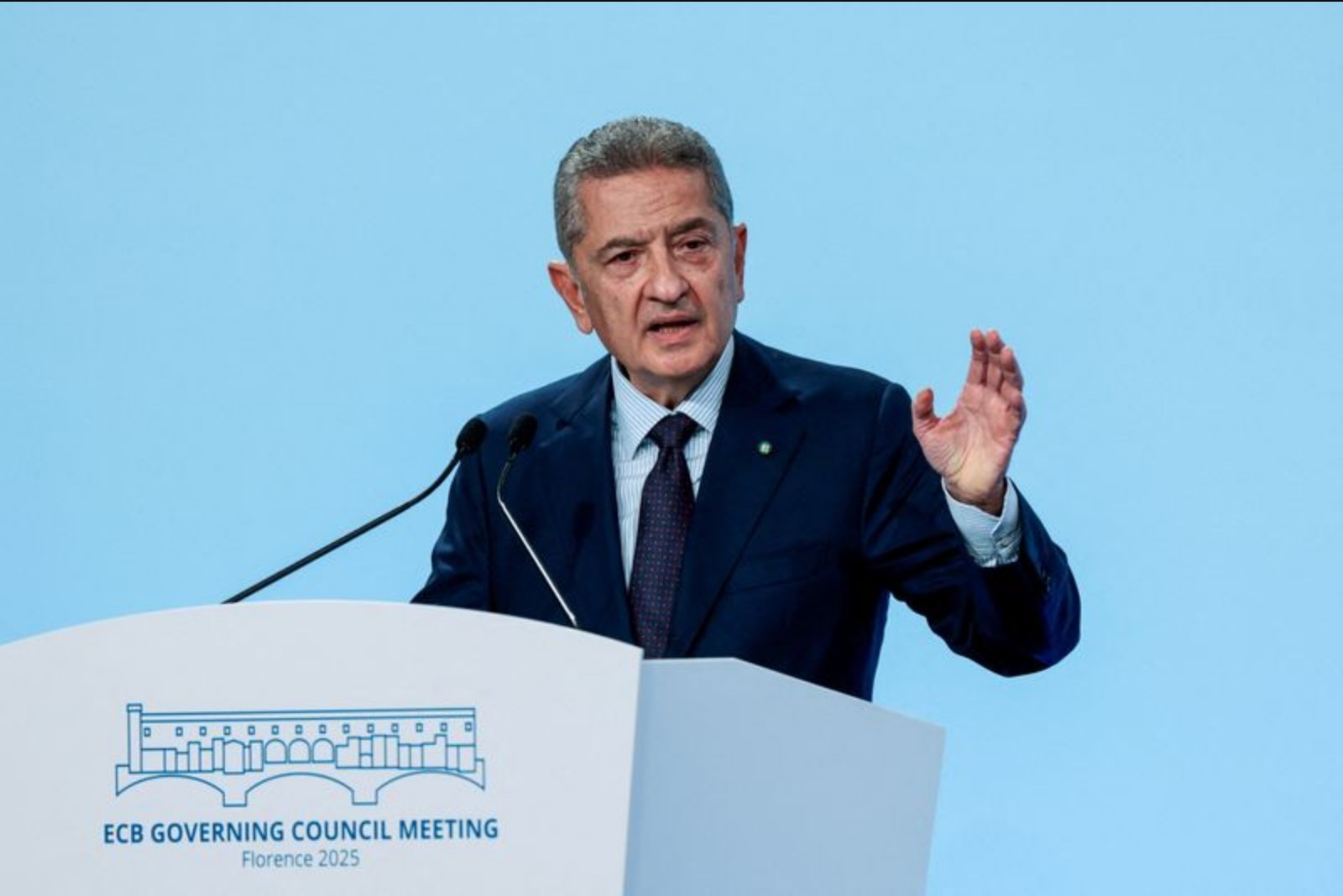
Fabio Panetta, governor of the Bank of Italy and a member of the European Central Bank's governing council, said the ECB will move in a "timely and measured manner" to prevent the present energy shock from becoming entrenched inflation.
Speaking at the Italian central bank's annual assembly in Rome, Panetta described the near-term inflation outlook as forward-looking and argued it appears to call for a recalibration of monetary policy by the ECB. He said that recalibration is intended to head off the risk that elevated energy costs feed through into broader, persistent price rises.
The ECB is widely expected to raise interest rates at its next governing council meeting on June 10-11, with a number of policymakers signalling a need for action. Panetta said the June meeting will be an important moment to evaluate how much of the recent rise in energy costs is passing through into the broader price environment.
On the outlook for commodity markets, the Bank of Italy chief warned that oil and gas prices are unlikely to return to normal quickly even if the Iran war is rapidly resolved. That caution underpins his argument for the central bank to be forward-looking in its policy response.
Panetta also highlighted signs of inflationary momentum in the real economy, noting that consumers' inflation expectations are rising and that businesses have already begun to plan price increases. Those developments are a concern for policymakers because they can reinforce inflation persistence if left unchecked.
At the same time, Panetta pointed out that medium-term inflation expectations in financial markets remain firmly anchored to the ECB's 2% target. That anchoring offers some reassurance that longer-term inflation expectations have not yet detached from the central bank's objective.
Context and implications
Panetta framed the case for measured policy adjustment around three central elements: the need to prevent an energy-driven rise in inflation from becoming self-sustaining; the upcoming governing council meeting on June 10-11 as a key decision point; and the uncertain near-term path of oil and gas prices even under a scenario of rapid resolution of the Iran conflict. He balanced those concerns with the observation that market-based medium-term inflation expectations continue to align with the ECB's 2% goal.
His remarks underline the ECB's focus on forward-looking policy decisions and the role of energy price dynamics in shaping the inflation outlook.