
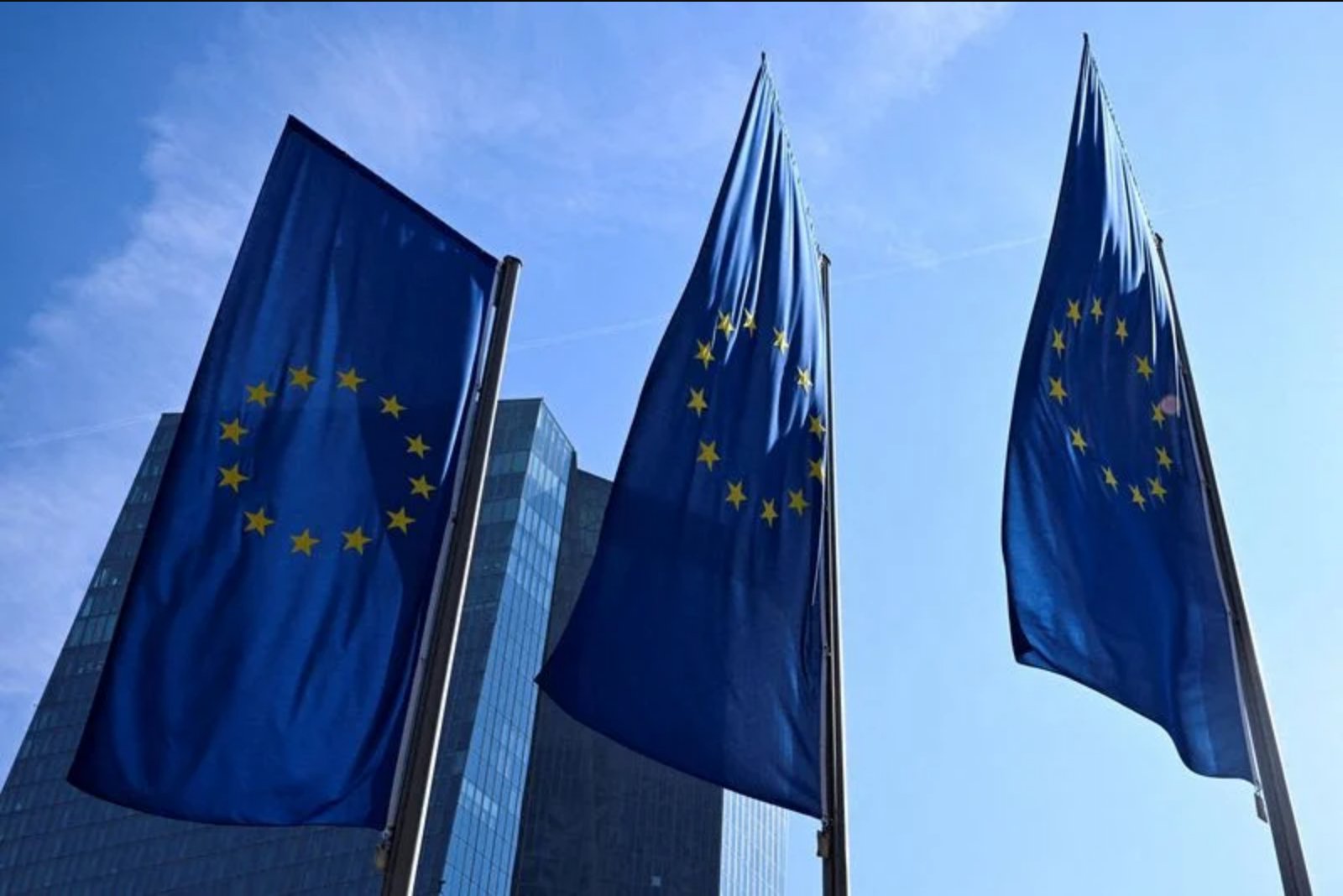
The European Central Bank appears ready to raise interest rates next week, marking the first move among the largest central banks since the outbreak of the Iran war created a fresh energy squeeze that is adding to inflationary pressures across the euro zone.
Policymakers are operating on a narrow path: they want to prevent higher prices from becoming entrenched while avoiding policies that would significantly deepen the hit to economic activity in the 21-country bloc, which is already weaker than it was during Europe’s previous energy shock in 2022.
Key questions for markets
Below are five issues that markets and analysts say will shape expectations around the ECB’s next moves.
1/ Is a June hike effectively certain?
Officials and market participants generally expect a rate increase next week. Support for a move extends across the policy spectrum, including from some officials typically viewed as dovish, such as Italy’s Fabio Panetta and Greece’s Yannis Stournaras. While the June step appears widely anticipated, the bank is not expected to commit to a clear path of further increases beyond that meeting.
2/ What comes after the June decision?
Future action will hinge importantly on the evolution of the conflict and the status of the Strait of Hormuz, a critical global energy corridor. Market pricing currently implies the ECB may lift rates once or twice more later this year after the June hike, with traders seeing September as the most likely timing for another move. Economists are more split: a recent Reuters poll found only 60% expect a second hike.
Financial market bets have been pared back somewhat as oil prices have eased, after traders initially priced in a more extensive tightening cycle including three hikes for 2026 earlier in the war period.
"Two rate hikes will likely be enough to bolster the ECB’s credibility without causing a major deceleration in the economy beyond what is already underway due to higher energy prices," said Reinhard Cluse, chief European economist at UBS.
3/ Are price pressures spreading through the economy?
Signs point to a possible widening of inflationary pressures compared with April. Headline euro zone inflation rose to 3.2% in May, and both services inflation and core measures that exclude food and energy increased for the first time since the outbreak of the war. That development may indicate price pressures are broadening, though analysts caution that calendar effects such as Easter could have influenced the data and that food inflation has eased.
Forward-looking indicators are therefore under close watch. Two elements that have raised concern are higher firms’ selling price expectations and a rise in medium-term consumer inflation expectations after the war began on February 28. On the other hand, selling price expectations stabilised in May, and a Reuters analysis showed only about one-third of the bloc’s largest companies signalled they were raising prices - a smaller share than during the 2022 episode. Consumer inflation expectations stabilised or fell in April and longer-term expectations remain near the ECB’s 2% objective, which could provide some reassurance to policymakers.
"True signs of second-round effects have not appeared in wage dynamics and inflation expectations yet," said Carsten Brzeski, head of global macro at ING.
Despite this, officials caution against waiting for wage growth to reflect the shock before acting, since wage responses typically display long lags and could lock in higher inflation if left unaddressed.
4/ What will the ECB’s updated projections show?
The bank is likely to lift its inflation forecasts in the new set of projections, according to ECB Chief Economist Philip Lane, while economists broadly expect downward revisions to growth. The projections will also refresh the alternative scenarios the ECB published in March. Current oil and gas prices leave the outlook sitting between the bank’s baseline and its adverse scenario, although the energy shock has persisted longer than the adverse scenario had assumed, a point made by board member Isabel Schnabel.
Analysts will pay particular attention to the central bank’s core inflation forecast as an indicator of how concerned policymakers are about inflation spreading beyond energy-related categories. Pia Fromlet, an economist at SEB, warned that a significant upward revision in core inflation projections could push markets to expect further rate hikes.
5/ Are non-monetary risks - private credit and AI - on the ECB’s radar?
On recent turbulence in private credit, the ECB’s assessment for now is that the euro area does not face systemic risk, largely because banks and other financial institutions have limited direct exposure; nevertheless, pockets of vulnerability exist. Separately, central bankers have highlighted artificial intelligence as a source of risk in the form of heightened cyber threats stemming from the newest AI models. The ECB has indicated it will urge banks to adopt proactive defence measures to counter these cyber risks, a step emphasised by board member Frank Elderson.
Markets and policymakers will be watching the ECB closely next week for both the immediate policy decision and the signals it sends about the likely path ahead. The combination of an economy that is softer than in 2022 and an energy-driven inflation impulse makes the bank’s task particularly delicate, as it seeks to contain price momentum without unnecessarily deepening the bloc’s economic slowdown.