
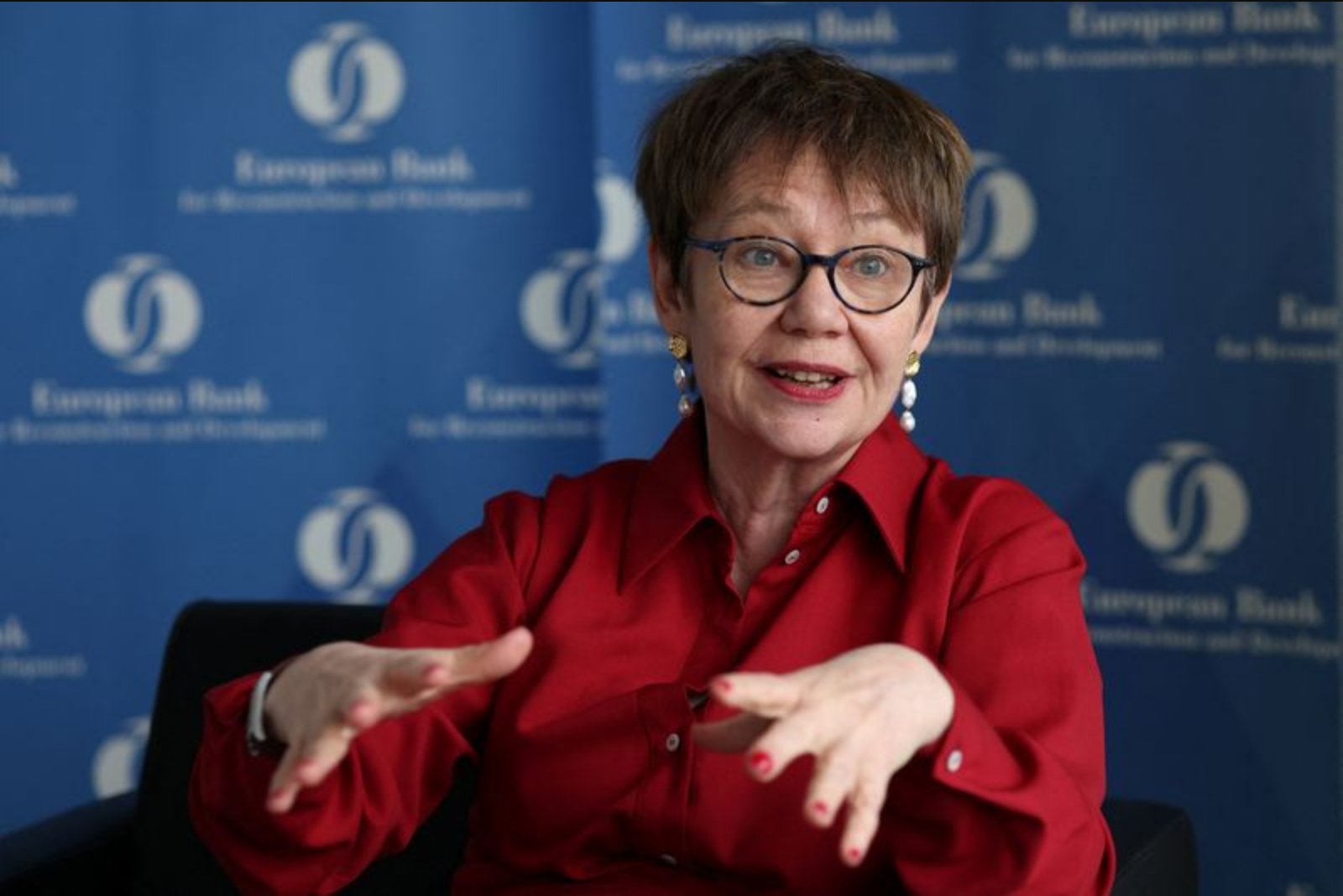
Europe's principal development lender is weighing intervention options to help businesses in the economies it serves absorb the economic shocks stemming from the war in Iran, the bank's president said.
The conflict, now into its third week, has pushed crude above $100 per barrel, reduced access to fertilisers and other goods that transit the Strait of Hormuz, and forced changes to air routes, according to comments by Odile Renaud-Basso, president of the European Bank for Reconstruction and Development (EBRD).
The EBRD, which supports private sector development across some 40 countries in Eastern Europe, Central Asia, the Middle East and Africa, is actively reviewing how it can assist clients in the most affected markets, Renaud-Basso told Reuters.
She said potential interventions could be aimed at helping companies manage the burden of elevated energy bills, obtain fertiliser supplies amid interruptions, or sustain businesses dependent on tourism in countries such as Egypt, Jordan and Lebanon as travel patterns shift.
"We are really already looking at what we can do to support our clients in the countries most definitely affected," Renaud-Basso said. She added: "This is a new shock and we need to be ready to provide support to accommodate this shock." She did not offer further detail on the exact form such support might take.
Renaud-Basso noted several channels through which the conflict could amplify economic pressure on the bank's countries of operation. One concern is a potential fall in remittances from migrant workers in Gulf states to home countries including Egypt and Jordan. The bank is also monitoring whether projects are delayed, cancelled or lose funding because of heightened uncertainty and rising energy costs.
Foreign direct investment may also decline if investor interest in emerging markets weakens, she warned. "The cost of funding has been increasing everywhere ... that could create also some macro challenges for some countries which already had quite a high level share of revenues allocated to debt repayment," Renaud-Basso said, flagging this dynamic as a worry for some Mediterranean states, Egypt, Tunisia and parts of Sub-Saharan Africa.
Benchmark yields on U.S. government debt, which inform the baseline cost of capital, have risen sharply since the conflict began, she said, while Gulf states are reassessing how they deploy assets managed by sovereign wealth funds to help offset war-related losses.
"What is clear ... is that we will see a lot of demand for investment in energy security and diversification of energy," Renaud-Basso said, pointing to stronger demand for projects aimed at reducing exposure to energy supply shocks. She added that countries such as Turkey, which have already invested in energy diversification and renewable generation, are less exposed to external supply and price shocks. "That will be a trend that we are likely to see, and a lot of demand for this kind of investment, for example," she said.
Renaud-Basso also linked the Iran war to the broader geopolitical and fiscal environment affecting Ukraine. She said the conflict is "not helpful for Ukraine" because elevated energy prices could bolster Russian state revenues and strain Ukraine's public finances. The EBRD suspended investment activity in Russia after it invaded Ukraine in 2022.
She further cautioned there "may be some tension on the supply" of weapons for Ukraine. "For us, it’s very important to continue to support Ukraine, and that the funding committed to Ukraine by the EU in particular is delivered," Renaud-Basso said.
Context and next steps
The bank's review of support measures is at an early stage; Renaud-Basso provided no specific programmes or funding commitments. The areas under consideration reflect disruptions already evident in energy markets, agricultural inputs and travel, and the bank is watching how shifts in capital flows and rising borrowing costs may affect fiscal positions and project financing across its regions.
The EBRD's mandate to promote private sector development gives it a range of instruments it may deploy, but any concrete interventions would depend on further assessment of needs, risks and financing options in affected countries.