
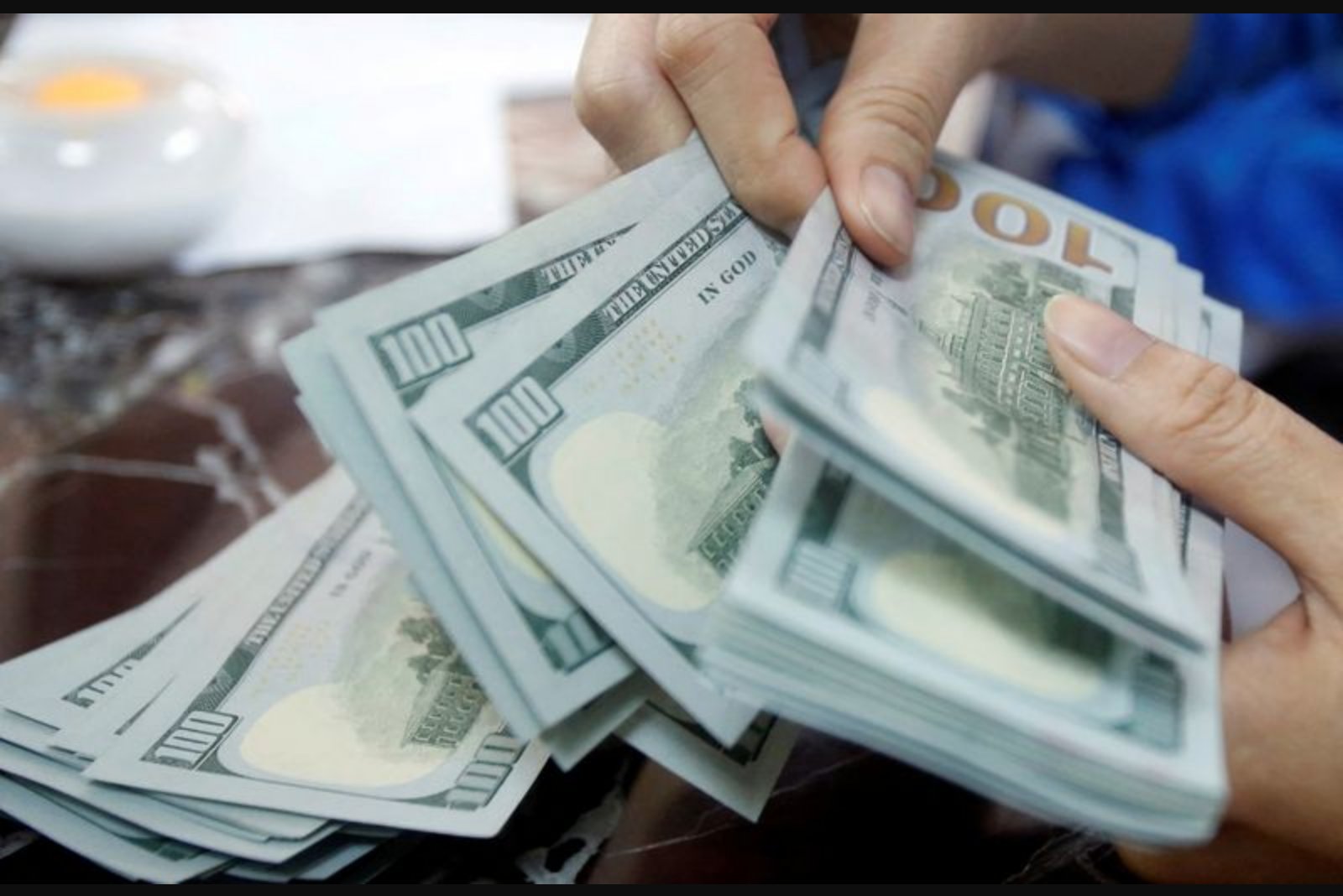
BENGALURU, March 4 - The U.S. dollar's bounce since the start of the U.S.-Israel conflict with Iran may not persist, according to a monthly survey of foreign exchange strategists conducted almost entirely in the days after the first missiles were launched. While the greenback has ticked higher in the immediate term - helped by traders covering short positions and a surge in oil - most strategists still expect the dollar to soften over the course of the year.
Traders had been positioned short the dollar since December, reflecting an expectation that the currency would fall. On a trade-weighted basis, the dollar has declined roughly 12% since the start of 2025. That backdrop made the recent uptick - the dollar is up about 1.5% since Monday - particularly sensitive to short-covering and commodity moves, with oil acting as a prominent trigger for the move.
Interest rate market pricing and strategists' views
Interest rate futures no longer reflect a June Federal Reserve rate cut, a shift that has lent some immediate support to the dollar. Nevertheless, contracts still imply roughly two cuts by year-end. Despite that change in near-term pricing, the median responses from 60 analysts in the survey showed expectations for a weaker dollar going forward.
Poll medians indicated the euro rising about 2% to $1.18 by end-March, then climbing to $1.19 in three months and $1.20 in six months - projections that were broadly unchanged from the prior month. The year-ahead median forecast had the euro at $1.21, though forecasters displayed a wide range of views: the spread of one-year forecasts was about 18 cents, the joint-widest range recorded in recent monthly polls.
"We haven’t changed our stance. We’re still continuing to expect euro-dollar and various dollar crosses to trade choppily this year," said Jane Foley, head of FX strategy at Rabobank. "But is the dollar as safe as it used to be? Probably not, because if it was, we wouldn’t be having this debate over the last year or so in the first place," she added.
Drivers of the short-lived rally
The pattern of the recent dollar rally differed from a classic flight-to-quality. Because market positioning was skewed toward dollar shorts ahead of the outbreak of hostilities early on Saturday, the initial reaction involved deleveraging and short-covering rather than fresh buying of U.S. assets.
"We had highlighted two weeks ago that some deleveraging signals were appearing in our flows data, perhaps partially linked to U.S.-Iran risk. It was therefore not surprising to see more such deleveraging Monday," JP Morgan FX strategists wrote in a note this week. They estimated that if dollar shorts were broadly covered back to flat, that would imply support worth about +1.5-2% to the dollar from current levels, though the magnitude would depend on how the conflict unfolds.
Commodity shock and emerging markets
Brent crude has jumped nearly 15% since Friday on concerns about supply disruptions and is now up around 37% in 2026. The oil spike has amplified pressure on emerging market currencies and higher-yielding sovereign bond markets, especially in Asia and Latin America.
Most emerging market currencies have broadly weakened this week, with Asian currencies particularly hit by the combination of higher oil prices and rising bond yields. "EM and Latam currencies are suffering from risk-off exacerbation with the double whammy of higher oil and the new jump in real yields... For now, more defensiveness is likely before any attempt of dip-buying," said Alejandro Cuadrado, global head of FX and Latam Strategy at BBVA.
Global equities have sold off, while conventional safe-haven assets have shown mixed performance. U.S. Treasuries have underperformed relative to typical crises, and gold, although still up about 20% so far this year, has pulled back somewhat.
Positioning and market sentiment
When strategists were asked how positioning might change by the end of March, responses were split. Of 45 strategists who answered that question, about half - 21 - said there would be little change or that short positions would increase. Nineteen said net-shorts would decrease, while only five expected positions to flip to net-longs.
Market participants also cited residual uncertainty around U.S. trade policy and the future of tariff measures, which continues to weigh on sentiment. Questions about central bank independence have been only partially soothed by Kevin Warsh’s nomination as the next Fed Chair, leaving some investors cautious.
Dan Tobon, head of G10 FX at Citi and one of the few who expects the dollar to strengthen, described the prevailing atmosphere among clients: "I’ll constantly have these client calls where one person on the team is dollar-bullish, one is dollar-bearish and the other person just decides, 'I’m not even going to look at the dollar'," he said.
He added, "This uncertainty on how the U.S. economy and labour market in particular will evolve from here - the range of outcomes - is tremendous. And that uncertainty for now is actually keeping the euro-dollar effectively pegged in a range."
Bottom line
While short-covering and higher oil prices supported the dollar in the immediate aftermath of hostilities, the majority of FX strategists in the monthly survey still expect the dollar to lose ground through the year as markets anticipate Fed easing. Near-term volatility, commodity-driven pressure on emerging markets, and a wider dispersion of long-term forecasts underscore the uncertain path ahead for currency markets.