
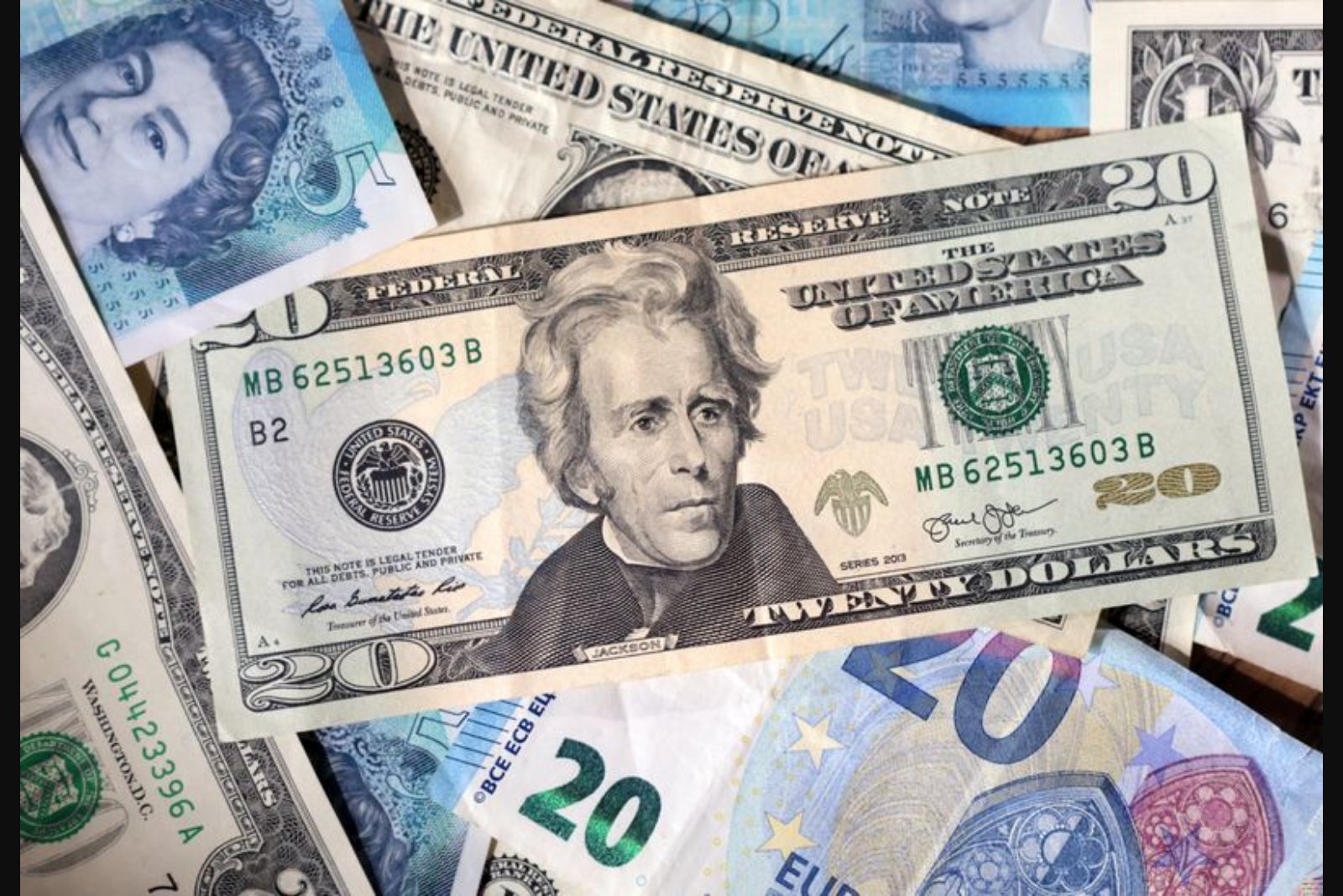
Global currency markets reacted on Monday to a high court ruling that struck down a wide swath of tariffs implemented by the U.S. president, with the dollar easing against several major peers. Traders treated the decision as potentially supportive for growth outside the United States, though concerns about regional tensions and legal ambiguity around replacement measures limited the scale of moves.
Through the Asia session - which saw thinner activity amid a public holiday in Japan and China’s Lunar New Year - the euro traded 0.4% higher at $1.1820, while sterling gained 0.3% to $1.3516. The dollar also fell 0.4% to 154.40 yen.
Policy developments at the center of the market shift stem from the Supreme Court’s finding last Friday that the president’s extensive tariff actions exceeded his statutory authority. In response, the administration announced a blanket 15% levy on imports and maintained that higher-tariff arrangements with trading partners should remain in place.
"It weakens the dollar in the sense that it potentially benefits non-U.S. growth," said Sim Moh Siong, currency strategist at OCBC Bank in Singapore. He noted, however, that longer-term foreign exchange consequences were mixed: lower U.S. revenues could weigh on the fiscal position and the dollar, yet curbing executive authority on trade may also remove a source of policy volatility.
Other currency moves included the New Zealand dollar trading a touch higher at just shy of 60 cents, while the Australian dollar dipped slightly to $0.7070 - a pair of moves shaped in part by the fact that U.S. tariffs on Australian goods had previously been set at 10%. The Swiss franc, often sought as a haven, jumped 0.5% to 0.7727 francs per dollar.
Market strategists framed the ruling as a constraint on the administration’s tariff toolkit. "This decision is another chip away at Trump’s power ... so that’s a positive for markets," said Jason Wong, strategist at BNZ in Wellington, while also warning that the interplay of factors left the situation difficult to trade.
Beyond the legal dispute over tariffs, investors were watching developments in the Middle East as the United States expands military presence to press Iran on its nuclear ambitions, and looking toward the president’s State of the Union address scheduled for Tuesday.
The administration’s interim replacement levies run for 150 days, with a key open question unresolved by the court: whether importers who already paid duties are entitled to refunds. The Supreme Court made no ruling on that point, leaving market participants and traders facing potential years of litigation and a period of activity-dampening uncertainty as efforts continue to find a more permanent tariff structure.
"It does reflect on the fact that the administration’s strategy to raise revenue is built on sources that could face significant uncertainty, while the propensity to spend continues to be high," said Tai Hui, Asia-Pacific chief strategist at J.P. Morgan Asset Management. He added that such dynamics could keep bond investors attentive to questions of fiscal discipline.
European officials urged the United States to adhere to an agreement reached with the bloc last year that preserves zero tariffs on certain items, including aircraft and spare parts, emphasizing the need to respect sector-specific commitments.
Trading partners in Asia and global investors were described as cautiously weighing a fresh layer of uncertainty following previous misreads of market responses to the tariff measures - which, notably, had not reduced the U.S. trade deficit.
Looking back to the period before the president’s election, many investors had anticipated that tariffs would lift the dollar as other economies moved to loosen their currencies to protect exports. Instead, through 2025 the dollar fell - the dollar index dropped more than 9% - as markets focused on expectations for interest rate cuts, concerns about the U.S. fiscal deficit and the administration’s unpredictable policy manoeuvres.
"The key issue ... is that the Trump administration will be much more constrained in their ability to use tariffs in general," said Richard Yetsenga, ANZ’s group chief economist, on the bank’s podcast. "I don’t think this will change too much about the global economy."
With legal wrangling expected to continue and geopolitical developments adding to headline risk, currency and bond markets are likely to price in both the immediate effects of the court decision and the uncertain path of U.S. trade policy going forward.