
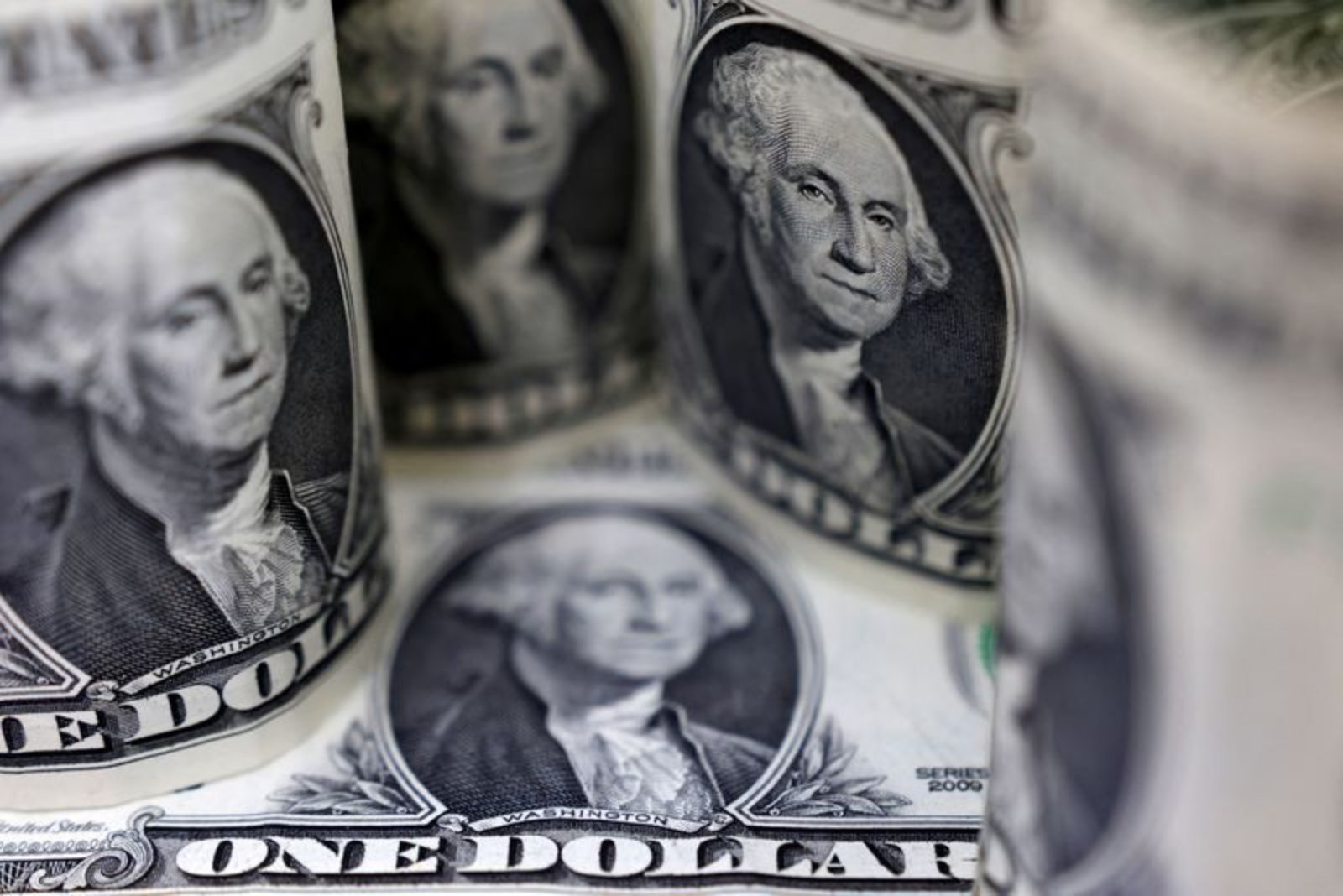
The U.S. dollar opened on the back foot in Asian markets on Thursday as a robust outlook from Nvidia lent support to equities and market participants awaited further details on U.S. tariff policy. The U.S. dollar index, which tracks the greenback against six major currencies, extended losses from the previous session and slipped to 97.592 amid lingering uncertainty over how the White House will react to a recent Supreme Court decision.
The Supreme Court’s February 20 ruling that struck down emergency tariffs has left the application of levies in flux. U.S. Trade Representative Jamieson Greer said on Wednesday that the U.S. tariff rate for some countries will rise to 15% or higher from the newly imposed 10%, but did not identify any trading partners or provide further implementation details.
Analysts weighed in on the policy backdrop. "President Trump’s 2026 State of the Union address focused on the economy but provided little-to-no information on new policy initiatives," wrote analysts from Westpac. The U.S. Trade Representative "offered no details regarding how the higher tariff will be applied in situations where it breaches U.S. trade deals." These gaps left investors seeking clarity while positioning around potential trade policy shifts.
Risk sentiment received a lift after Nvidia, a bellwether for the artificial intelligence sector, forecast first-quarter revenue above market expectations on Wednesday. That guidance refreshed buying interest on Wall Street and helped extend a tech-led rally that pushed U.S. equities to two-week highs. Stocks pared some gains in after-hours trade, with U.S. equity futures drifting slightly lower following the initial positive reaction.
Currency markets reflected both the improved risk tone and ongoing idiosyncratic pressures. The Japanese yen strengthened about 0.2% versus the dollar to 156.045, recovering some ground after touching two-week lows on Wednesday. Reporting in the Yomiuri newspaper said Bank of Japan Governor Kazuo Ueda intends to scrutinise incoming data at the March and April policy meetings when considering any move to raise interest rates, leaving open the possibility of a near-term hike. The Yomiuri report also noted that the yen’s prior weakness followed the Japanese government’s appointment of two academics to the central bank board who are seen as advocates for economic stimulus.
Economic commentators flagged risks surrounding policy influence and market reaction. "Further efforts from the Takaichi government to influence the BOJ threatens another round of turmoil in Japan’s bond and currency markets," wrote analysts from Capital Economics. "But we think the underlying fundamentals point towards continued stabilisation in the JGB market and a rebound in the yen."
Fixed income moves were modest. The yield on the U.S. 10-year Treasury was last recorded up 0.2 basis point at 4.048%.
Market pricing continues to show broad confidence that the Federal Reserve will hold interest rates steady at its next meeting. Fed funds futures imply a 98% probability that the Fed will keep policy unchanged at its next two-day meeting on 18 March, according to the CME Group’s FedWatch tool, a level little changed from the prior day.
Across other currencies, the dollar held flat at 6.854 in offshore trading against the Chinese yuan, leaving the yuan near its strongest levels in three years. The euro was steady at $1.1815 while the British pound was little changed at $1.3555. The Australian dollar traded at $0.7127. The New Zealand dollar briefly slipped below $0.60 against the U.S. dollar before recovering and was last flat at $0.6001.
In digital assets, Bitcoin extended losses, down 1.0% to $68,218.64, while ether fell 1.9% to $2,060.31.
Financial market participants are navigating a mix of corporate earnings cues, central bank commentary and trade-policy uncertainty. Nvidia’s upbeat revenue forecast provided a near-term boost to risk assets, while questions around tariff implementation and potential shifts in BOJ policy left currencies and bonds sensitive to incoming announcements and data.
Tools that scan company fundamentals and market signals were mentioned in market commentary. A promoted tool, ProPicks AI, evaluates companies including Nvidia using a broad set of financial metrics to identify investment ideas and compares them across strategies, noting past winners. The tool positions itself as objective and designed to highlight stocks that fit favourable risk-reward profiles based on current data.