
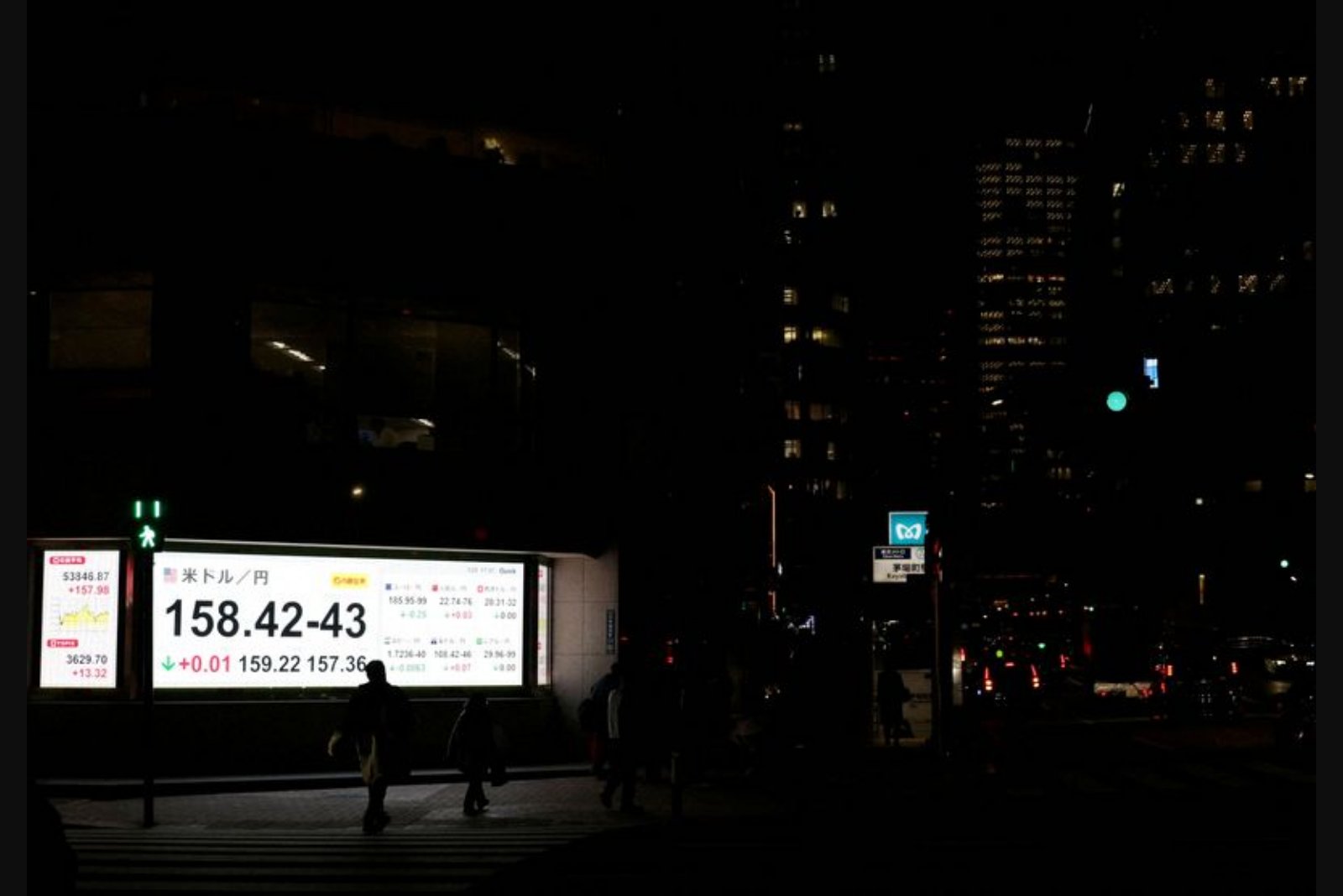
The dollar slipped on Tuesday as Asian markets reopened after holidays, with investors digesting fresh turbulence around U.S. tariff policy and its implications for global trade. The greenback retained some of its prior losses as markets considered the fallout from renewed tariff rhetoric and recent legal developments related to the trade measures.
Markets moved against a backdrop in which the U.S. Supreme Court found that the use of a 1977 emergency law to impose tariffs exceeded presidential authority. President Donald Trump responded by warning nations not to retreat from recent trade deals and signaled further tariff actions in public comments over the weekend.
Across currency markets, the dollar index - which measures the greenback against a basket of currencies - was flat at 97.69, following a decline of as much as 0.45% in the previous session. The euro edged up 0.07% to $1.1793. The yen was modestly softer, weakening 0.03% to 154.71 per dollar.
Ray Attrill, head of currency strategy at National Australia Bank, captured the prevailing sentiment on a NAB podcast: "Now we're back in a very uncertain environment," he said. "It’s just the uncertainty about what the future trade landscape will look like, just at a point where most countries had signed or were on the cusp of signing trade deals." His comment reflects market attention to how the legal and political developments could reshape trade relationships and investor expectations.
On policy specifics, President Trump said on Saturday he would raise a temporary tariff from 10% to 15% on U.S. imports from all countries - the maximum allowed under the relevant law. On Monday he took to social media to state that countries that "play games" in the wake of the Supreme Court’s ruling would face even higher duties.
The White House is reportedly considering additional national security tariffs on a range of industries. The Wall Street Journal said administration officials have discussed potential measures targeting large-scale batteries, cast iron and iron fittings, plastic piping, industrial chemicals and power grid and telecom equipment. Those industries were specifically named as being under consideration for new restrictions.
The tariff uncertainty has already affected trade negotiations and diplomatic engagement. The European Parliament decided on Monday to delay a vote on the European Union’s trade deal with the United States because of the new import tax. Meanwhile, Japan’s government said trade minister Ryosei Akazawa spoke with U.S. Secretary of Commerce Howard Lutnick on Monday to request that Tokyo’s treatment under any new tariff measures not be less favourable than last year’s agreement.
Currency market action in Tokyo was also influenced by reporting on the conduct of short-term intervention measures. The Nikkei newspaper said U.S. authorities led so-called rate checks last month - operations intended to test market conditions - and a subsequent report said U.S. officials conducted rate checks in January without a request from Tokyo and were prepared to undertake joint intervention to support the yen. The Nikkei coverage coincided with a slightly weaker yen as Japan returned to trading after a long weekend.
Beyond trade and currency mechanics, analysts flagged broader risk factors. Renewed trade uncertainties are surfacing at the same time that "doubts creep in" about the durability of heavy investments in artificial intelligence, the article noted, and Federal Reserve policymakers have continued to voice concerns about elevated inflation. The U.S. central bank is expected to keep interest rates on hold until at least June.
Fed Governor Christopher Waller said on Monday he was open to leaving interest rates unchanged at the Fed’s March meeting if forthcoming February jobs data showed the U.S. labor market had "pivoted to a more solid footing" after a weak 2025. That expectation keeps market attention focused on near-term economic data as a driver of monetary policy decisions.
Geopolitical developments were also on investors' radar. The U.S. State Department said it is withdrawing non-essential government personnel and their eligible family members from the embassy in Beirut, a senior State Department official said on Monday, citing growing concerns about the risk of a military conflict with Iran. Such moves contribute to a wider risk-off environment that can influence currency flows and risk assets.
Regional currencies showed small moves: the Australian dollar strengthened 0.1% against the greenback to $0.7061, while New Zealand’s dollar rose 0.08% to $0.5961. Cryptocurrencies recorded modest gains, with bitcoin up 0.6% at $64,961.86 and ether rising 0.2% to $1,866.88.
Overall, investors are balancing legal rulings on trade measures, fresh presidential directives on tariffs, market reports about intervention readiness, persistent inflation concerns and geopolitical developments as they re-enter Asian trading sessions. That confluence of factors has left the dollar subdued and contributed to an uncertain near-term outlook for global trade and currency markets.
Summary
Asia’s reopening coincided with renewed U.S. tariff threats and market reports of U.S. rate checks, leaving the dollar subdued. Legal limits on emergency tariff use, proposed tariff increases and the prospect of additional national security measures have clouded trade prospects. Monetary policy considerations and geopolitical tensions added to investor caution.
Key points
- Legal and political developments over U.S. tariffs have introduced fresh uncertainty for global trade and currency markets, weighing on the dollar and prompting policy and diplomatic responses.
- Market moves were modest: the dollar index was flat at 97.69; the euro was $1.1793; the yen was near 154.71 per dollar; the Australian and New Zealand dollars rose slightly.
- Monetary policy and geopolitical risks - including Fed commentary on interest-rate timing and a State Department drawdown in Beirut - are amplifying investor caution across asset classes, including cryptocurrencies.
Risks and uncertainties
- Uncertainty over the trajectory of U.S. tariff policy - including a planned increase from 10% to 15% and potential new national security tariffs - threatens to disrupt trade negotiations and cross-border commerce.
- Reports of currency "rate checks" and readiness for joint intervention cloud the near-term outlook for FX stability, particularly for the yen and other Asian currencies.
- Geopolitical tensions, highlighted by the withdrawal of non-essential personnel from the U.S. embassy in Beirut amid concerns about a possible military conflict with Iran, introduce additional market risk.