
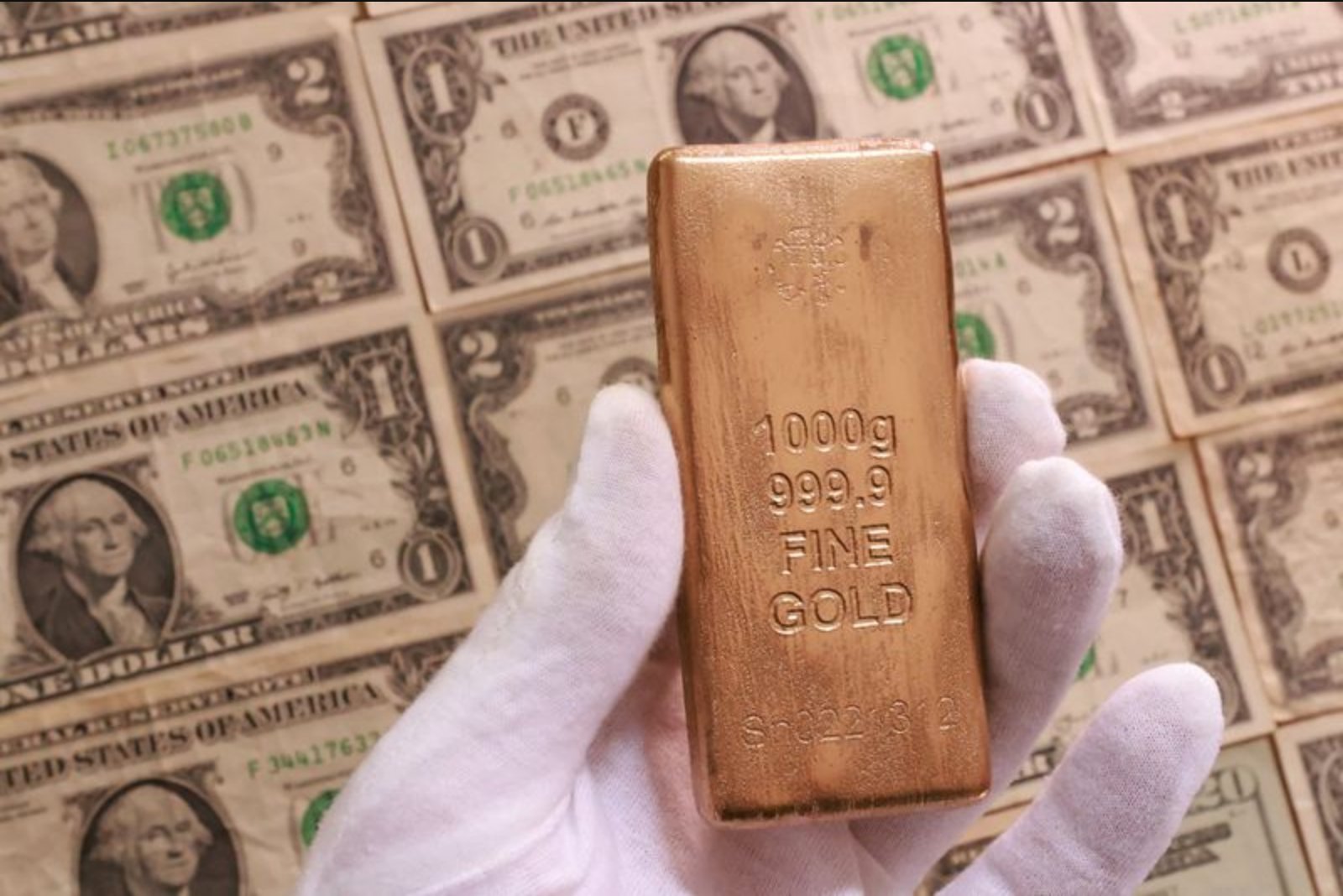
Market jitters following developments in the Middle East have reignited a familiar question for investors: which assets actually provide safety when uncertainty spikes? Recent moves underline that the answer is not clear-cut. Traditional havens have shown divergent behaviour, with the U.S. dollar, government bonds, gold, so-called currency refuges and defensive equities each responding for different reasons rather than in lockstep.
The dollar: a conditional refuge
This week the U.S. dollar has arguably emerged as the strongest among commonly cited safe havens. The dollar index, which measures the greenback against six major peers, has risen 1.5% in the period under review. Unusually, the dollar has even strengthened versus two currencies that typically outperform in stress scenarios - the Swiss franc and the Japanese yen.
Flow data point to demand concentrated in short-term dollar cash rather than a broad-based move into other dollar assets. The energy picture matters too: as the U.S. is a net energy exporter, a shock that lifts Brent crude above $80 a barrel can support the currency.
Still, the dollar's status is not absolute. "The dollar has some safe-haven characteristics, but it is context specific," said Morgan Stanley head of FX strategy James Lord. He added that policy uncertainty in the United States has eroded some of the currency's defensive qualities, meaning its outperformance may not be sustained in every shock.
Sovereign bonds: defensive label tested
Government bonds have not drawn the classic flight-to-safety flows in the current episode. Instead, investors appear to be trading sovereign debt primarily through the lens of inflation expectations. Concerns about fiscal trajectories have also weighed on sovereigns' appeal as havens.
Specific fiscal policy moves, such as Germany easing its debt brake, and broader anxieties around heavier government borrowing have dented the defensive narrative. Yields on Germany's 10-year Bunds, the euro zone benchmark, have risen 14 basis points so far this week, underscoring that sovereigns are being buffeted by fiscal considerations as much as by safe-haven demand.
"Germany is a flight-to-quality kind of investment, but you don’t really want to be playing around at the long end of the bull market if they’re raising more debt," said Bryn Jones, head of fixed income for Rathbones.
Gold: volatile but credible
Gold's credentials as a refuge remain solid according to many market participants, despite marked price swings. The metal has delivered a roughly 240% gain so far this decade, highlighting its long-term role in portfolios. Yet it has also shown short-term volatility, including a sharp fall on Tuesday.
Analysts point out that part of that volatility can be explained by investors selling strong-performing assets to cover losses elsewhere, an adjustment that depressed market sentiment during the recent spike in regional tensions. That selling does not, in their view, negate gold's defensive case given ongoing worries about inflation, geopolitics and high sovereign debt levels.
State Street noted that gold allocations in funds remain low, under 1% of global fund assets, compared with a 5-10% strategic allocation range it cites. "As a base case, $6,000 is more likely than $4,000 this year, and we’re just above $5,000," said Aakash Doshi, head of gold strategy at State Street Investment Management, reflecting a bullish baseline scenario embedded in that firm's view.
Classic currency havens under pressure
The Swiss franc and the Japanese yen, long viewed as currency refuges, have not escaped weakness. They have slipped 1.2% and 0.8% respectively so far this week.
From a valuation standpoint some investors still prefer the yen. "The one that looks relatively attractive from a valuation perspective is still probably the Japanese yen. It stands out to me as one that can provide protection in this environment," said Justin Onuekwusi, chief investment officer at St. James’s Place.
However, political developments have clouded the outlook for the yen after reports that Japanese Prime Minister Sanae Takaichi has voiced reservations about further rate hikes. For the franc, the Swiss National Bank's public warning that it stands ready to act to restrain excessive appreciation may limit upside, with Goldman Sachs strategist Teresa Alves noting that heightened SNB intervention risks could undermine the franc's haven attributes during this shock.
Defensive equities not delivering usual shelter
Historically, sectors such as utilities and consumer staples are among the less volatile parts of the equity market in times of stress. This episode has been different. In the United States, the S&P utilities and consumer staples sectors are down 1% and 2.8% respectively this week, while the broader S&P 500 is roughly flat. In Europe the gap is starker: utilities are down 3% and consumer staples are down 4.5% against a 3% fall for the STOXX 600.
Part of the explanation is that these defensive names had already been strong performers heading into the shock. Investors had been buying so-called hard assets, including infrastructure and industrials, and defensive value stocks more broadly had been outperforming growth names prior to the most recent volatility.
"When you’re investing in the classically defensive sectors at the level of current interest rates, you have to be much more disciplined about relative prices," said James Bristow, portfolio manager at Templeton Global Investments. He described choosing names on the basis of starting valuations and margins of safety, giving an example: "I own shares in Pepsi, for example, ... (it) isn’t the highest quality company, but the starting point was very low ... that’s a different margin of safety from if you’re buying shares in, say, Nestle."
AI stock-picking promotion cited by some market services
Some services have highlighted algorithmic stock selection tools that evaluate individual firms on numerous financial metrics. One such product claims to evaluate companies monthly using more than 100 financial measures and identifies names offering favourable risk-reward profiles. The promotional copy notes that the tool has previously identified winners such as Super Micro Computer and AppLovin, and invites investors to check whether a major consumer company is currently featured in those strategies or whether there are alternative opportunities in the same sector.
Takeaway
The recent bout of geopolitical stress has underscored that safe havens are not monolithic. The dollar has shown strength in the short term, sovereign bonds are being traded with a heavy eye on inflation and fiscal policy, gold remains a volatile but respected refuge, the traditional currency havens face specific policy risks, and defensive equities have not reliably protected portfolios. Investors weighing protection will be managing a mix of valuation, policy and flow considerations rather than leaning on a single universally stable asset.