
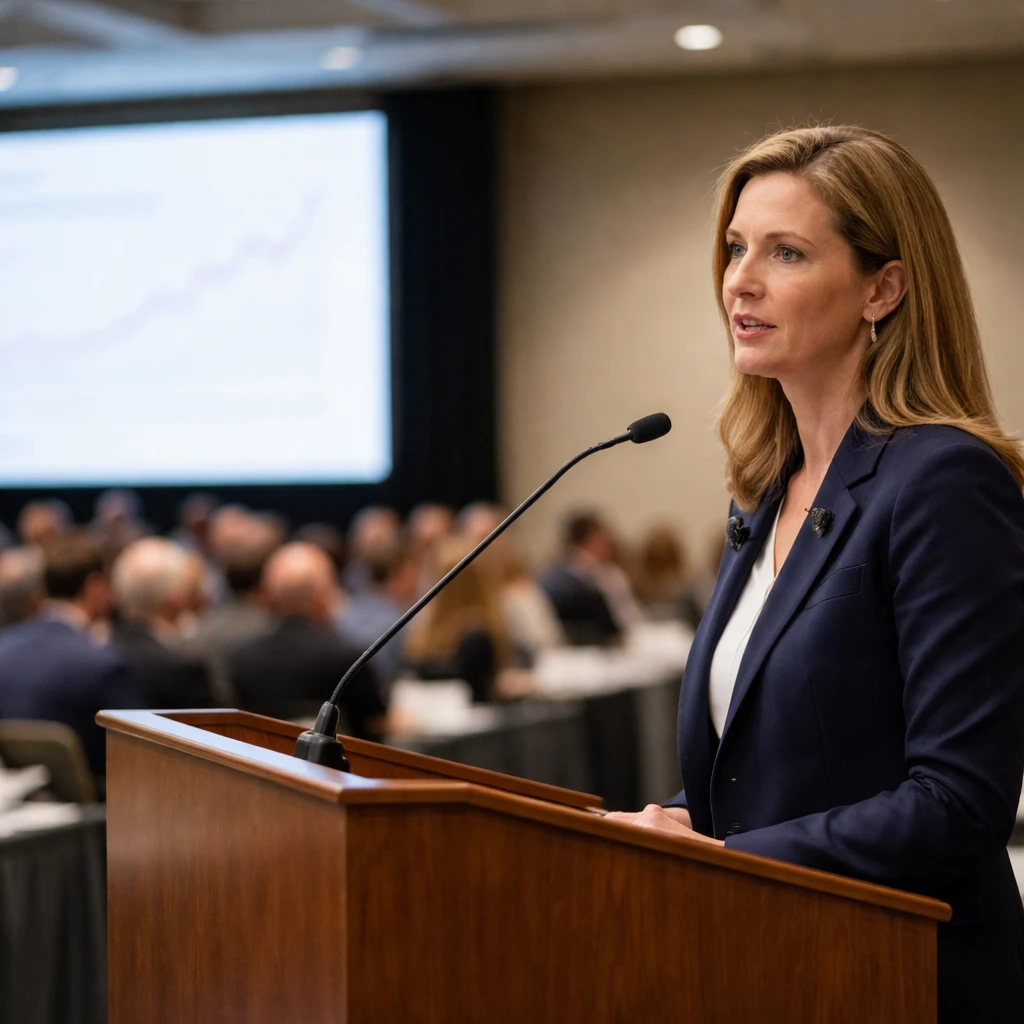
Dallas Federal Reserve President Lorie Logan told an audience in Austin, Texas, that she is cautiously optimistic the Fed's current policy stance will guide inflation back toward the central bank's 2% objective while preserving labor market stability.
Logan said the outlook hinges on incoming economic readings. "If economic data confirms this trajectory in coming months, our current policy stance is appropriate and no further rate cuts are needed to achieve our dual mandate goals," she said.
At January's policy meeting, Logan was among the 10-2 majority that voted to maintain the federal funds rate in the 3.50%-3.75% range. She noted that downside risks to the labor market "appear to have meaningfully dissipated" in the wake of last year's three interest-rate cuts, while also acknowledging that those easing steps introduced added inflationary risk.
With short-term borrowing costs sitting within estimates of "neutral" policy, Logan suggested the current rate setting provides only limited restraint on an economy that she said has "rebounded strongly" and on inflation that has remained above the Fed's target for nearly five years.
"I anticipate we'll see progress on inflation this year," Logan said, pointing to a set of forces she expects to help lower price growth. She cited diminished upward pressure from tariffs over time, a continued slowdown in housing services inflation amid weaker rental demand, and a moderation of non-housing services inflation as labor-market balance eases.
Logan also pointed to encouraging signs such as falling short-term inflation expectations and business surveys that show firms expect moderated costs and prices this year.
Despite those positive indicators, Logan said she is more concerned about "inflation remaining stubbornly high" than about further weakness in the labor market. She enumerated potential sources of upward pressure on prices, including upcoming tariff effects, fiscal policy, "buoyant" financial conditions that can act as tailwinds for the economy, and possible price effects from deregulation and new technologies.
She left open the conditionality of future policy moves, saying that if inflation moderates but the labor market cools markedly, "cutting rates again could become appropriate."
Context and implications
Logan's remarks frame the current policy rate as defensible under a confirmed path toward lower inflation, while acknowledging multiple channels that could keep inflation elevated. Her emphasis on data dependency underscores the Fed's willingness to adjust policy should the outlook change materially.