
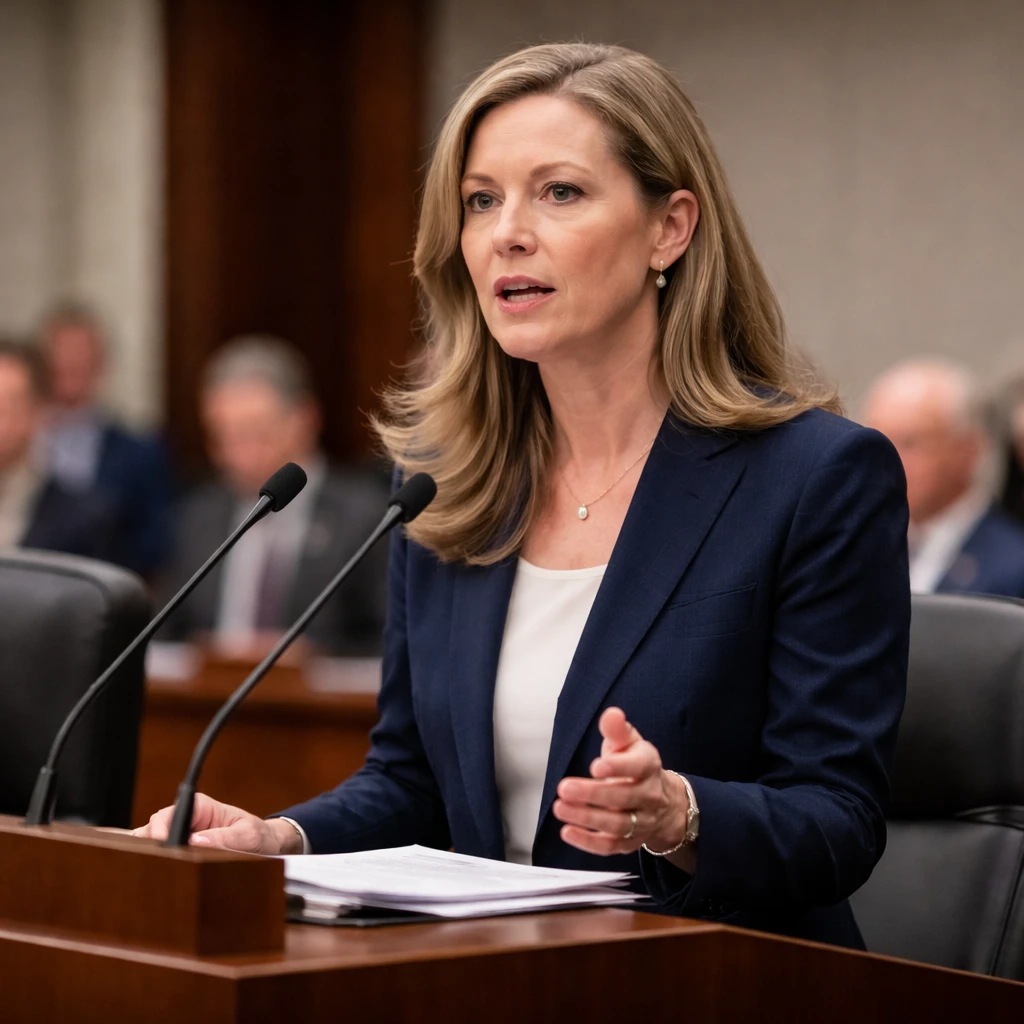
Dallas Federal Reserve President Lorie Logan told an audience in Austin, Texas on Tuesday that she is "cautiously optimistic" the central bank's current interest rate setting will steer inflation toward its 2% objective while preserving a stable labor market. Her comments were delivered in prepared remarks and stressed that forthcoming data will show whether that outlook materializes.
Logan said that if inflation trends down toward the Fed's target without causing a material cooling in the job market, "this would tell me that our current policy stance is appropriate and no further rate cuts are needed to achieve our dual mandate goals." She added a caveat: if inflation recedes but the labor market weakens substantially, "cutting rates again could become appropriate. But right now, I am more worried about inflation remaining stubbornly high."
At the Fed's January meeting, Logan was part of the 10-2 majority that chose to keep the policy rate unchanged in the 3.50% to 3.75% range. She noted that after three interest-rate cuts last year, the downside risks to employment "appear to have meaningfully dissipated," a development she credited at least in part to those rate reductions. However, she said those same moves have also heightened risks on the inflation front.
Logan observed that short-term borrowing costs are now squarely within many estimates of a "neutral" policy rate - a setting that is neither stimulative nor restrictive. In that position, she argued, current rates are doing little to restrain an economy that has rebounded strongly and an inflation rate that, she emphasized, "for nearly five years has run above the Fed's target."
Looking ahead, Logan said she expects to see progress on inflation this year. She cited several factors that should ease upward pressure on prices: the fading impact of tariffs over time, a continued slowing in housing services inflation given reduced rental demand, and an easing of labor-market imbalances that would help relieve pressure on non-housing services inflation. She pointed to tentative signs that support this view, including a decline in short-term inflation expectations and business surveys showing firms expect costs and prices to moderate this year.
Despite those encouraging signals, Logan listed a series of inflation risks that temper her optimism. She warned that some tariff effects have yet to be felt; that fiscal policy and "buoyant" financial conditions could provide a tailwind to economic activity; and that deregulation and new technologies have the potential to push prices higher. "Any number of economic or financial developments could require a change in the course of policy or a fundamental rethink of the outlook and the balance of risks," she said.
Logan's remarks underline a cautious posture within the Fed: while the current rate setting may be sufficient if incoming data confirm easing inflation without labor market damage, several known and potential upside pressures on prices leave the door open for policy adjustments.