
Economy February 10, 2026

Dallas Fed Chief Flags Risks from Rapid Growth in Treasury Basis Trade

Lenders and regulators urged to tighten risk controls and finish resilience reforms as leveraged arbitrage expands

By Derek Hwang
Dallas Fed Chief Flags Risks from Rapid Growth in Treasury Basis Trade

Federal Reserve Bank of Dallas President Lorie Logan warned of vulnerabilities tied to the sharp increase in the Treasury basis trade, saying the strategy’s recent expansion could amplify pressures during market stress. Speaking in Austin, she urged stronger risk management, greater transparency and completion of official-sector reforms while also commenting on AI’s economic effects and the importance of Fed independence.

Key Points

  • Rapid expansion of the Treasury basis trade has been described as "phenomenal" and involves hedge funds using high leverage to arbitrage small differences between cash Treasuries and futures - impacts Treasury markets and hedge funds.
  • Logan warned the trade is vulnerable in market stress, capable of triggering rapid deleveraging, and called for "really strong risk management" and increased transparency - impacts futures and fixed-income markets.
  • She emphasized the necessity of completing official-sector Treasury resilience reforms and discussed AI-related power demand and potential effects on economic overheating - impacts regulatory policy and technology-related sectors such as data centers.

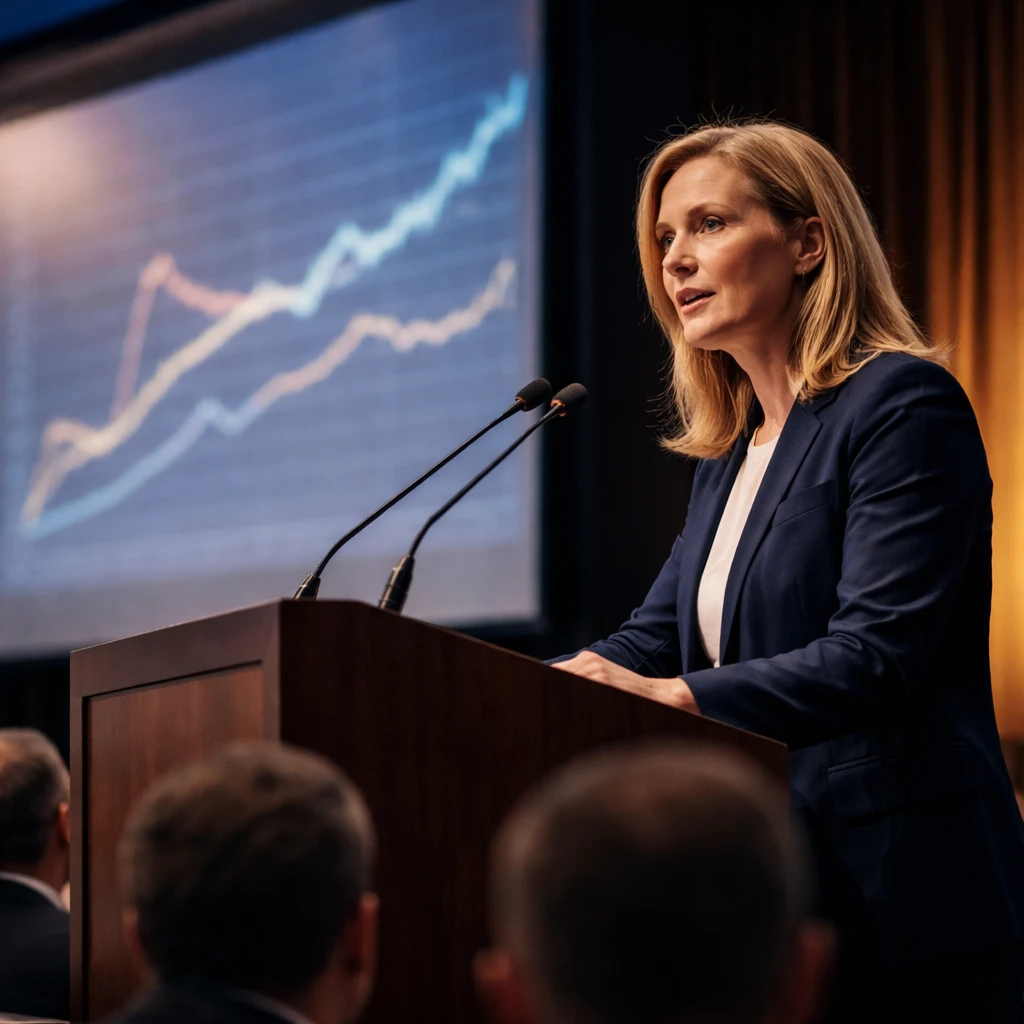
Federal Reserve Bank of Dallas President Lorie Logan warned market participants on Tuesday about the growing prominence of the Treasury basis trade and the risks it poses if market conditions deteriorate.

Delivering remarks at a Futures Industry Association conference in Austin, Texas, Logan described the expansion of the trade over the past year as "phenomenal." The Treasury basis trade is an arbitrage strategy in which hedge funds take highly leveraged positions to exploit small price discrepancies between cash Treasury bonds and futures contracts.

Logan cautioned that the structure of the trade makes it vulnerable in a stress scenario. "It does have vulnerabilities if there is a stress event," she said, warning that rapid deleveraging could follow. She stressed that those participating in such trades require "really strong risk management" and that there must be greater transparency around the activity.

Alongside those market-specific comments, Logan underscored the need for official-sector work on Treasury market resilience. She called completion of those reforms "critically important," indicating that policy and regulatory measures remain a priority in addressing systemic weak points linked to the growth of leveraged arbitrage.

Her remarks also touched on technology-driven demand and monetary policy. On artificial intelligence, Logan observed that power demand from AI data centers is substantial but "not as big as might think." She added a caveat about timing for productivity gains from AI, noting that if those gains arrive later rather than sooner the economy could face more overheating.

On the subject of monetary decision-making, Logan reiterated the Federal Reserve’s independence. She said "short-term politics" are not part of the Fed’s data set when setting interest rates and expressed the hope that the central bank’s independence would remain "foundational" for years to come.

The remarks combined warnings about a specific market strategy with broader concerns about resilience, transparency and the timing of technology-driven productivity benefits — themes that intersect with Treasury markets, hedge funds and broader macroeconomic stability.

Risks

  • Rapid deleveraging in the Treasury basis trade during a stress event could amplify volatility and disruptions in Treasury and futures markets, affecting liquidity and prices.
  • Insufficient risk management and limited transparency among participants in highly leveraged arbitrage strategies increase the chance of sudden market dislocations, particularly for hedge funds and counterparties.
  • Delayed realization of productivity gains from AI could contribute to stronger-than-expected economic overheating, with potential implications for broader macroeconomic stability and monetary policy.

More from Economy

U.S. Trade Office to Open Broad Section 301 Reviews Covering Major Partners Feb 20, 2026 Supreme Court Term Spotlight: High-Stakes Cases Shaping Law and Policy Feb 20, 2026 Trump Vows Fresh 10% Global Tariff After Supreme Court Limits His Trade Authority Feb 20, 2026 Supreme Court Ruling Narrows Presidential Tariff Options, Treasury Secretary Says Feb 20, 2026 Supreme Court Curbs Emergency Tariff Authority, Sparking Market and Policy Reactions Feb 20, 2026