
Economy March 13, 2026

Cuba Confirms Dialogue with Trump Administration, Warns Progress Will Be Slow

Havana says talks seek solutions to bilateral differences even as U.S. rhetoric and sanctions intensify

By Jordan Park
Cuba Confirms Dialogue with Trump Administration, Warns Progress Will Be Slow

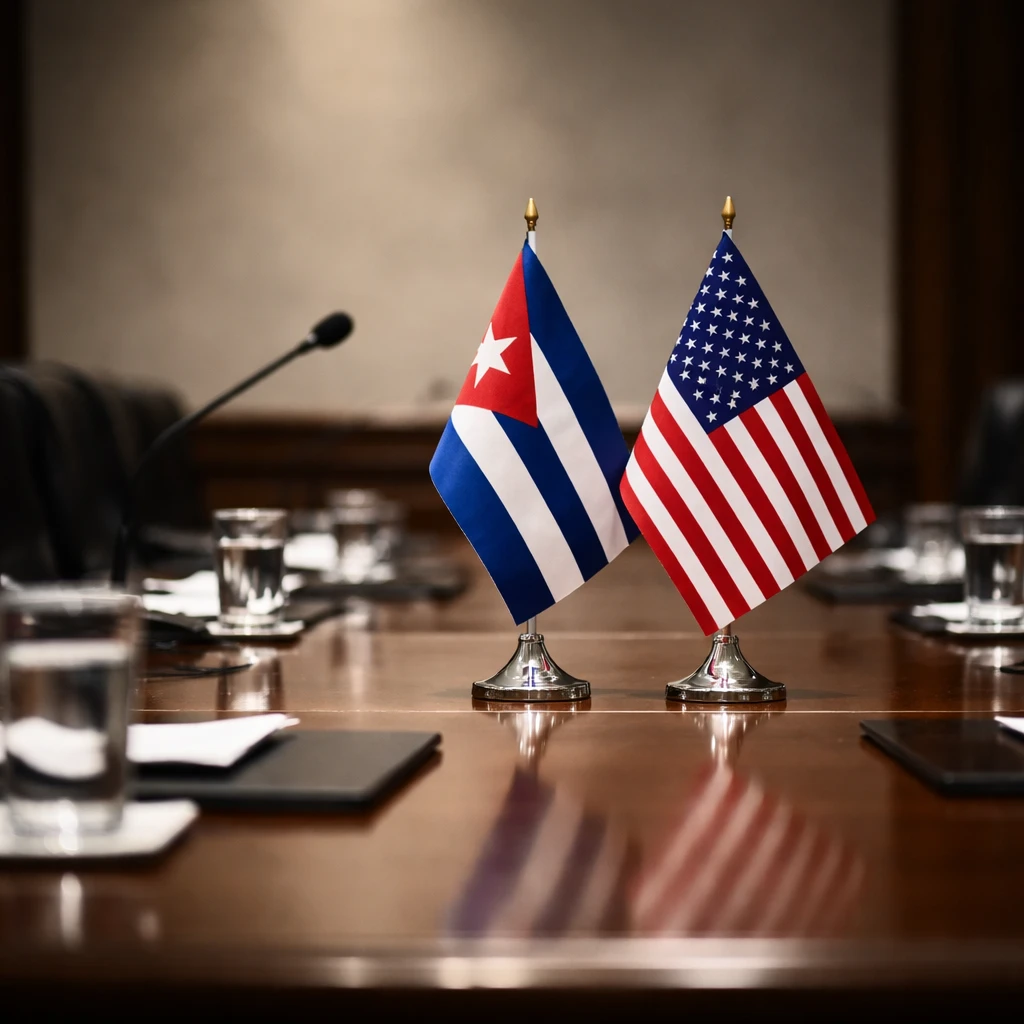
Cuban President Miguel Díaz-Canel confirmed that Havana is engaged in talks with the Trump administration aimed at resolving bilateral disputes. Díaz-Canel emphasized that such negotiations are lengthy and require the right conditions and willingness to proceed. The announcement comes amid heightened U.S. rhetoric about Cuba's future and an ongoing U.S. oil blockade that has worsened the island's economic crisis.

Key Points

  • Cuba confirmed it is holding talks with the Trump administration aimed at resolving bilateral differences; discussions were described in a readout by Foreign Minister Bruno Rodríguez Parrilla.
  • President Miguel Díaz-Canel warned negotiations are lengthy processes requiring willingness and established channels for dialogue - "All of that takes time," according to a CBS News account.
  • The confirmation arrives amid intensified U.S. rhetoric about Cuba, a U.S. oil blockade imposed since January, and assertions about parallel U.S. actions against other regimes - factors that influence energy supplies and regional political risk.

Cuba's government acknowledged on Friday that it is engaged in discussions with the Trump administration, President Miguel Díaz-Canel said in a statement circulated by Foreign Minister Bruno Rodríguez Parrilla.

According to the readout posted on social media by Rodríguez Parrilla, Díaz-Canel framed the exchanges as efforts "aimed at seeking solutions, through dialogue, to bilateral differences that exist between the two nations." The Cuban president also pointed to external elements that have helped facilitate the conversations, saying "there are international factors that have facilitated these exchanges."

At a press conference on Friday, Díaz-Canel cautioned that negotiations of this sort are protracted undertakings that depend on mutual willingness and established channels to sustain dialogue. "All of that takes time," he said, a remark attributed to him in a report by CBS News.

The confirmation follows recent public comments from U.S. President Donald Trump about Cuba's prospects. Trump has renewed a warning about a potential "friendly takeover" of the island and has said Cuba is in "deep trouble." The president has also suggested Cuba could fall once Iran's regime is toppled, a remark reported earlier this month by Politico in which he stated, "Cuba's going to fall, too."

Havana is confronting a deteriorating economic picture. The Cuban government said the United States has imposed an oil blockade on the island since January, a move the country describes as having come shortly after its ally and principal oil supplier, Venezuelan President Nicolás Maduro, was seized in an extraordinary military operation.

The readout and subsequent statements placed the bilateral conversations in the context of a broader pattern of assertive U.S. foreign policy actions toward adversarial regimes. The Trump administration has been described as pursuing aggressive measures, including the arrest of Maduro and military engagement alongside Israel in Iran that, according to the account in the earlier report, resulted in the death of Iran's Supreme Leader Ayatollah Khomeini.


The Cuban government portrayed the talks as exploratory and solution-focused, while simultaneously signaling that any substantial progress will demand time and conducive diplomatic channels. For now, Havana stresses that international dynamics have aided in opening lines of communication but reiterates that successful negotiations are not immediate.

Risks

  • Prolonged negotiation timeline - Havana stressed talks are long processes, which implies limited near-term policy change; this affects sectors sensitive to geopolitical continuity such as energy and trade.
  • Economic strain in Cuba - the country faces a worsening economic crisis and a U.S.-imposed oil blockade since January, posing risks for energy availability and domestic economic stability.
  • Heightened regional tensions - assertive U.S. actions toward adversarial regimes and strong rhetoric increase uncertainty for markets tied to geopolitical risk and could influence investor sentiment in related sectors.

More from Economy

Musk Accelerates Staff Cuts at xAI as Coding Unit Draws Criticism Mar 13, 2026 Mayor Proposes Steep Cut to New York Estate Tax Exemption, Seeks Higher Top Rate Mar 13, 2026 Surge in Iran-driven Oil Prices Forces African Central Banks to Reconsider Easing Mar 13, 2026 China Signals Willingness to Rebuild Trust with New Dutch Government Mar 13, 2026 Bank of Canada Seen Keeping Policy Rate Steady Through Year as Middle East Oil Shock Is Weighed but Not Acted On Mar 13, 2026