
The backdrop of an intensifying conflict in the Middle East and mounting concerns over less-transparent lending channels combined to sap appetite for risk on Monday, leaving several European credit gauges at multi-month wides.
Investors reacted to an expansion of air strikes tied to the U.S.-Israeli campaign, which extended into Lebanon after Israel struck in response to attacks by Hezbollah. At the same time, Iran launched missiles and drones at targets that included Israel, Gulf states and a British air base located in Cyprus. As sentiment deteriorated, market participants sold down riskier assets across the board - including corporate credit, cryptocurrencies and equities.
Credit default insurance costs for lower-rated European corporates rose substantially. The iTRAXX Europe Crossover index, which reflects the cost of insuring a basket of high-yield corporate debt against default, climbed by nearly 11 basis points to around 270 basis points. That move followed a large increase the prior week, the biggest since early October. A gauge of investment-grade credit, the iTRAXX Europe Main, also widened, gaining about 1.5 basis points to roughly 57 basis points - its highest reading since mid-October.
Market attention has been drawn to cracks outside public debt markets. Last week’s failure of a small British mortgage financing firm heightened investor anxiety about the build-up of corporate leverage associated with the artificial intelligence-driven borrowing boom and renewed scrutiny of lending standards. Much of this incremental debt has been sourced through private credit vehicles, which are typically less transparent and less liquid than public markets, and therefore more susceptible to freezing up in the event of a shock.
"With all the focus right now on the oil price, currency and equity moves, and what may or may not represent a safe asset in the 'new normal', one should not lose sight of everything that is going on in the credit space (where spreads have in some cases been wafer-thin), and a known (difficult to quantify) risk that has in recent weeks been coming more and more to the fore - namely private markets and the exposure of banks through their lending books, to non-bank financial institutions," said David Owen, chief economist at Saltmarsh Economics.
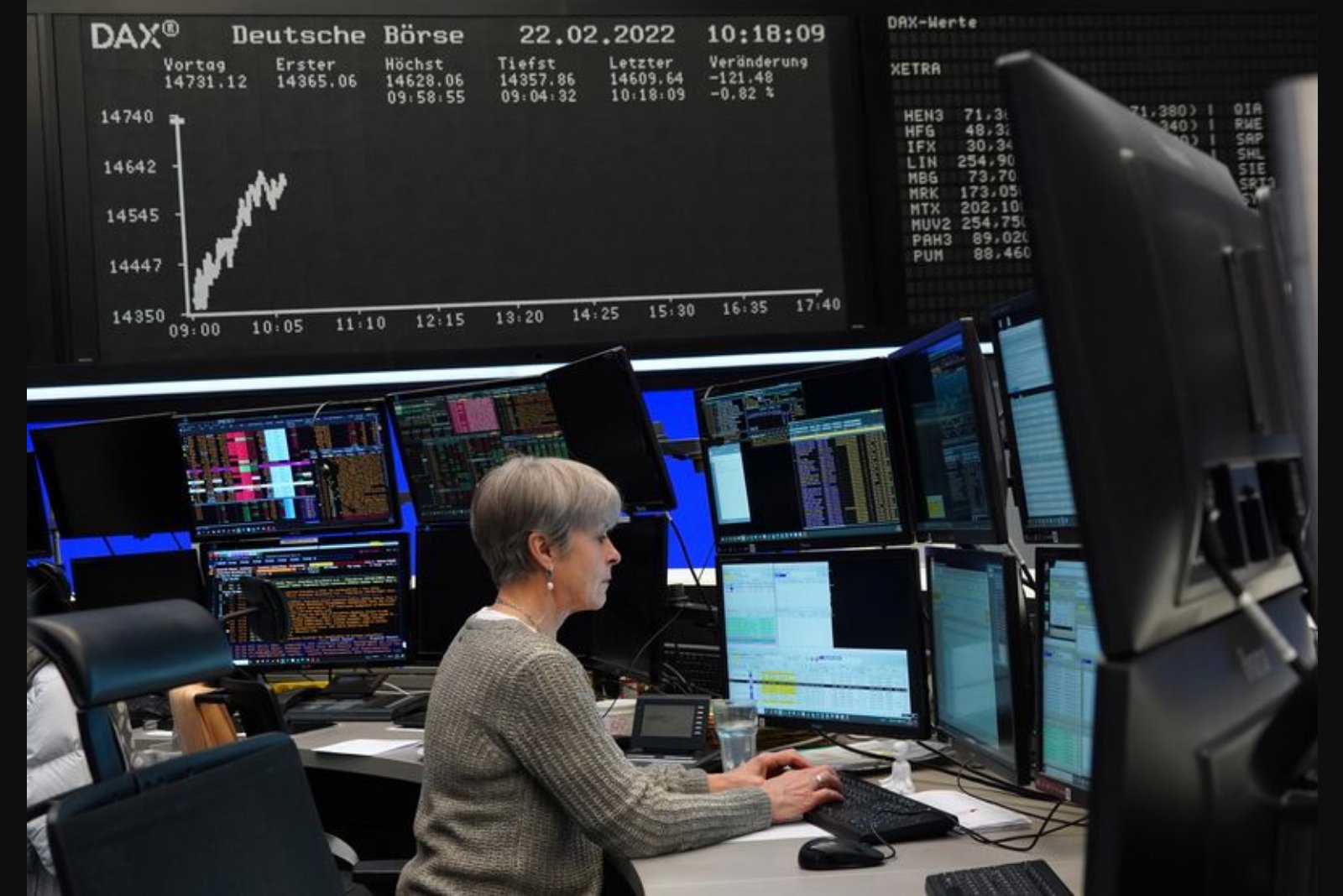
Banking sector shares led European equity declines, with travel and leisure stocks also under pressure. Major lenders such as HSBC, Banco Santander and Deutsche Bank saw their shares fall in the range of 4 to 5 percent on the day.
U.S. corporate credit measures reflected similar widening. At Friday’s close, the ICE BofA U.S. Corporate Index traded at 118 basis points, its highest level since late November, up from a recent four-year low of 100 basis points. The ICE U.S. High Yield Index finished Friday at 312 basis points, also the most since late November.
Short-dated U.S. Treasury yields moved higher as market participants priced in the prospect of a sustained oil price increase and a possible uptick in global inflation. Nelson Jantzen, who covers high-yield bonds, leveraged loans and distressed leveraged credit at JPMorgan, warned in a note that the regional concentration of energy flows through the Strait of Hormuz and the uncertain trajectory of the conflict raise elevated tail risks.
The fragility of segments of the credit plumbing has also been a focus of senior banking executives. JPMorgan chief executive Jamie Dimon warned late last year that more problems could surface in pockets of Wall Street’s vast credit machinery, using the metaphor that additional "cockroaches" might be found.
Collectively, the widening in credit spreads, declines in bank equities and the rise in safe-haven Treasury yields illustrate how geopolitical shocks and concerns about opaque private lending arrangements can feed through to broader market stress, even without new data on the underlying fundamentals of corporate borrowers.
Summary
Credit spreads widened in Europe and the United States as a Middle East escalation and worries over private credit amplified investor risk aversion. Key indices of high-yield and investment-grade credit hit multi-month highs, major bank shares fell sharply, and short-term U.S. Treasury yields rose amid oil-driven inflation concerns.
Key points
- The iTRAXX Europe Crossover index rose nearly 11 basis points to around 270 basis points, marking the highest yield since November.
- The iTRAXX Europe Main increased by about 1.5 basis points to approximately 57 basis points, its most elevated level since mid-October.
- Bank equities led European declines, with HSBC, Banco Santander and Deutsche Bank down 4-5 percent; investors also reduced holdings in cryptocurrencies and equities.
Risks and uncertainties
- Escalation of the Middle East conflict could keep oil prices elevated, feeding higher inflation expectations and pressuring short-term Treasury yields and credit markets.
- Opaque private credit exposures and the potential for liquidity to dry up in those channels pose a risk to banks that have lending exposure to non-bank financial institutions.
- Further failures among small niche lenders, similar to the recent collapse of a British mortgage financing company, could undermine confidence in corporate lending standards and amplify spread widening.