
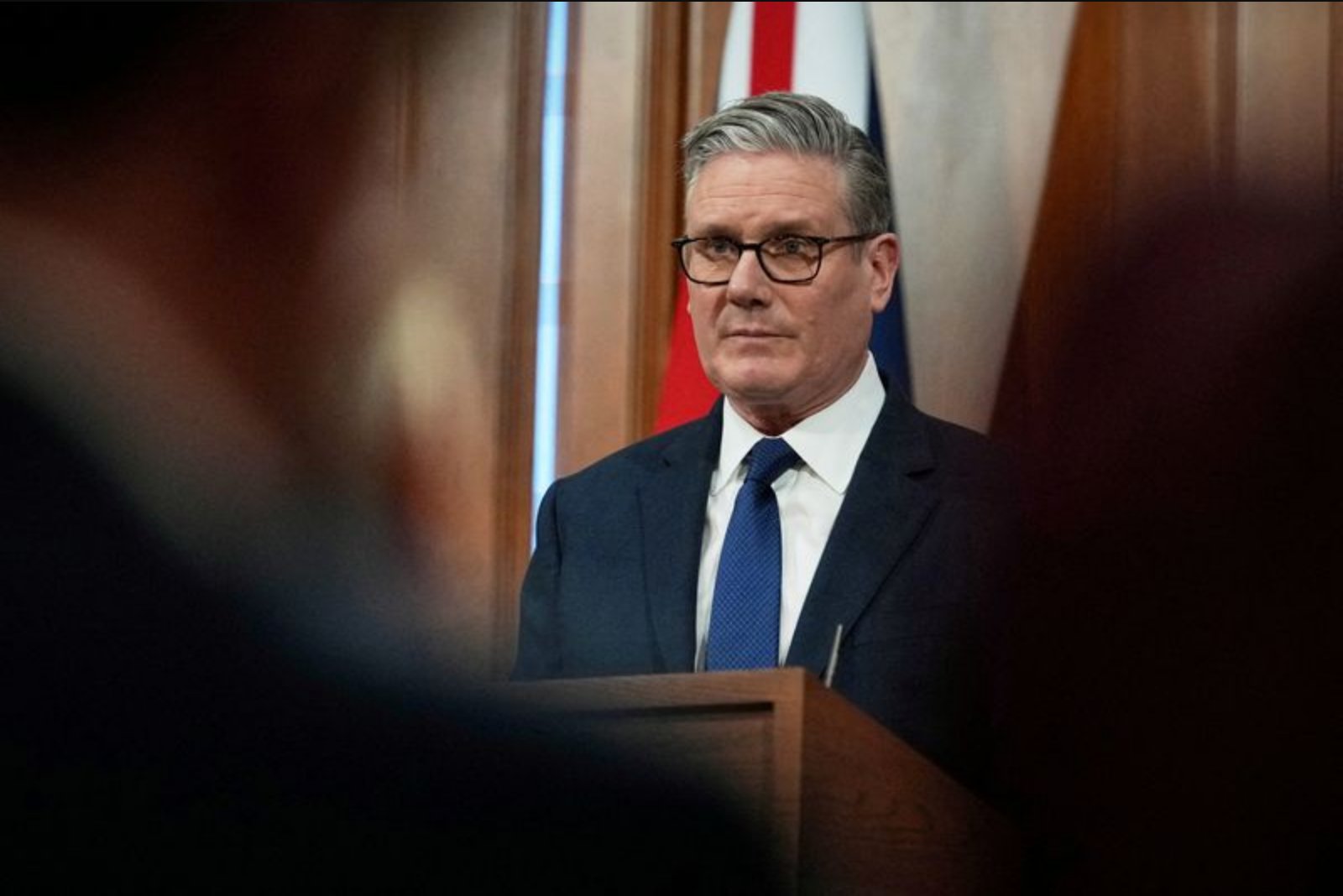
Public unease over living costs is undermining support for Prime Minister Keir Starmer and his government, with persistent price pressures and renewed energy market shocks feeding into a marked deterioration in household sentiment. Starmer secured the largest parliamentary majority since 1997 in 2024 after 14 years of Conservative-led rule, but less than two years on Labour is polling at 17% and questions have formed around his political standing.
Consumer researchers point to expectations that were higher than outcomes as a key source of the current negativity. "People were hoping for better things than what has actually transpired, so I think that feeds through to some of the negativity we are seeing now," said Neil Bellamy, consumer insights director at GfK, which has tracked British household sentiment since 1974.
The political challenge facing Starmer is not unique to Britain. Leaders in other large European economies have similarly weak ratings: consumer morale in France and Germany has fallen to near three-year lows since the Iran war began in late February, underscoring wider regional discomfort over economic trends.
Official and private-sector measures show Britain’s decline in sentiment has been disproportionately large. OECD data indicate consumer confidence has fallen more in Britain than among G7 peers since Starmer took office. Polling from YouGov showed the economy overtaking immigration as Britons’ top worry late last year, signalling that economic concerns have become dominant in public priorities.
A major driver of the slump in mood has been the surge in inflation that followed Russia’s 2022 invasion of Ukraine. Inflation jumped to more than 11% at that time - a period that coincided with bond market turmoil under Liz Truss’ brief premiership - and pushed sentiment indicators to a record low from which they have struggled to recover. The more recent conflict in Iran has revived inflationary pressures, contributing to an almost 50% rise in oil prices and amplifying concerns about the cost of energy.
While wage growth has been relatively strong since the pandemic, pay increases have not kept pace with rising prices. As a result, household after-tax income in real terms remains 0.4% lower than at the end of 2019. "The cost of living crisis is still very much fresh in the minds of people. They see inflation going up again and it’s a bad hit at a bad time," said Stephen Millard, deputy director at the National Institute of Economic and Social Research.
Pantheon Macroeconomics’ chief economist Rob Wood added that Britain "does stand out for its inflation concerns." Inflation has exceeded the Bank of England’s 2% target for all but four months in the past five years. That extended period of above-target inflation has been accompanied by monetary tightening: Bank of England interest rates are more than 1.5 percentage points higher than those set by the European Central Bank, a gap that feeds through into higher mortgage costs for British households.
Inflation’s impact has been particularly visible in everyday purchases. Cost increases have concentrated on items such as food, fuel and hospitality, with food prices now more than a third higher than at the start of 2022. "If you go to the supermarket to buy your daily products ... they’re a lot more expensive than they were four or five years ago," Bellamy noted.
In response to these pressures, the government has introduced a package of measures aimed at easing immediate burdens. Starmer postponed a planned fuel tax rise, and finance minister Rachel Reeves has shifted some environmental levies away from energy bills and into general taxation. Reeves also announced a set of smaller interventions, including free summer bus travel for schoolchildren and reduced tariffs on imported nuts.
Such adjustments are designed to provide near-term relief, but they do not alter the broader debate about the root causes of Britain’s economic malaise. Commentators and political figures point to a range of longer-term factors in that debate: the austerity policies enacted after the global financial crisis, the economic impacts attributed by some to Brexit, higher taxation levels, and persistent regional inequalities emphasised by figures such as Greater Manchester Mayor Andy Burnham, a prominent challenger to Starmer.
Among economists there is broad agreement that subdued productivity growth since the 2008 financial crisis sits at the heart of Britain’s problem. Productivity - the amount of additional output produced per hour worked - has been weak for an extended period and is a central determinant of long-run wage growth relative to inflation. James Smith, chief economist at the Resolution Foundation think tank and a former Bank of England official, said faster productivity is essential for wages to outpace prices over time. "We have gone from incomes doubling roughly every 10 to 20 years, to rates of income growth, particularly at the bottom, that are more like ... hundreds of years for incomes to double," he observed.
Although many advanced economies experienced a slowdown in productivity growth after the 2008 crisis, Britain suffered a larger setback, a shortfall that economists link in part to the country’s heavier reliance on financial services. By contrast, the United States appears to have made relative gains since 2020; economists have associated that uptick with a more intensive job market reallocation during COVID, looser rules on oil and gas extraction and a possibly greater adoption of artificial intelligence, though some of that stronger growth may be temporarily enhanced by higher government borrowing.
Promoting faster growth has been a policy objective for Starmer’s administration, as it has been for predecessors. The International Monetary Fund recently commended measures intended to boost medium-term expansion - policies aimed at streamlining construction permitting, addressing skill shortages and improving access to long-term finance for fast-growing companies.
Yet there is a political tension between long-term structural reforms and immediate household pressures. Voters who have lived through a succession of negative hits to living standards may be reluctant to wait years for productivity gains to translate into real wage improvements. "If you are a consumer ... what you have experienced is a series of very negative hits to living standards," said Rob Wood. "It’s not all that surprising that people aren’t particularly optimistic about the economy. And you won’t find many forecasters that are optimistic about it either."
The government’s short-term measures attempt to blunt some of the most visible cost pressures, but the underlying challenge - lifting productivity growth to deliver sustainable real income gains - remains a long-term task. Until that shift materialises in household wallets, political vulnerability tied to cost-of-living concerns looks set to persist.