
Economy February 25, 2026

Commerce Department to Convene Robotics Roundtable on March 10 to Strengthen U.S. Industry

Federal session will gather manufacturers of industrial and humanoid robots to surface supply-chain and policy obstacles amid competition from China

By Leila Farooq
Commerce Department to Convene Robotics Roundtable on March 10 to Strengthen U.S. Industry

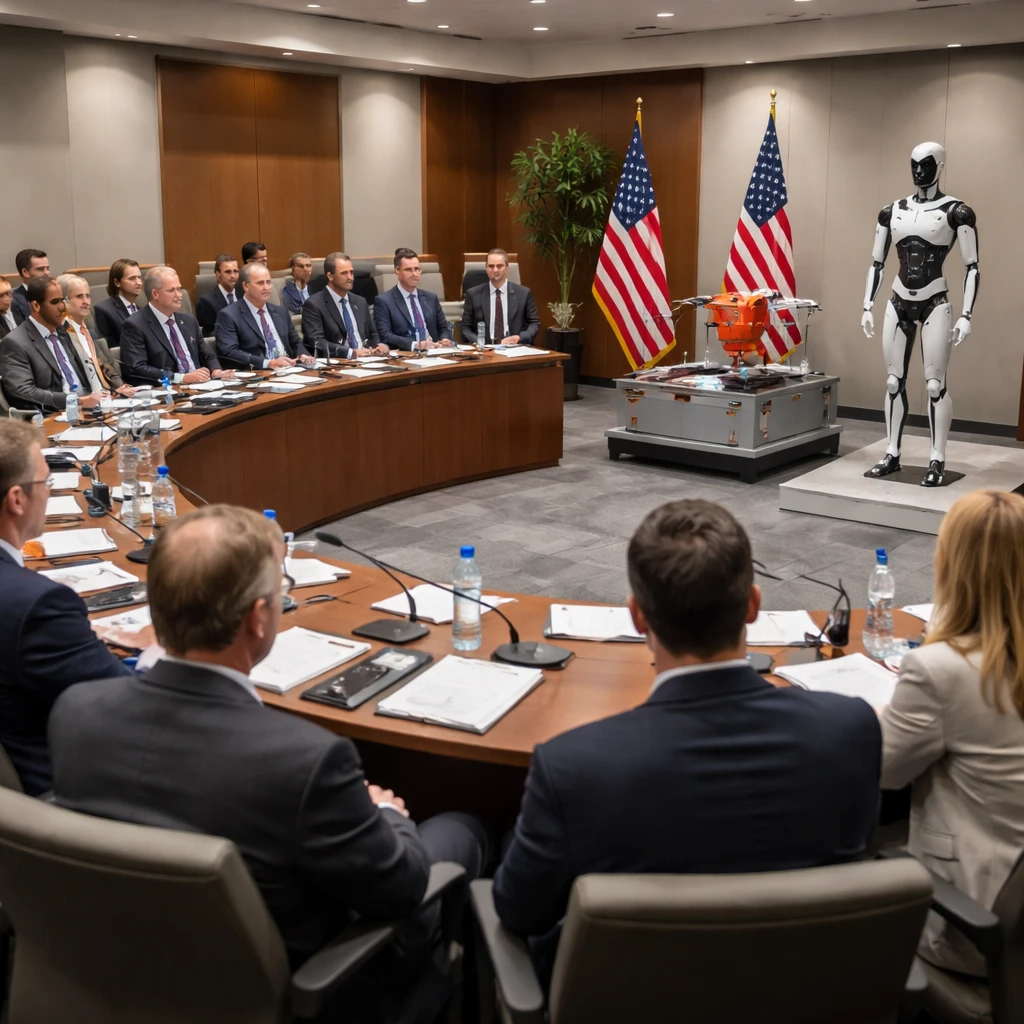
The U.S. Department of Commerce will bring together American robot manufacturers on March 10 to solicit industry feedback aimed at shoring up domestic robotics production and addressing competition from China. The session will focus on identifying supply-chain bottlenecks and policy challenges affecting the deployment and manufacture of both industrial robots and humanoid machines, while intentionally avoiding overlap with ongoing work on tariffs and trade restrictions.

Key Points

  • The U.S. Department of Commerce will hold a roundtable on March 10 to convene American robot manufacturers to address competition from China.
  • The invitation from the Commerce Department's National Telecommunications and Information Administration targets makers of both industrial manufacturing robots and humanoid robots to identify supply-chain and policy challenges.
  • A Commerce spokesperson said the agency is soliciting industry feedback on federal robotics policies and emphasized that the discussion is not intended to overlap with existing work on tariffs or import and export restrictions.

The U.S. Department of Commerce has scheduled a roundtable for March 10 that will assemble domestic robot manufacturers to discuss ways to reinforce the American robotics sector and respond to competitive pressures from China. The meeting is being organized by the Commerce Department and aims to gather direct input from companies that build both manufacturing robots and humanoid machines.

An invitation issued by the Commerce Department's National Telecommunications and Information Administration sets out the session's purpose: to identify the principal supply-chain hurdles and policy challenges that affect U.S. robotics manufacturing and the deployment of robotic systems. The invitation targets manufacturers across the robotics spectrum, including firms that produce traditional industrial robots and those that develop humanoid platforms.

A Commerce spokesperson said the agency intends to use the roundtable to solicit industry feedback on federal robotics policies. Officials expect to hear a range of perspectives and opinions from participants, reflecting the diversity of the domestic robotics industry. At the same time, the Commerce Department has made clear that the discussion is not intended to duplicate or encroach on existing work concerning tariffs or import and export restrictions.

The meeting represents a federal effort to map out immediate operational and regulatory obstacles facing U.S. robotics firms, with an explicit objective of strengthening the domestic base in the face of Chinese competition. By bringing manufacturers together, the agency is seeking actionable input on supply-chain resilience and policy priorities that may affect how robots are built and deployed in the United States.

While the roundtable is designed to gather industry views, Commerce officials have indicated the session will remain distinct from established trade-related efforts. That delineation suggests the focus will be on domestic policy levers and operational challenges rather than on tariff-setting or trade restriction policymaking.

The Commerce Department's convening of robot-makers on March 10 is the next step in an administrative effort to better understand industry needs and to identify potential federal responses that could support manufacturing capacity, technological deployment, and competitiveness against foreign rivals.

Risks

  • Divergent views among robotics manufacturers could complicate consensus on federal policy priorities - this affects the technology and manufacturing sectors.
  • Uncertainty about how input from the roundtable will translate into concrete federal actions or policies could limit near-term market response - relevant to investors in robotics and industrial automation.
  • Potential overlap with ongoing trade-related efforts is being avoided, but coordination challenges between policy workstreams could create ambiguity in regulatory outcomes - impacting supply-chain planning for robotics firms.

More from Economy

New York Attorney General Sues Valve, Alleges Loot Boxes Constitute Gambling Feb 25, 2026 Outgoing Atlanta Fed Chief Warns Political Strife Eroding Central Bank Independence Feb 25, 2026 Bostic Warns Political Attacks on Fed Are Eroding Public Confidence Feb 25, 2026 Musalem Says Fed’s Policy Rate Now Balances Risks Between Jobs and Inflation Feb 25, 2026 Schmid Says Elevated Inflation Remains Primary Challenge for Fed, Stops Short on Policy Path Feb 25, 2026