
Economy March 4, 2026

Cleveland Fed's Hammack Urges Holding Rates Steady, Says Iran Conflict’s Economic Toll Is Still Unclear

Hammack expects inflation to ease over summer but remain above target into next year; labor-market developments could shift policy

By Ajmal Hussain
Cleveland Fed's Hammack Urges Holding Rates Steady, Says Iran Conflict’s Economic Toll Is Still Unclear

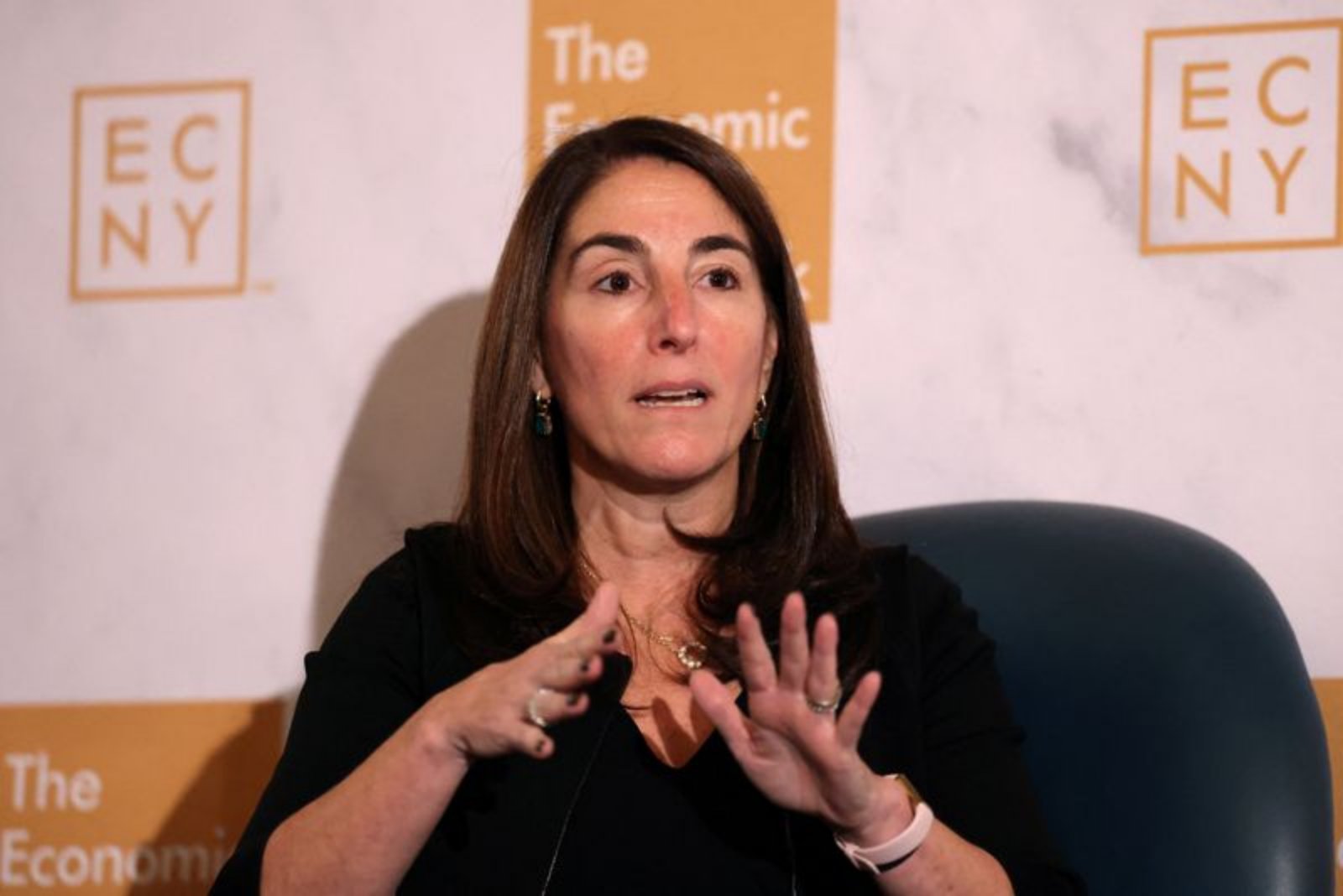
Beth Hammack, president of the Federal Reserve Bank of Cleveland, told the New York Times it is too soon to assess the economic fallout from the Iran war and supported keeping interest rates unchanged "for quite some time." She said policymakers should prioritize returning inflation to target while monitoring labor-market softness that could change the stance of monetary policy.

Key Points

  • Cleveland Fed President Beth Hammack supports holding interest rates steady "for quite some time" to prioritize reducing inflation while monitoring labor-market developments - impacts policy and financial markets.
  • Hammack expects inflation to ease gradually over the summer but to remain above the Fed's target beyond the end of the year - relevant to sectors sensitive to interest rates such as banking, housing, and corporate borrowing.
  • Federal Reserve officials have begun assessing risks from the widening conflict in the Middle East, which could pose near-term threats to U.S. inflation and growth despite limited sensitivity of the economy to recent energy price shocks - relevant to energy and commodities markets.

Summary

Federal Reserve Bank of Cleveland President Beth Hammack said in an interview published on Wednesday that it remains premature to determine how the Iran war will affect the U.S. economy. She backed maintaining the central bank's current interest-rate stance "for quite some time," emphasizing the need to balance efforts to bring inflation back to target with any emerging weakness in the labor market.


Policy outlook and inflation

Hammack told the New York Times that the immediate economic implications of the widening conflict in the Middle East are unclear, and the Fed should not rush to reassess its monetary stance based on uncertain developments. "It’s important to make sure that we’re maintaining policy at a level where we can drive inflation back down to target while balancing any potential softness in the labor market," she was quoted as saying.

She also said she expects inflation to ease gradually over the summer but predicted it would remain above the Fed's target beyond the end of the year. That forecast underpins her view that the central bank should keep a steady posture until there is clearer evidence that price pressures are moving sustainably toward target.


Labor market and conditional policy paths

Hammack reiterated that, with inflation still too high and the labor market holding relatively steady, the Fed's primary focus should be on suppressing price pressures. Her comments framed policy as conditional: if the labor market shows increased weakness, the Fed might need to "provide more accommodation." Conversely, if inflation does not decline as she expects, the central bank could be required to "put more restriction on the economy."

Federal Reserve officials began reviewing the potential near-term risks from the expanding Middle East conflict on Tuesday, noting that such developments could affect both U.S. inflation and growth despite the economy's relative resilience to energy price shocks.


Context and constraints

The remarks reflect a cautious approach: maintain current policy settings to allow time for incoming data to clarify whether geopolitical developments meaningfully alter the outlook for inflation and labor markets. Hammack's guidance leaves open distinct, data-dependent paths for future action based squarely on the evolution of inflation and employment readings.

Risks

  • Uncertain economic impact from the Iran war could raise near-term risks to U.S. inflation and growth, affecting energy and commodities sectors.
  • If the labor market weakens materially, the Fed may need to ease policy to support employment, which would affect interest-rate-sensitive sectors such as housing and financials.
  • If inflation fails to move toward the Fed's target as expected, policymakers could impose tighter restrictions on the economy, increasing borrowing costs for businesses and households and impacting corporate investment.

More from Economy

Venezuela Reports 7.07% Yearly GDP Gain in Q4; Central Bank Flags Sanctions Mar 4, 2026 NATO Intercepts Iranian Ballistic Missile Heading Toward Turkey; Debris Falls Near Hatay Mar 4, 2026 UK stocks climb as diplomatic signals ease Middle East fears; Vistry tumbles on margin warning Mar 4, 2026 ECB on Alert as Iran-Linked Oil Shock Revives Painful Memories of 2022 Mar 4, 2026 OECD Flags Inflation as Central Threat to Global Bond Markets amid Energy-Price Shock Mar 4, 2026